
Quaddie vs Accumulator: Pool Dividend or Fixed-Odds Fourfold?
 Available in US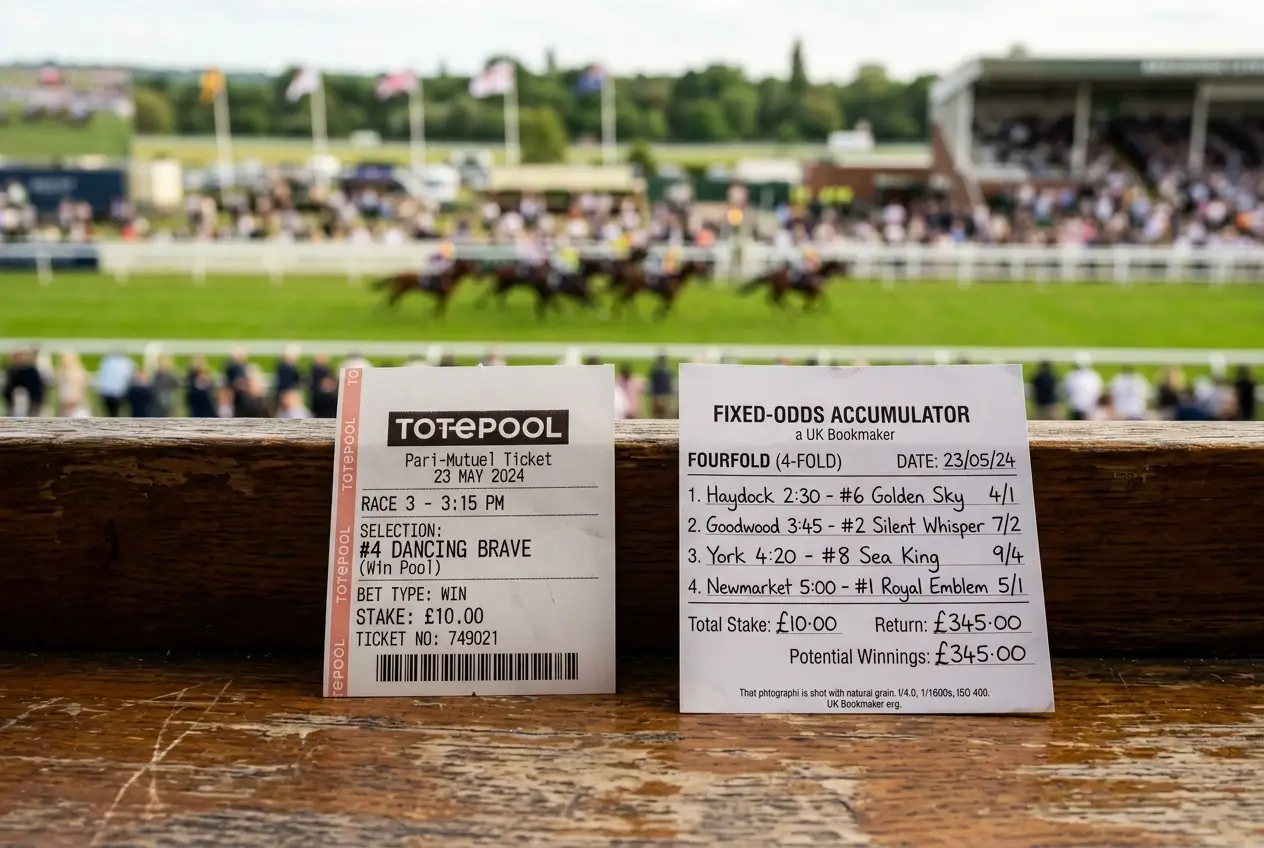
Same four races, two completely different bets
The surface similarity between a quaddie and a fixed-odds fourfold accumulator is deceptive. Both require you to identify four winners. Both fail if any of the four selections loses. But the comparison ends there, and understanding exactly where it ends is what allows you to choose the right format for the situation rather than defaulting to one out of habit. I’ve had punters tell me they “did a quaddie” when they meant they’d put up a four-leg acca on fixed odds with a bookmaker. The terminology confusion usually reflects a genuine uncertainty about what differentiates the two — and that uncertainty has real financial consequences. The full picture is in our complete guide to quaddie betting.
A fourfold accumulator is a fixed-odds bet. You take a price on each of your four selections, those prices compound together, and if all four win, you receive the compounded return. The return is determined entirely by the prices you took at the time of placing the bet — it doesn’t matter if the same horses are backed by thousands of others, your return per unit doesn’t change. The bookmaker has accepted a position on your bet and will pay whatever the staking and odds arithmetic produces.
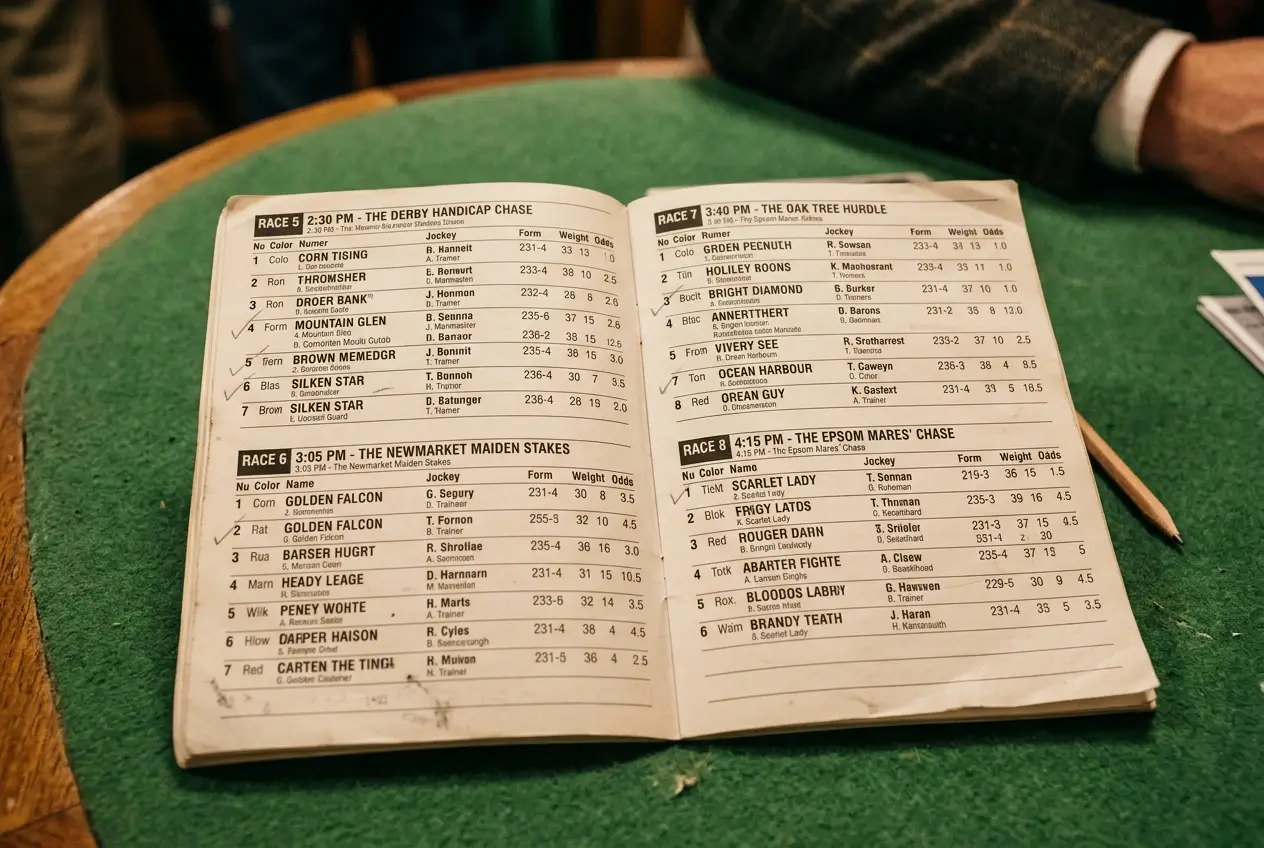
A quaddie is a pari-mutuel pool bet. There are no fixed prices. Your effective return is determined by how large the pool is and how few other tickets hold the same winning combination as you. The dividend is declared after all four races have been run, and it could be anything from a few pounds per unit (on an easy card where many tickets survive) to thousands of pounds per unit (on a difficult card where almost nobody picked all four winners). You cannot know your return in advance.
Same four races, two bet shapes
Consider a practical scenario. Four races on a Saturday card. You’ve identified likely winners in each: a 2-1 favourite, a 3-1 shot, a 5-1 chance, and a 4-1 chance. In a fixed-odds fourfold, you take those prices on the nap sheet: 2-1 x 3-1 x 5-1 x 4-1, which compounds to a return of (3 x 4 x 6 x 5) = 360 times your stake on a £1 unit. A £10 fourfold at those prices returns £3,600. You know that figure when you place the bet.
The same four races as a quaddie pool would produce an unknown return. If you correctly pick all four winners, you share the net pool with every other ticket that also picked all four. If your four selections were the four most heavily backed horses in the pool — and they were, given they’re the market leaders — then many tickets will have also covered them, and the dividend per unit could be considerably less than the fixed-odds calculation suggests. Alternatively, if one of your selections was at 5-1 and few other tickets covered it, the dividend could significantly exceed the fixed-odds equivalent.
The bet shape difference is therefore: fixed-odds accumulator gives you a known return at a known price with a known probability profile. The quaddie gives you an unknown return that could be higher or lower depending on how many other tickets share your combination. The uncertainty is the fundamental trade-off.
Certainty versus pool upside
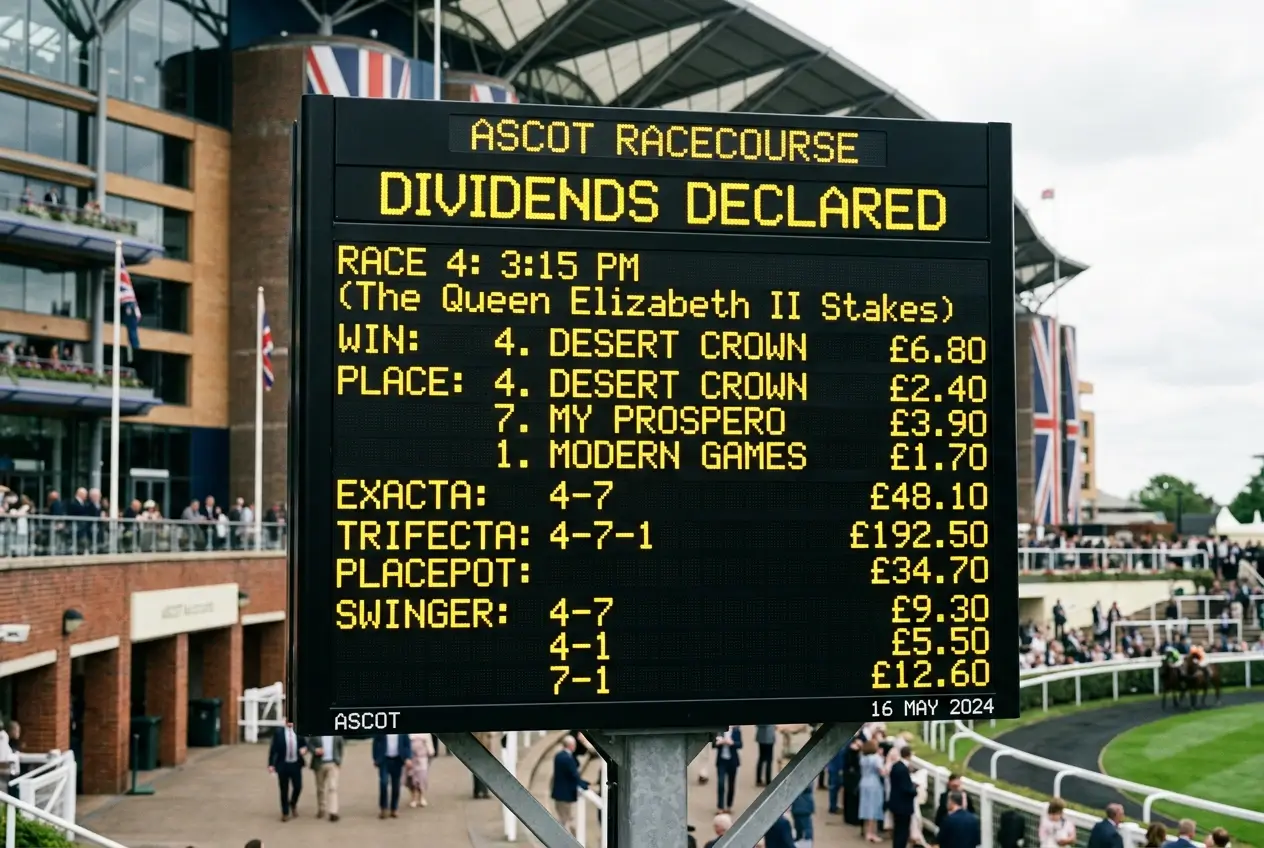
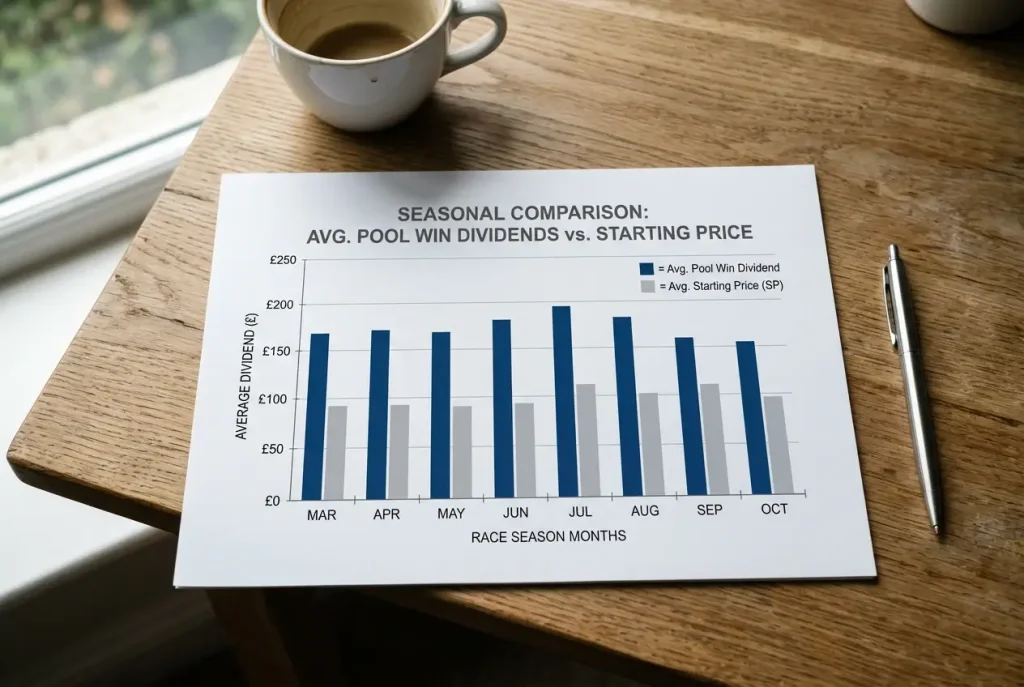
On World Pool race days in 2025, Tote win bets outperformed equivalent Starting Price returns by £171.44 per race on average across British and Irish racing. That consistent outperformance across a large sample is the structural argument for pool betting over fixed odds on major race days — the pool, fed by international money from 27 jurisdictions, tends to price less-fancied outcomes more generously than the domestic fixed-odds market does. On those days, and specifically for horses where international market opinion differs from domestic opinion, the pool dividend systematically exceeds what a fixed-odds bookmaker would have paid.
The same data shows Tote Exacta outperforming Forecast in roughly 73% of races. For a four-leg quaddie equivalent, the expectation would be similar: across a sufficient sample, the quaddie pool tends to distribute better value than a fixed-odds fourfold at the corresponding SP prices. But that’s a statistical expectation across many bets. For any individual quaddie, the return could be significantly above or below the fixed-odds equivalent depending on the specific combination of results and the distribution of money in the pool.
Grainne Hurst, Chief Executive of the Betting and Gaming Council, has commented on how regulatory changes affect the betting industry’s ability to offer competitive products — a reminder that the commercial environment for both pool and fixed-odds betting in the UK is shaped by policy decisions that can change the relative value of each format. The practical upshot for punters is that pool betting’s value advantage is most consistent on large, liquid pools where international diversity of opinion is high — and most variable on thin domestic pools where a single result can swing the dividend dramatically in either direction.

Which suits which punter
The honest answer is that the right format depends on what you’re trying to optimise. If you want to know your return before the first race starts, and you want the insurance that your return is capped at a specific worst-case scenario (the bet loses entirely), the fixed-odds accumulator gives you that certainty. You can calculate exactly what a successful bet returns, you can compare it against your assessment of probability, and you can make a rational decision based on known numbers.
If you’re comfortable with unknown returns and you’re specifically targeting races where you believe consensus opinion may be wrong — where the public favourite might be overbet, or where an overlooked runner has genuine claims that most other punters haven’t incorporated — the quaddie pool potentially rewards your contrarian assessment more generously than a bookmaker’s price would. The bookmaker sets a fixed price before the race based on their assessment; the pool price emerges from the crowd’s behaviour and can diverge from the “correct” probability more dramatically in either direction.

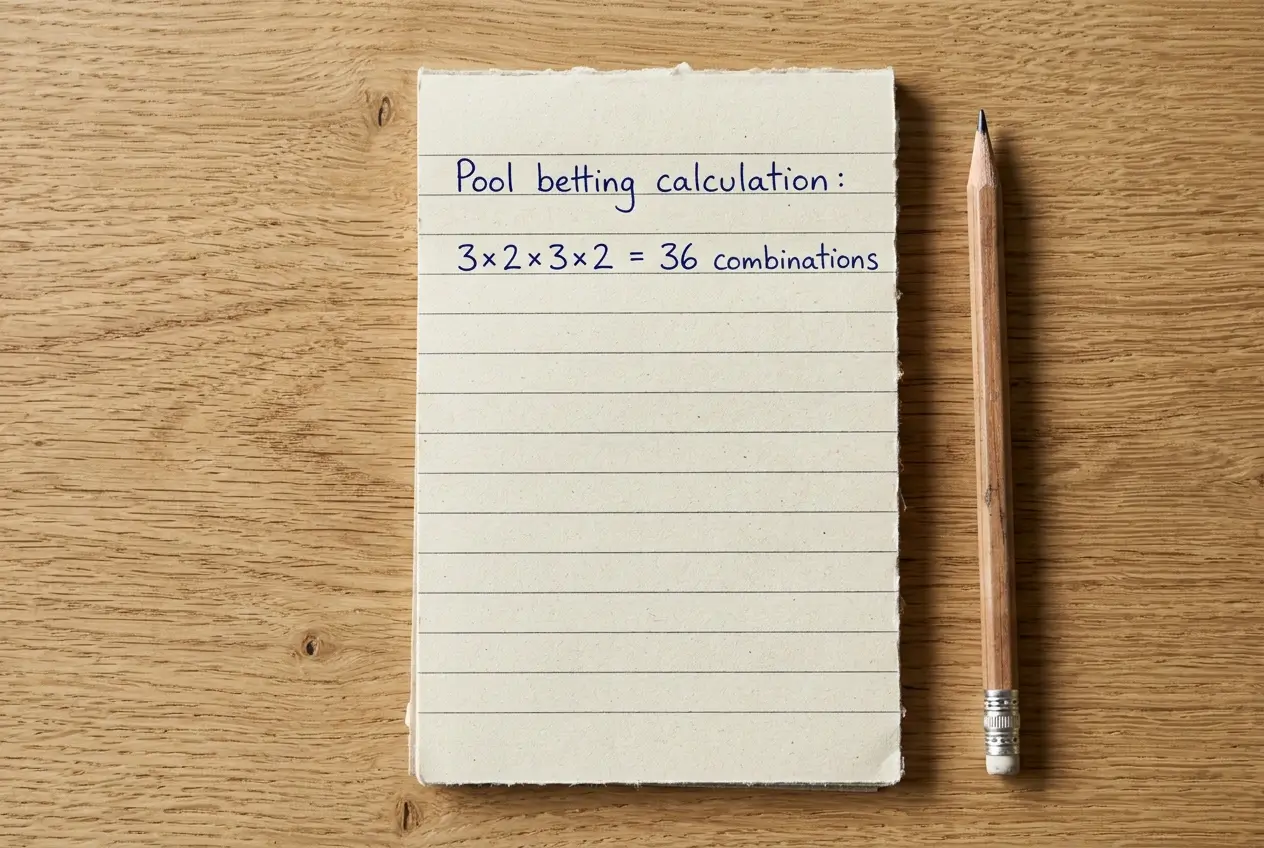
There’s also a structural consideration: flexi betting on a quaddie allows you to cover multiple combinations in each leg at a fraction of the full-unit cost, which the fixed-odds format doesn’t allow in the same way. A 3x3x3x3 = 81 combination quaddie at 12.5% flexi costs £20.25 and gives you 81 different routes to the dividend. A fixed-odds “fourfold” is structurally a single-combination bet — one set of four selections. You cannot take fractional interest in multiple fixed-odds outcomes the way you can fractionally cover multiple pool combinations. That structural difference means the quaddie, despite its uncertain return, gives you genuinely broader coverage for a given budget than the fixed-odds equivalent. For a full exploration of what happens when pool and fixed-odds betting go head-to-head on value, the pool betting versus fixed odds guide works through the evidence systematically. How a pool dividend is set: pari-mutuel betting.
Is a quaddie just a tote accumulator?
No. A quaddie is a pari-mutuel pool bet where your return is determined by the pool size and the number of other winning tickets. A fixed-odds accumulator pays a predetermined compounded return based on the prices you took. In a quaddie, you cannot know your return in advance. In an accumulator, you know exactly what you’ll receive if all four selections win.
Which pays more, a quaddie or a fourfold acca?
It depends on the specific races and results. If the four winners were heavily backed consensus selections, the quaddie dividend may be lower than the fixed-odds accumulator at SP, because many tickets share the winning combination. If one or more winners were genuine surprises, the quaddie can significantly exceed the fixed-odds equivalent. The pool’s distribution is variable; the fixed-odds accumulator’s return is predetermined.
Do I know my return upfront with a quaddie?
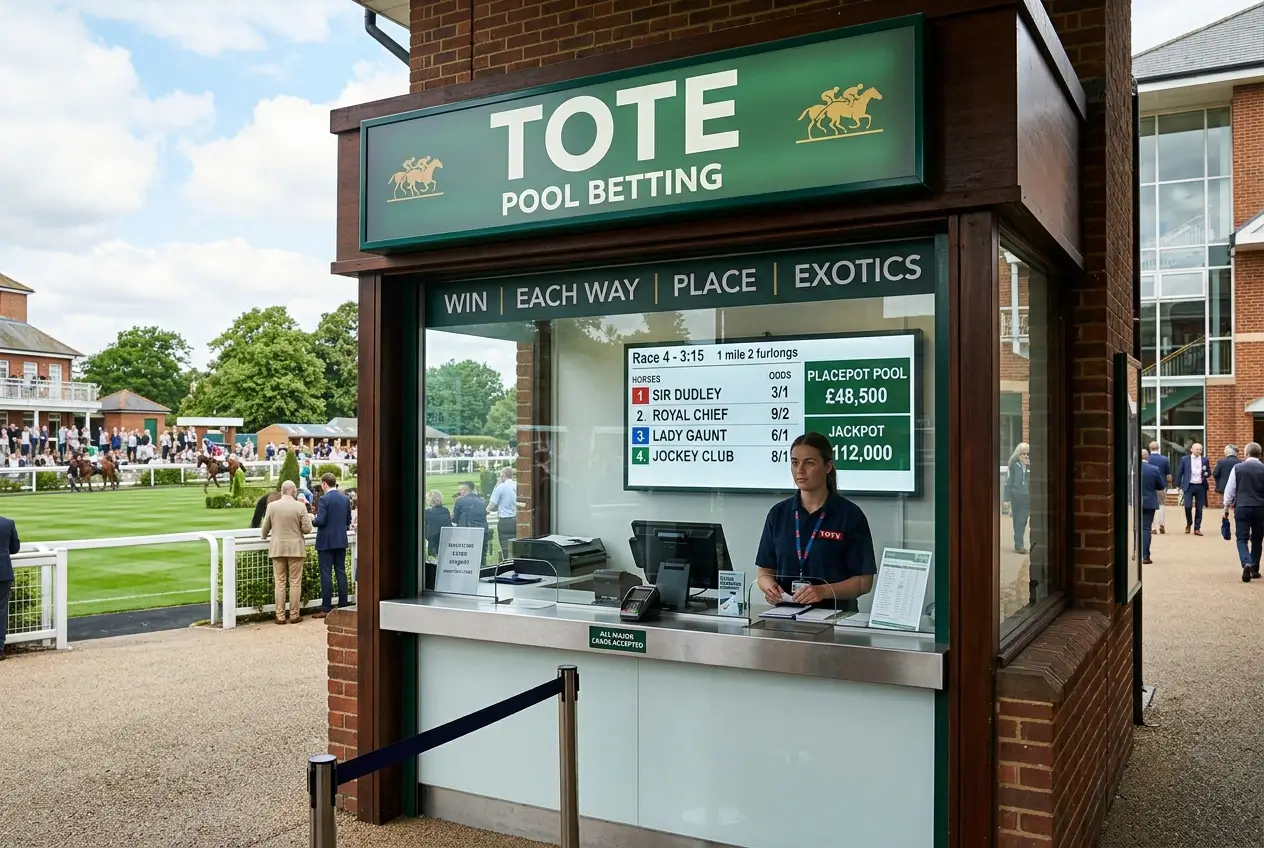
No. The quaddie declares a dividend after all four races have been run, based on the pool and the number of winning units. You cannot know your return at the time of placing the bet. You can see approximate ‘will-pays’ on the Tote board that indicate projected dividends as the pool develops, but these are estimates that change until the pool closes.
This material was created by the FourCast team.
Related posts

Quaddie Tips: How to Read, Judge and Use Daily Selections
Pool Betting vs Fixed Odds: Where the Value Evidence Points