
Quaddie Betting Terms: A Practical Glossary of Pool Betting Language
 Available in US
The vocabulary before the bet
Every specialist field has its own vocabulary, and pool betting has accumulated one over the better part of a century. Some terms are straightforward and widely understood; others are genuinely confusing because the same concept goes by different names in different jurisdictions, or because a term means something slightly different in an Australian context versus a British one. I’ve had enough conversations where someone quoted a dividend figure from an Australian tip sheet without realising they were reading a per-unit return in Australian dollars that had no direct UK equivalent to know that a clear vocabulary matters. This glossary covers the terms you’ll encounter regularly in quaddie and Tote pool betting, explained precisely and with the cross-jurisdictional context where it matters. The full picture is in our complete guide to quaddie betting.
Core pool betting terms
Pari-mutuel: from the French for “mutual stake,” this is the betting system in which all stakes are pooled, the operator deducts a commission, and the remaining pool is divided among winning tickets. The effective odds are determined by the distribution of money in the pool, not by a bookmaker setting prices. All Tote and TAB pool products in the UK and Australia are pari-mutuel.
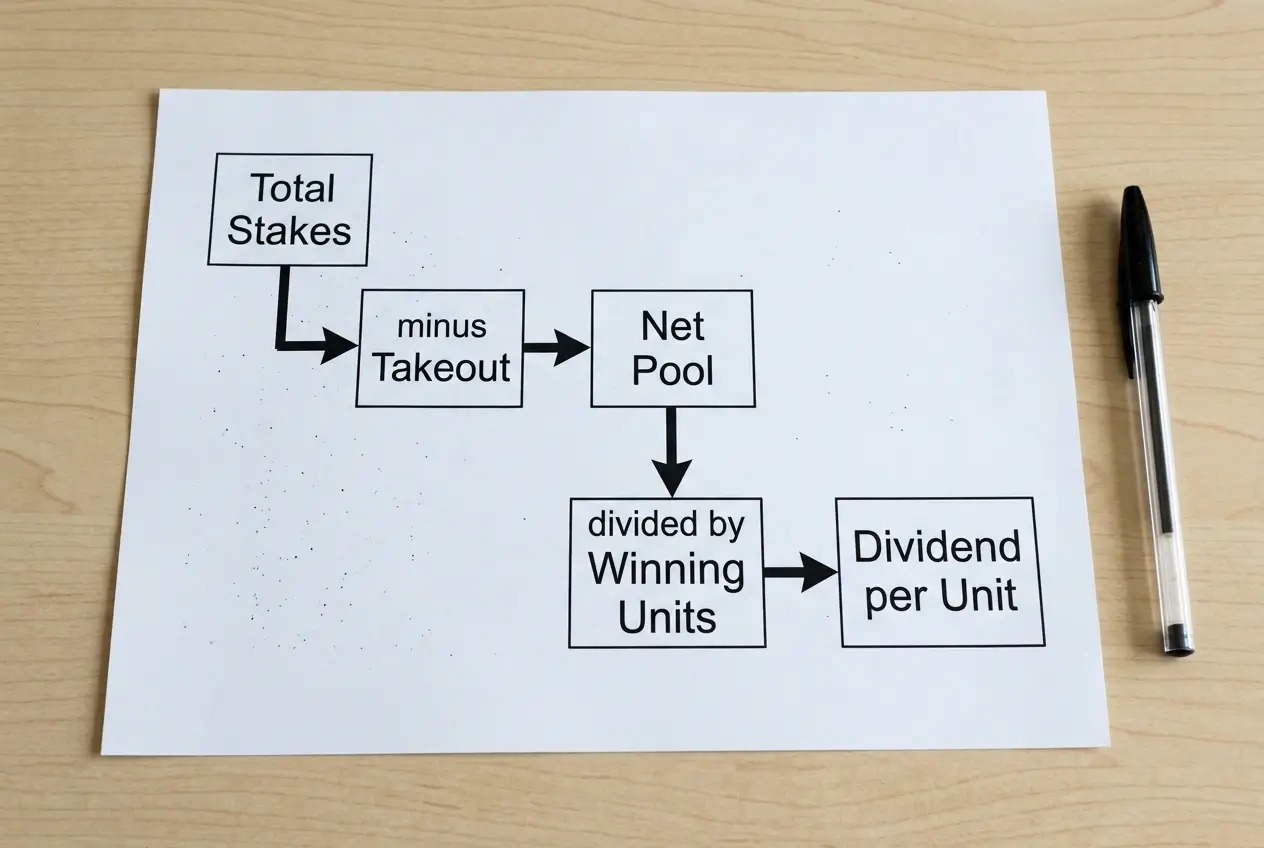
Takeout (also: commission or deduction): the percentage deducted from the gross pool by the operator before dividends are calculated. In UK pool betting this is typically 15–17% on win and place pools, and higher on exotic products. The takeout funds the operator’s costs, statutory duties, and profit. The net pool — what remains after takeout — is what gets distributed to winning tickets.
Net pool: the gross pool minus the takeout. This is the amount from which dividends are paid. Divide the net pool by the total number of winning units and you get the declared dividend per unit.
Dividend: the declared return per unit to winning tickets. In UK Tote pools, dividends are declared per £1 unit. In Australian TAB pools, they are typically declared per $1 unit. A dividend of £150 means each £1 winning unit returns £150. A minimum £2 ticket in the UK holds 2 units and returns £300.
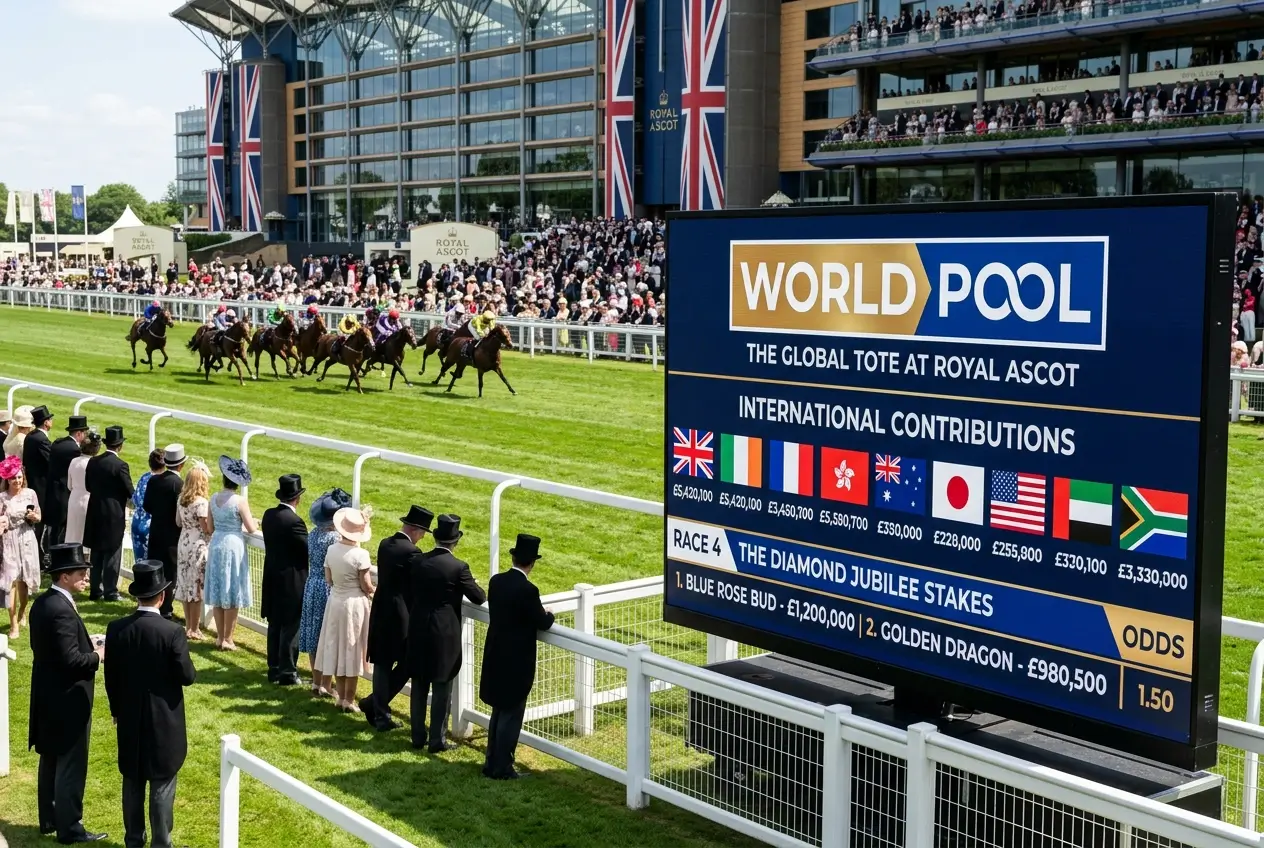
Commingling: the merging of pool bets from multiple jurisdictions into a single combined pool. The World Pool operated by the Hong Kong Jockey Club commingles bets from 27-plus jurisdictions into one pool for designated elite races, producing larger and more internationally diverse pools than any single-jurisdiction domestic product. In 2025, World Pool turnover reached HK$10.9 billion.
Multi-race pool terms
Quaddie (also: quadrella): the Australian four-leg pool bet requiring the winner of four designated races. First recorded in 1978 in a Tasmanian publication. The word is a contraction of “quadrella,” from the Latin prefix quadr- (four) and the Italian diminutive suffix -ella. In Australia, used interchangeably with “quadrella”; in the UK, has no direct equivalent product by this name.
Banker (also: standout or anchor): a single selection in one leg of a multi-race pool — a horse you’re committing to as the sole selection in that leg rather than spreading multiple runners. Banking one leg reduces your combination count by a factor equal to the number of selections you would otherwise have had in that leg.
Flexi betting: the mechanism allowing a punter to take a fractional percentage of the full unit stake per combination. At 25% flexi, you pay 25% of the full-unit cost and receive 25% of the declared dividend if your combination wins. Flexi is standard on all Tote and TAB pool products. The Tote minimum absolute stake is £2; flexi percentages let you cover wide combination structures within any budget.
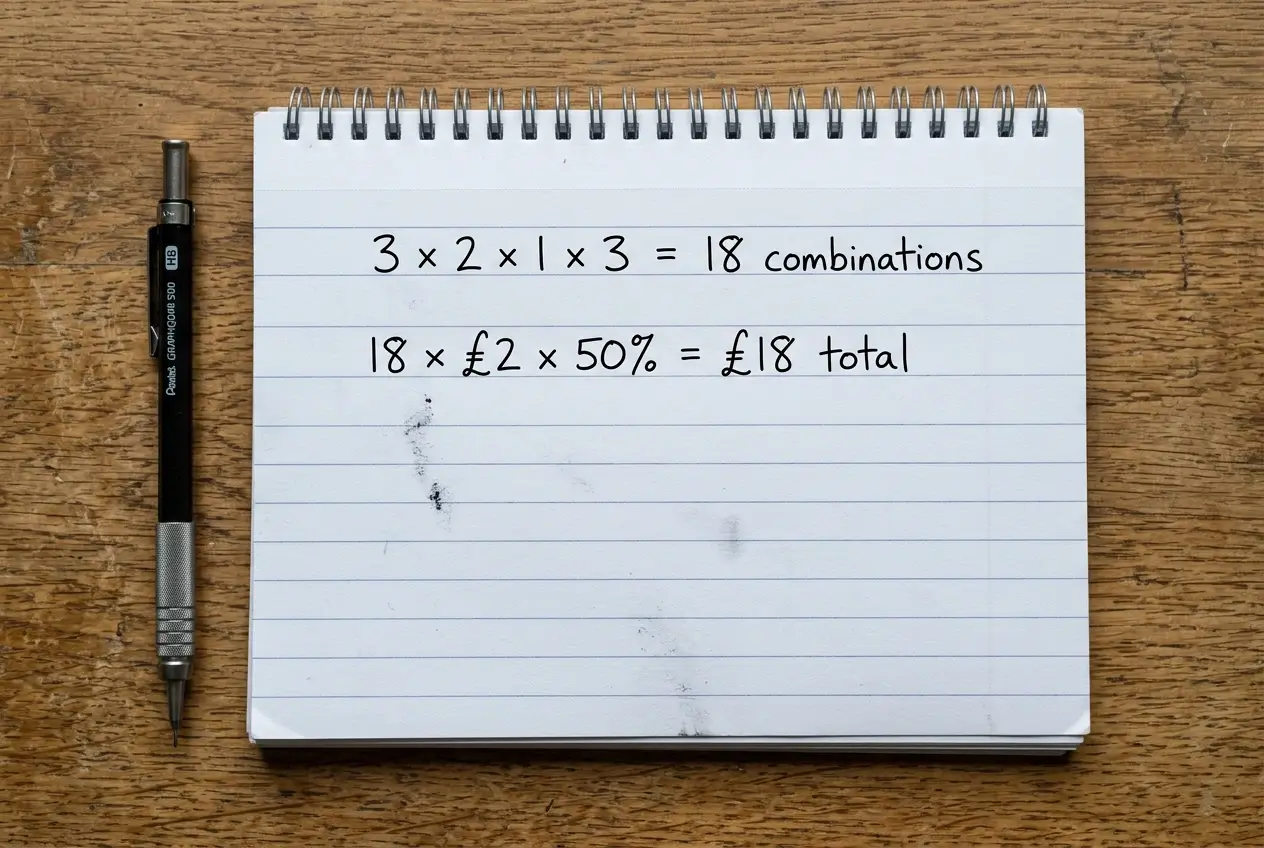
Combination: one specific sequence of selections across all legs of a multi-race pool. A ticket with 3 selections in leg 1, 2 in leg 2, 1 in leg 3, and 3 in leg 4 covers 3x2x1x3 = 18 combinations. The total ticket cost is combinations x unit stake x flexi percentage.
Perm (also: permutation): selecting multiple runners in one or more legs to cover multiple combinations with one ticket. The act of perming is standard Placepot and quaddie terminology in the UK and Australia respectively.
Carry-over (also: rollover): the undistributed pool from a meeting where no winning ticket was held, held by the operator and added to the pool at the next designated meeting. Carry-over pools grow until claimed. The Tote Jackpot uses this mechanic; most Australian quaddies are non-carry-over (terminating) products.
Terminating pool: a pool that must be paid out on the day it runs, with consolation dividends if no ticket holds all correct selections. Contrasted with a carry-over pool. Consolation dividends are paid to the next-best partial result (e.g., three from four correct in a quaddie).
UK-specific Tote terms
Placepot: the Tote’s six-leg pool bet requiring a placed runner in the first six races at a meeting. The UK’s most popular pool product, available at every British meeting with a £50,000 daily guarantee and £1,000,000 Festival guarantee. Dividends have ranged from a few pounds on easy cards to £182,568 (the 2019 Cheltenham record).
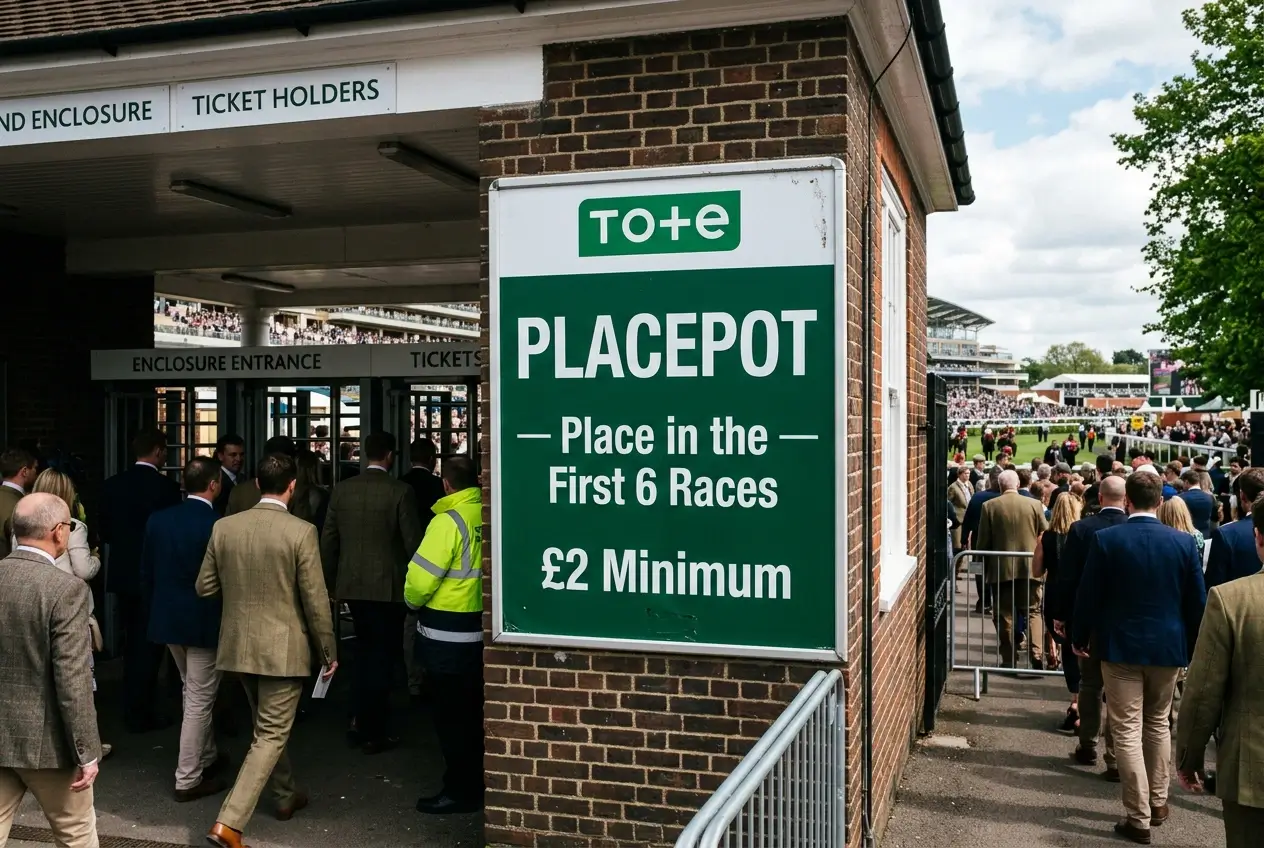
Quadpot: the Tote’s four-leg placed-runner pool covering races 3 through 6, the most common UK equivalent to the Australian quaddie in structural terms, though it requires placed runners rather than winners.
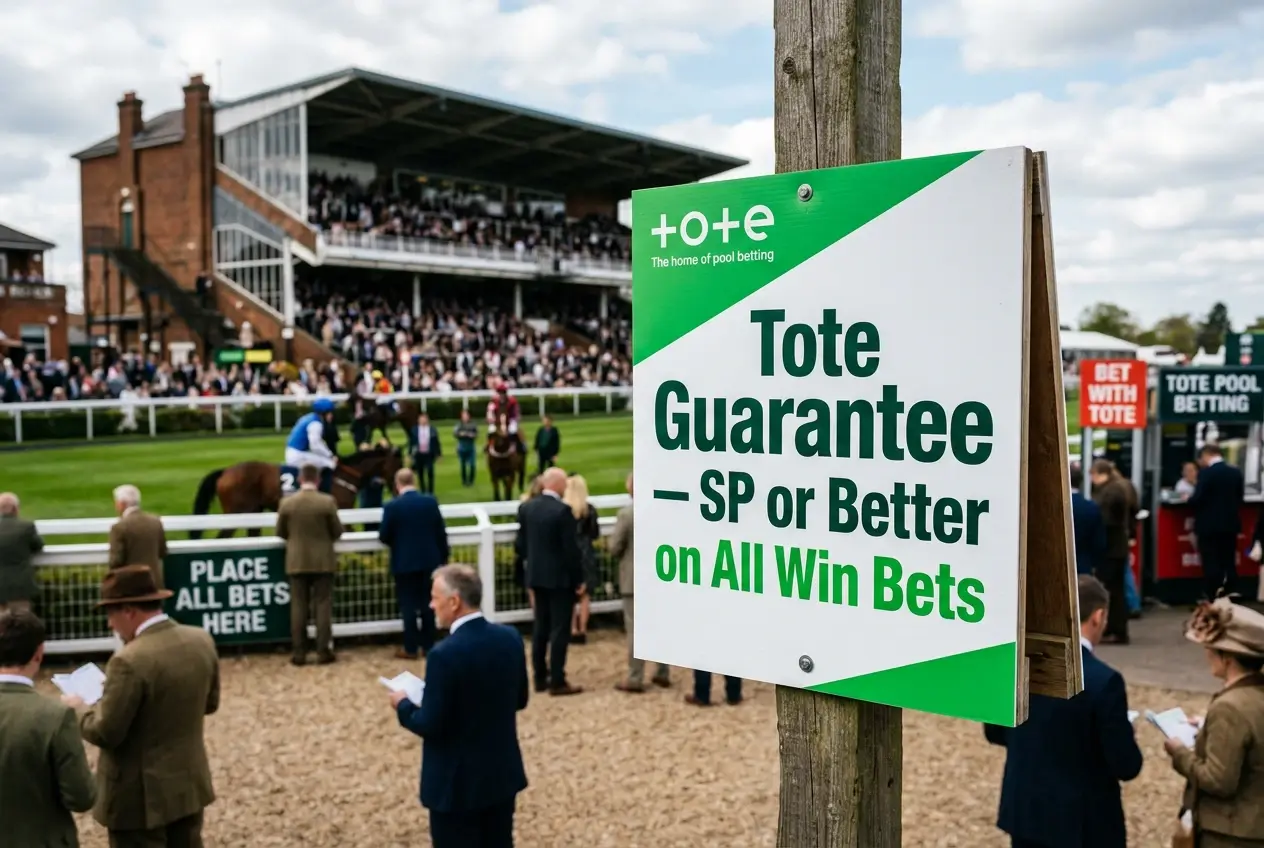
Tote Guarantee: the commitment that Tote win and place dividends will pay the industry Starting Price if the pool dividend falls below SP. An automatic floor applying to win and place bets, ensuring punters never receive less than the bookmaker’s equivalent.
Tote+: the 10% uplift on win/place dividends and 5% uplift on exotic pool dividends for bets placed through the Tote’s digital channels. Exclusive to the Tote app and tote.co.uk, not available on-course or through third-party platforms.
Starting Price (SP): the industry-agreed odds for each runner at the off, used as the reference point for the Tote Guarantee. Set by the official SP reporters based on on-course market activity at the start of the race.
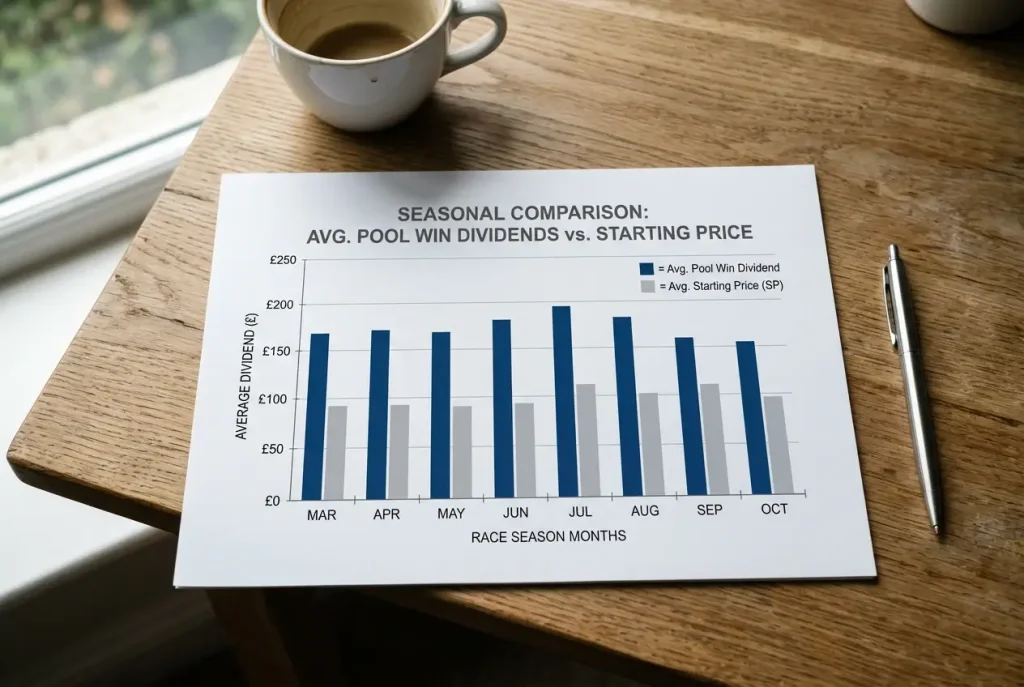
World Pool: the commingled international pool operated by the Hong Kong Jockey Club in partnership with the UK Tote Group, running on elite British, Irish, and Hong Kong racing. In 2025, declared dividends on World Pool days outperformed SP by £171.44 per race on average across British and Irish racing. For the broader context of how pool and fixed-odds returns compare, the pool betting versus fixed odds guide works through the evidence systematically. The terms in action: how to calculate a quaddie.
What is the difference between a banker and a perm?
A banker is a single selection in one leg — you commit to one horse only. A perm means selecting multiple horses in one or more legs to cover the resulting combinations with a single ticket. A permed leg multiplies your combination count; a banked leg contributes a factor of one to the multiplication, keeping that leg’s cost impact minimal.
What does ‘declared to a £1 unit’ mean?
It means the dividend figure is the return per £1 of stake on the correct winning combination. Since the Tote minimum stake is £2, a minimum bet holds 2 units and returns double the declared per-unit figure. A declared dividend of £400 to a £1 unit on a £2 minimum single-combination ticket returns £800.
Are Australian and UK pool terms the same?
Mostly, but not entirely. The core pari-mutuel mechanics are universal — takeout, net pool, dividend per unit. The product names differ: Australia has ‘quaddie’ and ‘quadrella’; the UK has ‘Quadpot,’ ‘Placepot,’ ‘Jackpot.’ ‘Flexi betting’ is the same in both jurisdictions. ‘Commingling’ is used in both but refers specifically to the World Pool mechanism when used in a UK context.
This material was created by the FourCast team.
Related posts

Quaddie Tips: How to Read, Judge and Use Daily Selections
Pool Betting vs Fixed Odds: Where the Value Evidence Points