
How Quaddie Dividends Are Calculated: From Net Pool to Your Return
 Available in US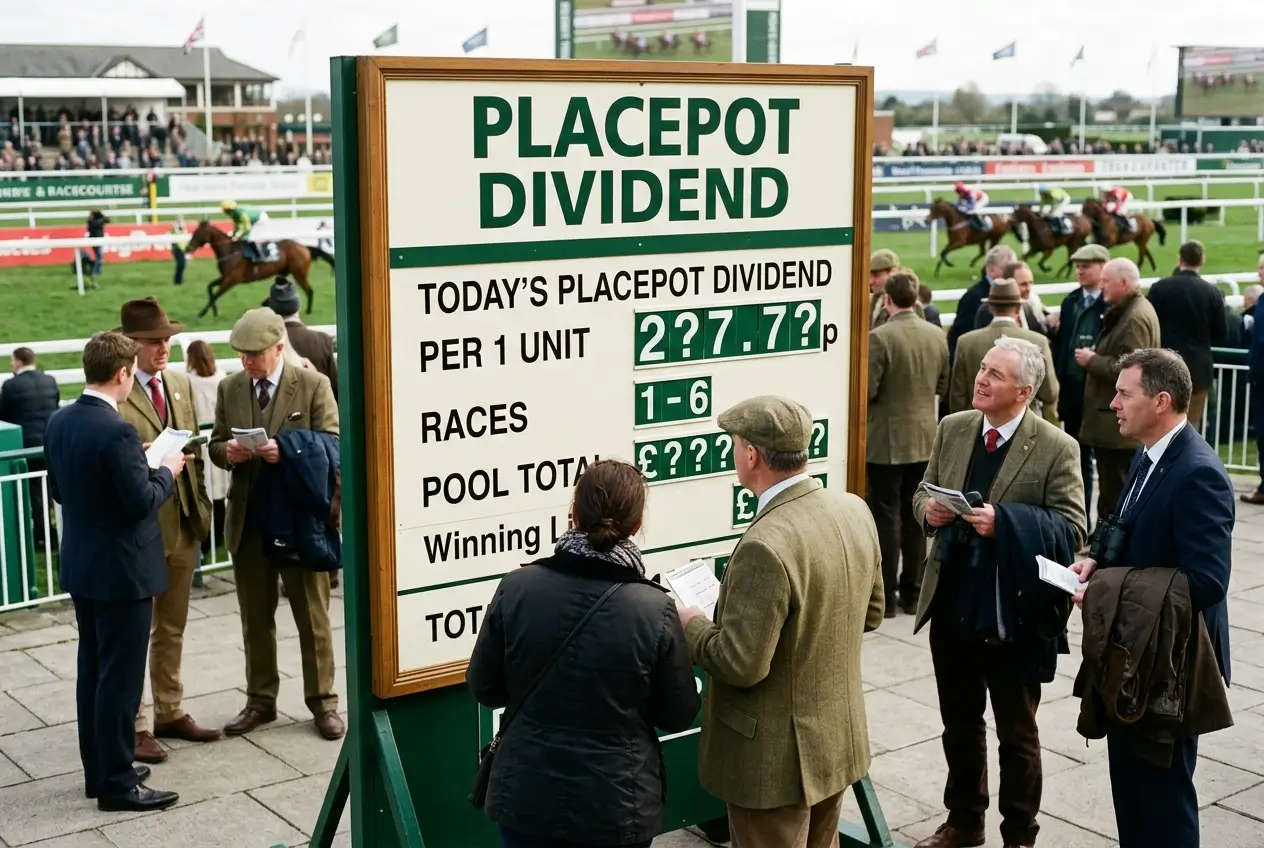
The maths is simpler than the dividend figure suggests

When you see a quaddie or Placepot dividend of, say, £840 declared to a £1 unit, it can feel like the result of some inscrutable calculation performed in a back room somewhere. The actual arithmetic is transparent — and understanding it changes how you think about entering pool products and what size dividend is plausible on any given card. Punters who understand the calculation make better structural decisions than those who just look at the final number in isolation. The calculation demystifies the product: a big dividend is not luck dressed up in numbers, it’s the predictable outcome of a pool being large and winning tickets being few. The full picture is in our complete guide to quaddie betting.
The dividend calculation for any pari-mutuel pool — quaddie, Placepot, Quadpot, or any other — follows the same three-step process. Step one: all stakes are pooled together to form the gross pool. Step two: the operator’s takeout percentage is deducted, leaving the net pool. Step three: the net pool is divided among all the winning units. The result is the dividend per unit — the figure declared at the end of the race or race sequence. That’s it. There’s no mystery. The dividend is just the net pool divided by the number of winning units.
Net pool after takeout
The gross pool is the total of all stakes placed in the pool before takeout. Every pound bet into the quaddie pool by every punter goes into this gross figure. On a quiet midweek meeting with modest participation, the gross pool might be a few thousand pounds. On a Cup day at Flemington or a Gold Cup day at Cheltenham, it might be tens of millions.
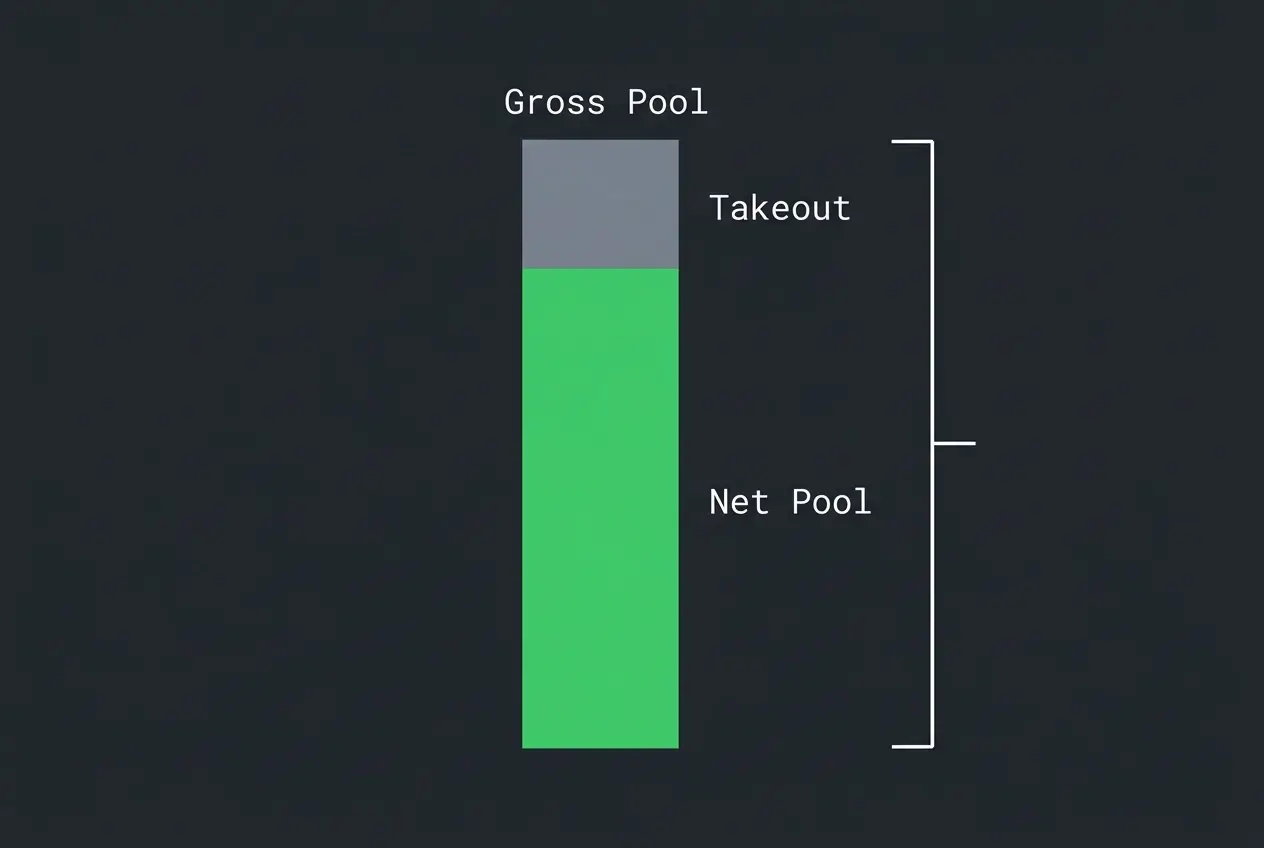
The takeout is the operator’s commission — the percentage deducted from the gross pool before any dividends are calculated. In UK pool betting, takeout rates vary by product: roughly 15-17% on win and place pools, and somewhat higher on multi-leg exotic products like the Placepot and Quadpot. The takeout covers the operator’s costs, statutory duties — General Betting Duty runs at 15% for racing operators in the UK — and profit. After takeout, the net pool is what remains, and the net pool is the total amount available for distribution to winning tickets.
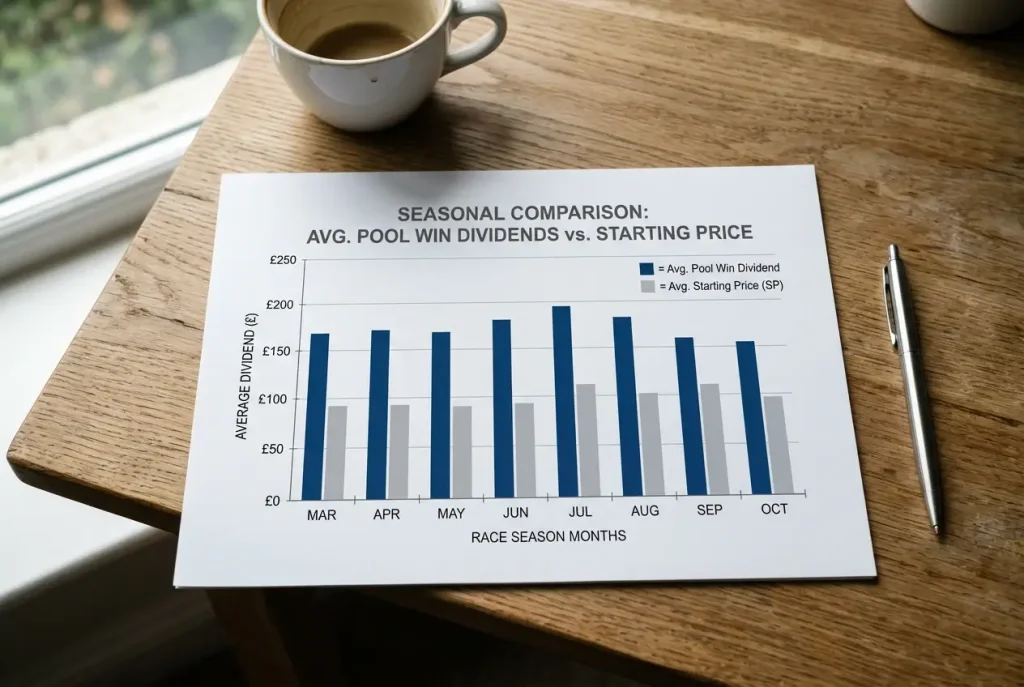
On World Pool race days, where commingled bets from multiple jurisdictions supplement the domestic pool, the evidence shows that Tote win dividends outperformed equivalent Starting Price returns by an average of £171.44 per race across British and Irish meetings in 2025. That figure represents the aggregate effect of a larger, more diverse pool distributing value more generously than a domestic-only pool or a fixed-odds market would. The takeout percentage doesn’t change with commingling — it’s still collected on the net pool — but the larger gross pool before takeout means the net pool available for distribution is simply bigger.
Dividing by the winning units
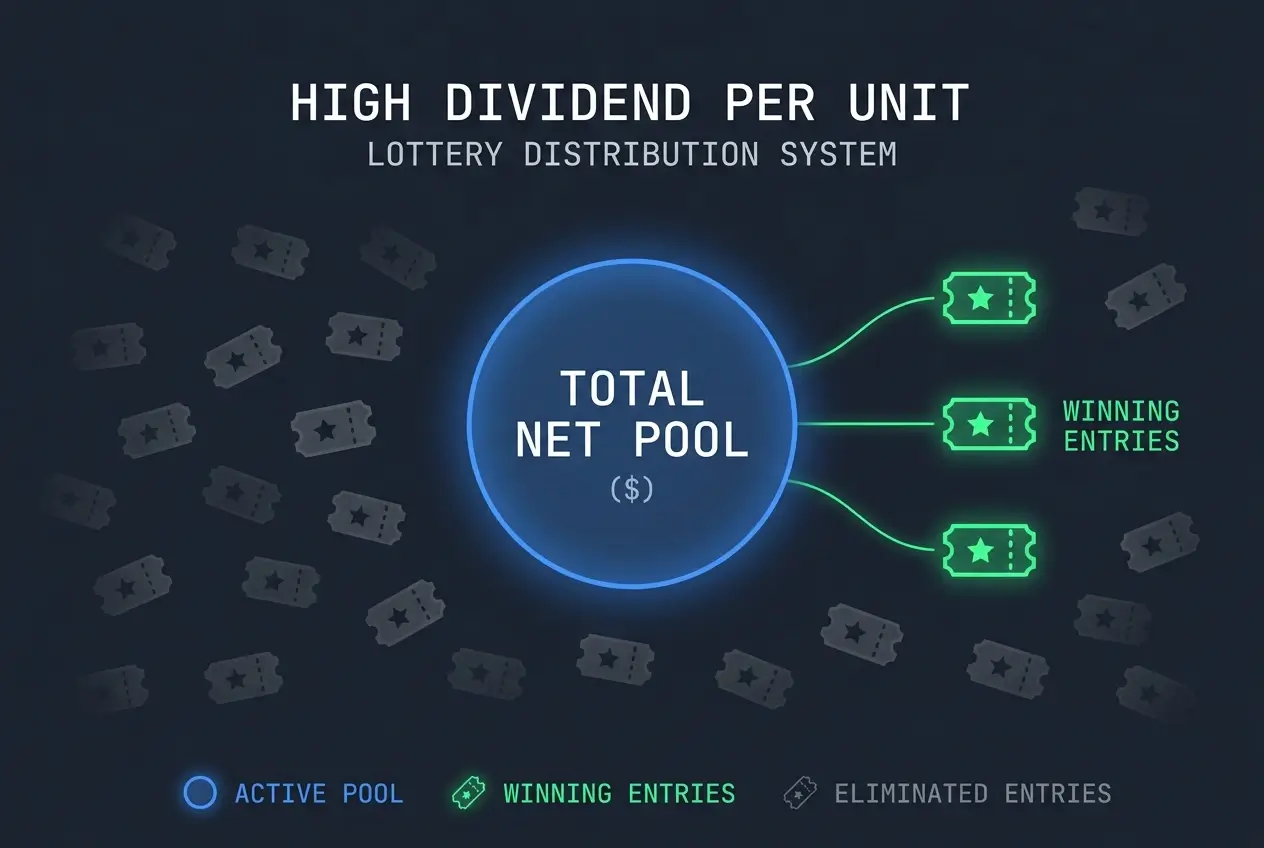
Once the net pool is established, the dividend per unit is calculated by dividing the net pool by the total number of winning units. A winning unit is the basic unit of stake corresponding to one correct combination. If the quaddie pool is structured to pay per £1 unit, then each £1 correctly placed on the winning combination counts as one unit. If you staked £10 on the winning combination, you hold 10 units. If you staked at 50% flexi on a £2 minimum-unit ticket, you hold 1 unit (£2 x 50% = £1, which is one unit at the £1 declared-to level).
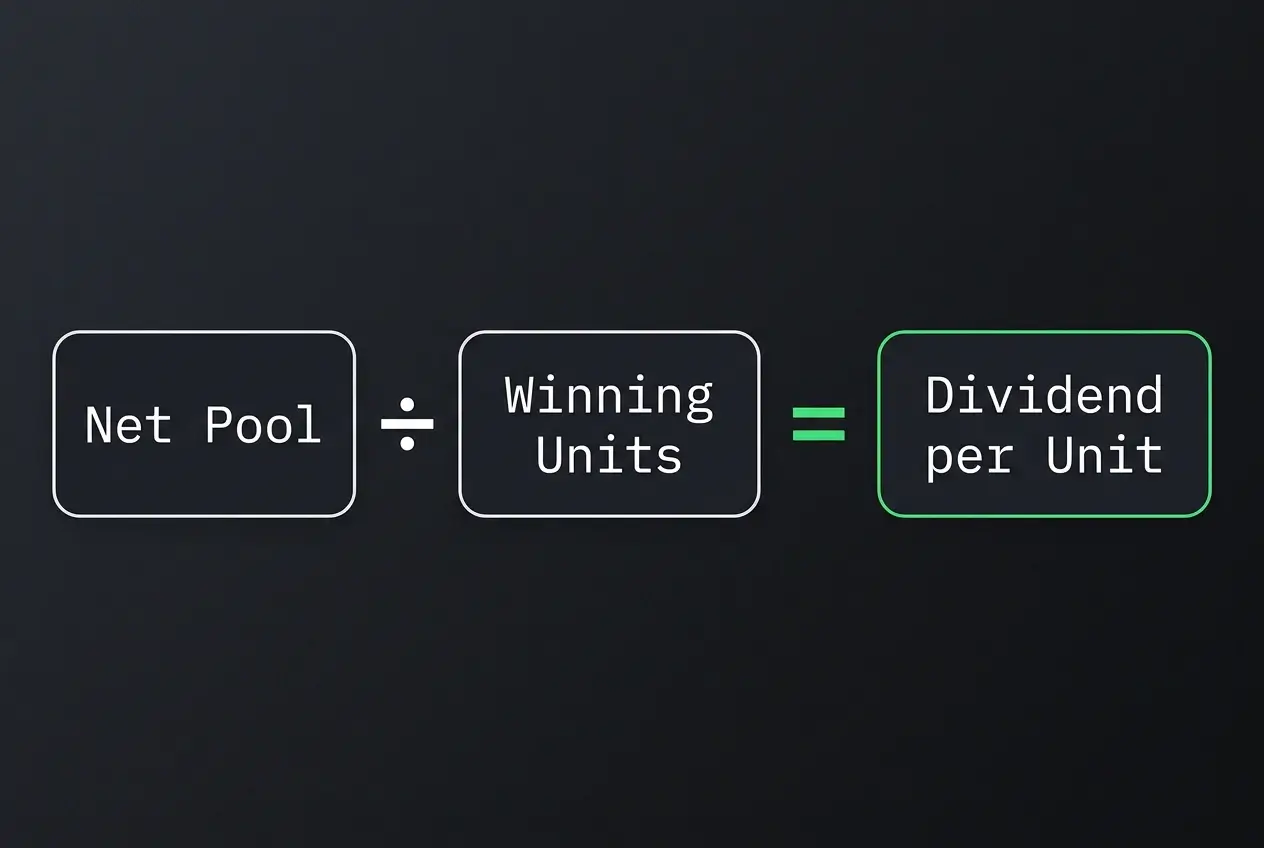
The declared dividend is always per unit at a standard denomination — typically £1 for UK pools, though the Tote’s minimum stake is £2. The dividend you see declared (for example, “Placepot: £340 to a £1 unit”) means each winning £1 unit returns £340. A punter who held 4 units (a £8 stake at minimum £2 per unit covering 4 combinations) returns 4 x £340 = £1,360.
The Melbourne Cup 2024 quaddie dividend of A$512,000 was declared per winning unit at the standard Australian unit stake. The exact number of winning units in that pool would have been extremely small — probably single figures — given the combination of three roughie winners and a thin coverage profile among the ticket-holding public. Divide a large net pool by a small number of winning units and the result per unit is enormous. That’s the mechanism, stripped bare: A$512,000 = net pool divided by winning units, where winning units was a very small number.
Why the same result pays differently to different punters
Two punters can hold the correct winning combination in a quaddie and receive different absolute returns — even though the dividend per unit is identical for both. The difference comes from how many units each holds and whether they were betting at a flexi percentage. This is one of the most commonly misunderstood aspects of pool betting returns.
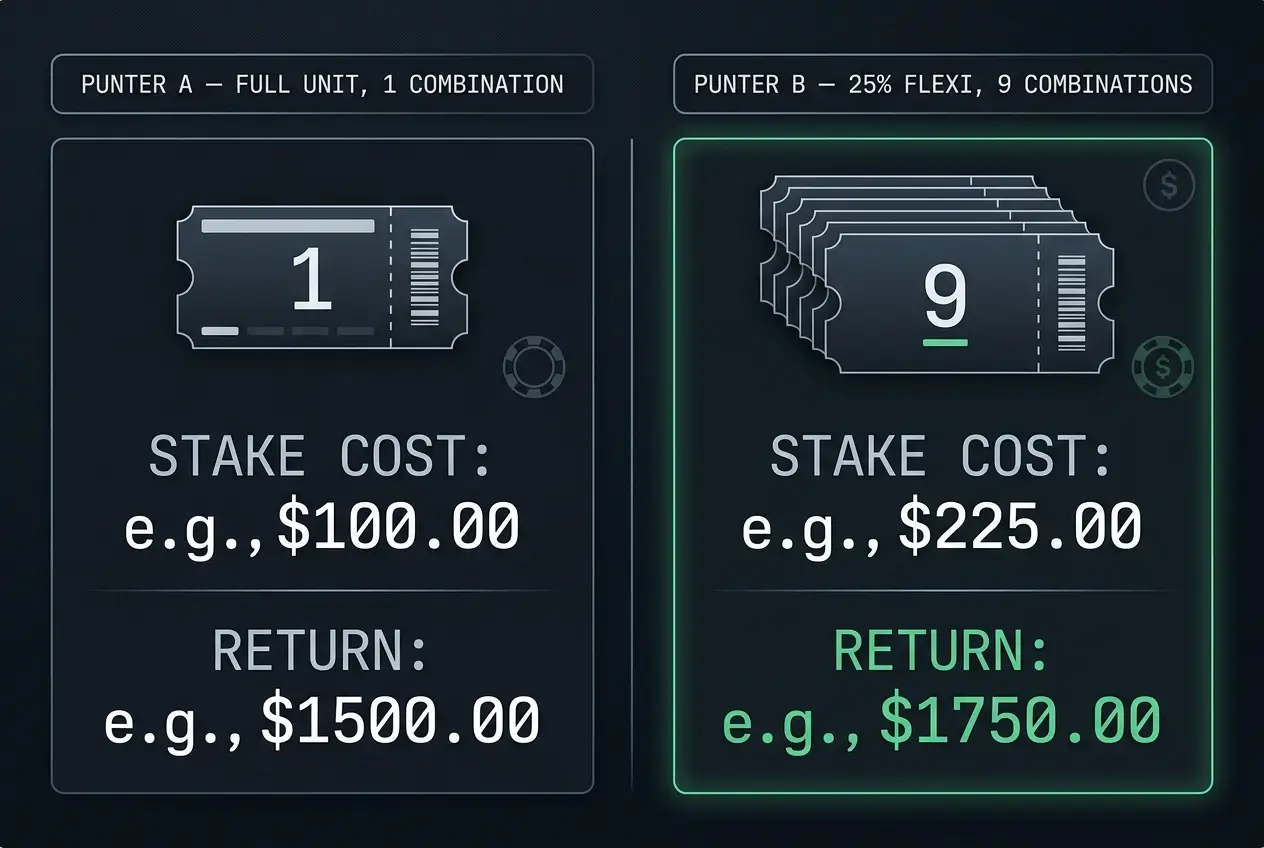
Punter A places a full-unit bet on a 1-combination quaddie ticket (one selection in each of four legs). At £2 per unit, the ticket cost £2. The quaddie declares a dividend of £850 to a £1 unit. Punter A’s return: 2 units x £850 = £1,700. Punter B places a 25% flexi bet on a 9-combination ticket. At £2 minimum unit and 25% flexi, the ticket cost 9 x £2 x 25% = £4.50. Punter B holds 9 combinations x 25% flexi = 2.25 units worth. Return: 2.25 x £850 = £1,912.50.
Punter B spent £4.50 and received £1,912.50. Punter A spent £2 and received £1,700. The dividend per unit was the same for both — £850. The difference in absolute return came from the number of units held and from the cost structure the punter chose. Understanding this interaction between combination count, flexi percentage, and the declared dividend is essential to knowing what any pool bet might realistically return before you place it. For a full explanation of how combination counts and flexi percentages interact in the calculation, the biggest quaddie payouts guide shows how these mechanics produce record returns at the extreme end. What takeout does to the pool: pari-mutuel betting.
How is a quaddie dividend worked out?
Three steps: sum all stakes to get the gross pool; deduct the operator’s takeout percentage to get the net pool; divide the net pool by the total number of winning units held across all tickets. The result is the dividend per unit — what every £1 unit correctly placed on the winning combination returns.
What does ‘declared to a £1 unit’ mean?
It means the dividend figure quoted is the return per £1 of stake on the winning combination. Since the Tote minimum stake is £2, a minimum winning ticket automatically returns twice the declared per-unit figure. If the Placepot declares £200 to a £1 unit, a £2 ticket returns £400, and a £10 stake returns £2,000.
Why did two people with the same four winners get different amounts?
Because they likely held different numbers of units. If one punter had a larger stake, more combinations, or a higher flexi percentage, they held more winning units. The dividend per unit is identical for both — the difference in absolute return reflects the difference in how many units each person held across their ticket.
This material was created by the FourCast team.
Related posts

Quaddie Tips: How to Read, Judge and Use Daily Selections
Pool Betting vs Fixed Odds: Where the Value Evidence Points