
Cheltenham Festival Placepot: Big Pools, Big Dividends, Tough Cards
 Available in US
The four days where a £2 line has changed people’s lives
I’ve had some decent Festival Placepots over the years, and I’ve had many more that fell apart in the handicap hurdle on day two when something at 25-1 found the line to deny my third selection. The Cheltenham Festival Placepot is, in my experience, the single most discussed pool product in British racing across the four days of the meeting. The conversation isn’t complicated: enormous guaranteed pools, an extremely difficult card, and occasional dividends that remind you what pool betting is for. The record is £182,568 declared to a £2 stake in 2019 — a figure that still gets quoted regularly because nothing else in British pool betting comes close to illustrating the product’s potential in a single number. The full picture is in our complete guide to quaddie betting.
The Tote guarantees a minimum Placepot pool of at least £1,000,000 for each of the four days of the Cheltenham Festival. That guarantee underpinned all four days of the 2024 Festival. It creates a floor — the pool will be at least a million pounds regardless of how much punter money flows in on any given day. In practice, Festival Placepot pools regularly exceed the guarantee substantially, because the combination of the guarantee announcement, media coverage, and the wider racing public’s engagement on Festival days drives turnover well above the floor.
The million-pound festival pools
The £1,000,000 guaranteed pool is not a typical Tote offering. The standard daily Placepot guarantee on an ordinary racing day is £50,000 — a twentieth of the Festival guarantee. That 20x step-up reflects the difference in scale between a mid-week provincial meeting and the Festival, both in terms of public interest and actual pool turnover. At Cheltenham in March, the Placepot attracts participation from punters who don’t normally touch pool betting — the combination of the Festival’s profile, the four-places handicap structure, and the publicised dividend potential draws in a much broader audience than the Tote’s regular customer base.
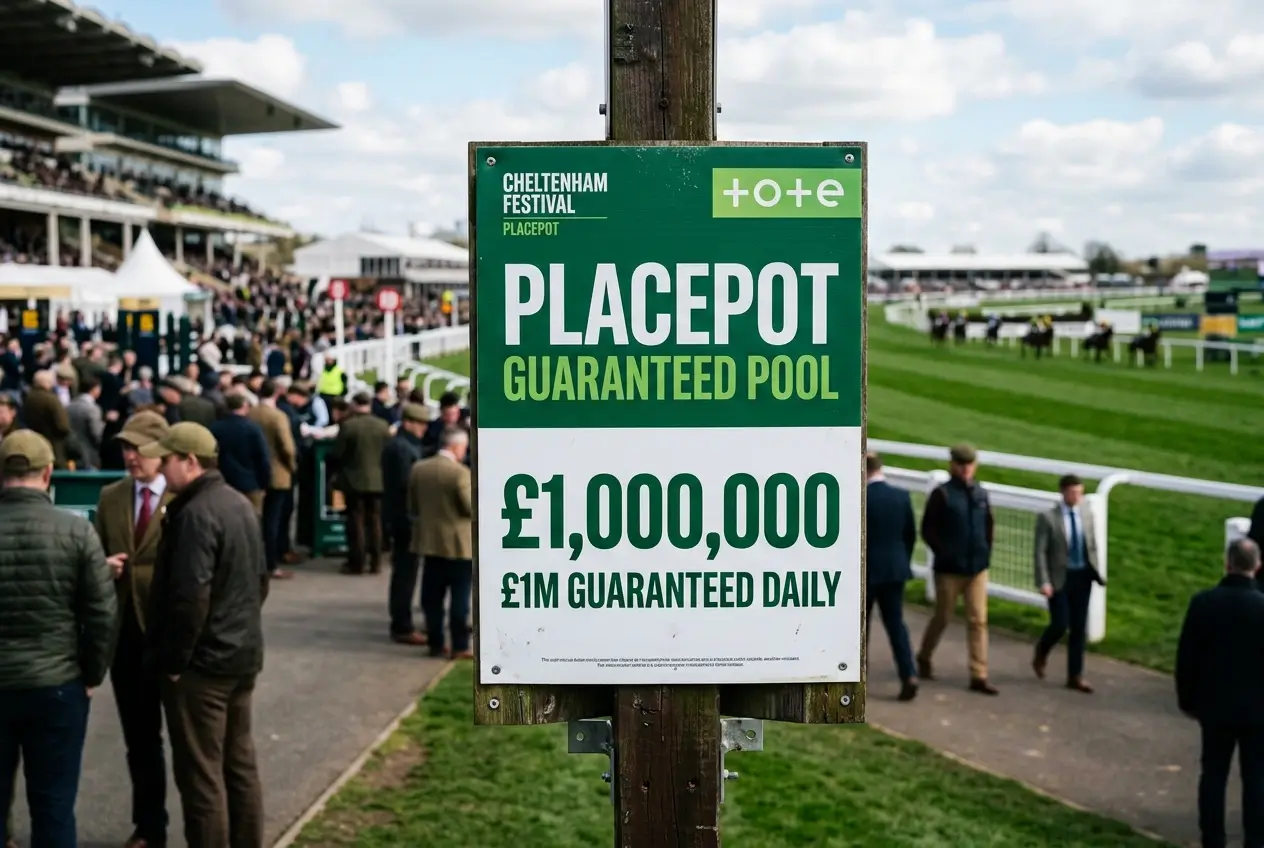
The guarantee matters even when the natural pool exceeds it, because it changes punter behaviour before the event. A punter who knows the Placepot pool is guaranteed to be at least a million pounds will engage with the product more seriously — more combinations, more consideration of flexi percentages, more attention to the structure — than they would for a pool where the potential prize is unknown. The guarantee is, in effect, a marketing mechanism that attracts the very turnover that makes the pool genuinely large.
On the biggest Festival days — Gold Cup day in particular — Placepot pools have historically reached multiples of the £1,000,000 guarantee. The combination of the guaranteed floor and the organic turnover from the world’s largest jump racing meeting produces pools that are unlike anything available at any other meeting in the British racing calendar.
Record and average dividends
The record Festival Placepot dividend is worth examining in detail. In 2019, a particularly unforgiving card eliminated almost every ticket in the pool before the sixth race. By the time the results were settled, the surviving tickets were so few in number that the net pool — divided among those tickets — produced a declared dividend of £182,568 to a £2 line. Per £1 unit, that’s £91,774.50 — a figure that also represents the record Cheltenham Placepot per-unit return.
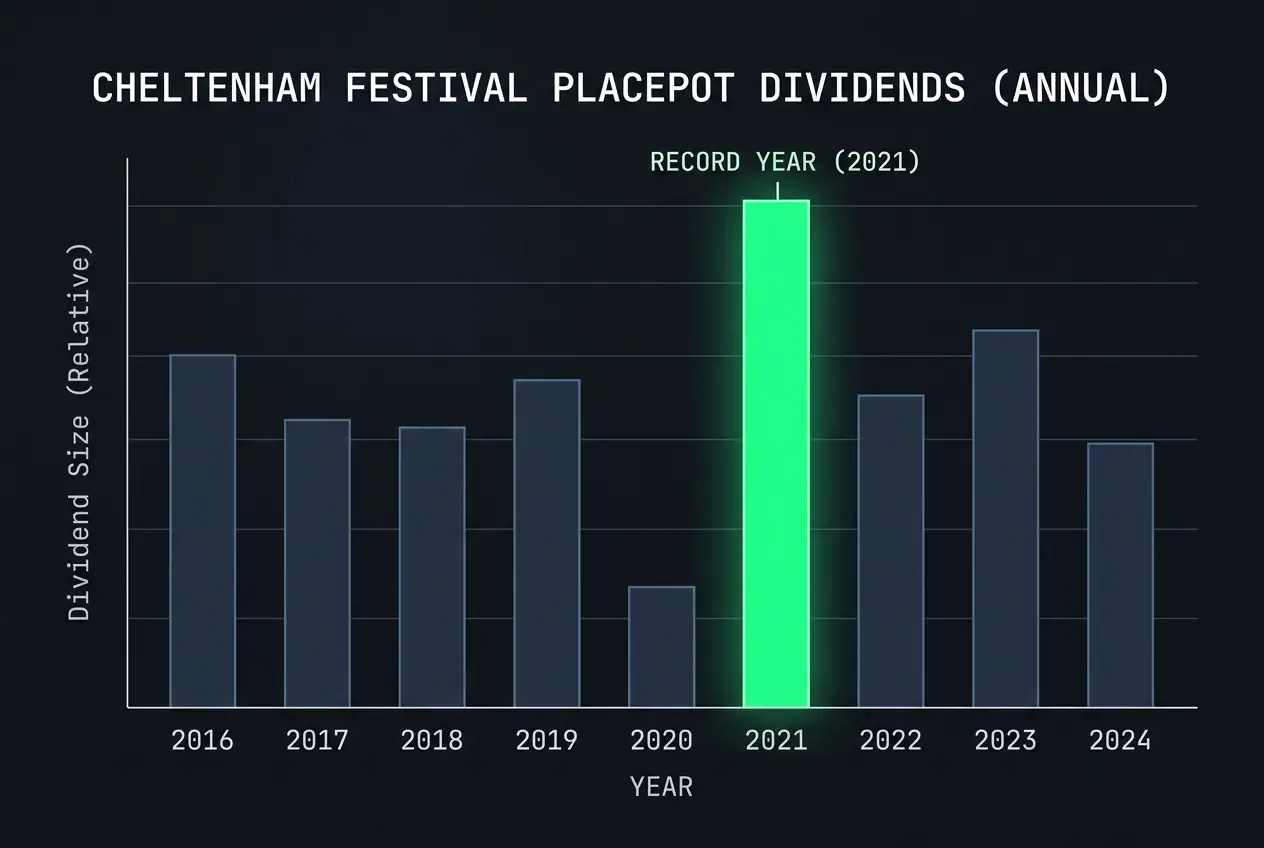
The 2025 Royal Ascot Placepot produced a dividend of £26,424.30 as the largest in that year’s UK calendar — achieved on just over 18 winning units. That Royal Ascot figure puts the Cheltenham records into perspective: even an exceptional Royal Ascot Placepot is a fraction of the record Festival return. The Cheltenham Festival’s combination of pool size, card difficulty, and field sizes creates conditions for extreme dividends that no other UK meeting replicates.
The average is more useful for planning purposes. The five-year average Placepot dividend at Cheltenham exceeds £2,361 — compared to a broader UK average of approximately £466 across all meetings in 2023. On Festival days specifically, the 2020-2024 average across the four-day meeting ran higher still, exceeding £7,126 per day. Those figures reflect both the large pool sizes and the regular difficulty of landing a Festival Placepot — the average dividend is as high as it is because the pool is frequently concentrated into very few winning tickets. For UK Placepot records beyond Cheltenham, the biggest Placepot payout guide covers the full history of record dividends.
Surviving a Festival card

The strategic challenge of the Festival Placepot is that every leg is, by the standards of ordinary racing, a hard race. The Festival card is the best jump racing in the world — twenty-eight races across four days, each one drawn from the cream of its division. There are very few races at the Festival where a punter can comfortably bank a single selection with the confidence they’d have on a mid-week novice hurdle at Huntingdon.

The practical consequence is that the Festival Placepot requires wider coverage per leg than a standard meeting would. The large guaranteed pool justifies that wider coverage — spending more on combinations is proportionate when the prize pool is a million pounds rather than fifty thousand. A punter who takes two or three runners in each of the six legs, accepting a larger flexi percentage to keep the cost manageable, has a reasonable structural approach for a Festival card. Trying to run a one-runner-per-leg structure across six competitive Festival races is, unless your form reading is genuinely exceptional, a high-probability path to elimination by leg three.
The Festival’s field sizes in handicap races — typically 20-25 runners, often paying four places — both help and hinder the Placepot punter. Four places in a 24-runner field sounds forgiving, but the competitive depth of Festival handicappers means the “obvious” placed horses are often beaten by lightly-raced or well-handicapped alternatives. Getting two runners into a 24-runner Festival handicap still leaves 22 runners that can eliminate your ticket. The average dividend figures suggest that the pool is regularly distributed among very few survivors — which means that surviving the Festival card with a winning ticket is both rare and, when it happens, spectacularly rewarding. The mechanics of the bet: the Tote Placepot.

How big are Cheltenham Festival Placepot pools?
The Tote guarantees a minimum Placepot pool of £1,000,000 for each day of the Cheltenham Festival. In practice, Festival pools regularly exceed the guarantee due to the combination of media coverage and wider public participation. The guarantee is confirmed for all four days, meaning punters know in advance that the prize floor is a million pounds per day across the whole meeting.
What is the biggest Cheltenham Placepot dividend?
The record Cheltenham Festival Placepot dividend is £182,568 declared to a £2 stake, set in 2019 when a particularly difficult card eliminated nearly every ticket in the pool. Per £1 unit, that’s £91,774.50. It remains the largest single Placepot payout in the history of the Cheltenham Festival.
Why are Festival Placepots so hard to land?
Because the Cheltenham Festival card is the most competitive jump racing programme of the year. Every race contains high-quality horses, and handicaps involve large fields of well-assessed runners where the placed-horse outcome is genuinely difficult to predict. The average dividend figures reflect how often the pool is concentrated into very few surviving tickets — difficulty is high, but so is the reward when your ticket survives.
This material was created by the FourCast team.
Related posts

Quaddie Tips: How to Read, Judge and Use Daily Selections
Pool Betting vs Fixed Odds: Where the Value Evidence Points