
Turbo Quaddie Explained: The Boosted Four-Leg Pool
 Available in US
When an operator adds “turbo” to a pool, the first question is who’s paying for it
I’ve been sceptical of branded betting products ever since a tote operator at a country meeting handed me a flyer for their “Power Quaddie” with a look that suggested I was about to discover something life-changing. The bet was identical to a standard quaddie. The difference was a guaranteed minimum pool — funded by the operator — designed to make the dividend floor higher than the raw turnover would otherwise support. That’s the turbo quaddie in a nutshell: a standard four-leg pool bet with an operator-injected boost to the pool size or dividend minimum. The full picture is in our complete guide to quaddie betting.
A turbo quaddie is not a structurally different type of bet. You still select the winner of four designated races. You still enter a pari-mutuel pool where the dividend is calculated by dividing the net pool among the winning units. The “turbo” element is a marketing and financial mechanism, not a change to the bet itself. The operator seeds the pool with additional funds — either a guaranteed minimum pool size, a minimum dividend per unit, or both — to make the product more attractive to punters who might otherwise find the raw pool too thin to bother with.

What makes a quaddie “turbo”
The defining feature of a turbo quaddie is operator-backed financial support for the pool. This takes one of a few forms in practice. The most common is a guaranteed minimum pool: the operator commits to a floor — say, A$50,000 or A$100,000 — regardless of how much actual punter money flows in. If turnover falls short of that floor, the operator tops it up. The dividend calculation then runs on the inflated pool, so winning tickets receive a share of a larger pot than the raw bet volume would have generated.
A second variant is a guaranteed minimum dividend per winning unit. Instead of seeding the pool as a whole, the operator commits to paying at least a specified return — perhaps A$5 per $1 unit — even if the natural pool arithmetic would produce a lower figure. This is effectively a price floor on the product, similar in concept to the Tote Guarantee that underpins UK win and place bets with a promise to match or beat the Starting Price.
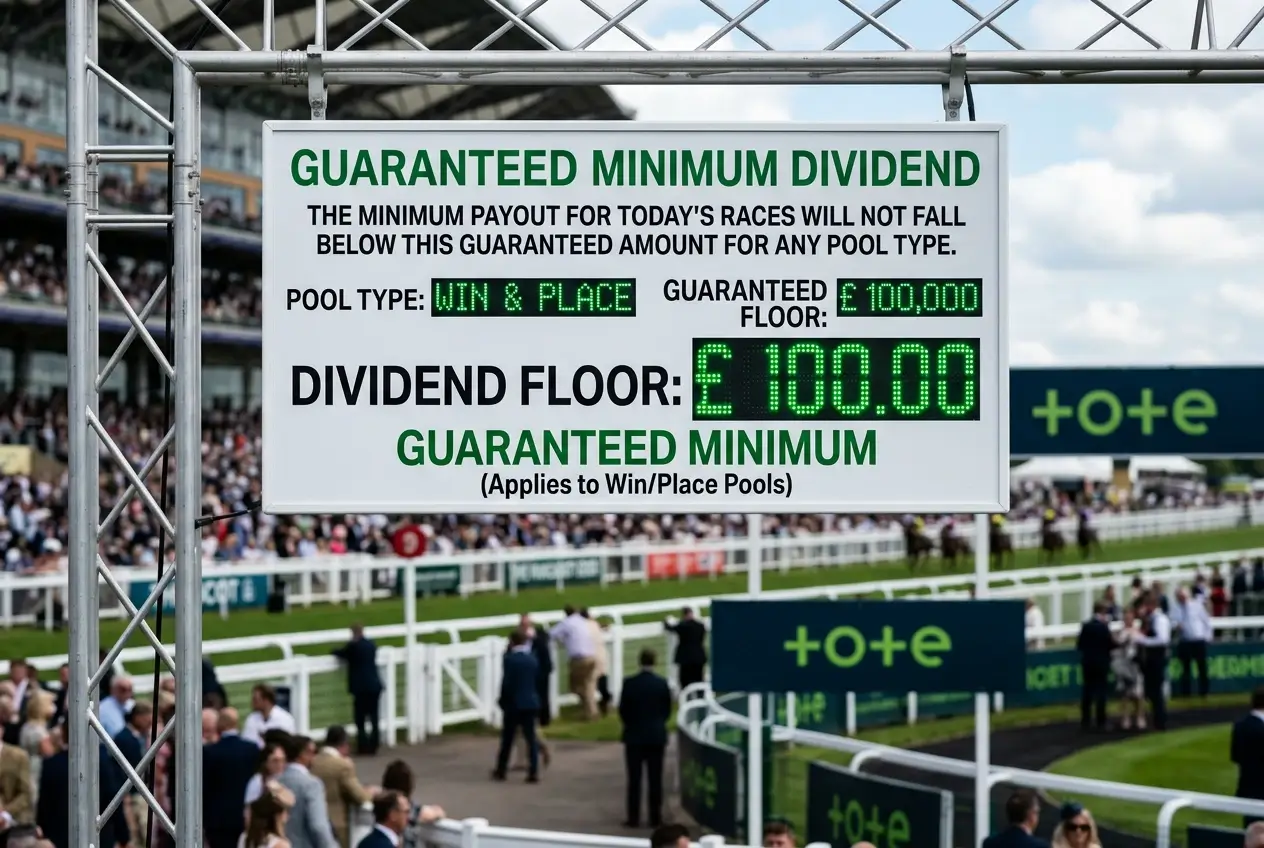
A third approach, used on premium race days, combines a seeded pool with promotional marketing. The operator publicises the guaranteed minimum alongside the race card, which attracts more punter money, which in turn further inflates the pool beyond the seed amount. On those days the “turbo” label becomes partly self-fulfilling — the marketing draws the turnover that justifies the larger pool.
From a punter’s perspective, the practical effect is that a turbo quaddie on a thin card behaves less erratically than a standard quaddie would. In a natural pool with low turnover, a single unbackable winner can distort the dividend wildly — because so few tickets hold that winner, the payout per unit balloons. Operator seeding smooths that variance by ensuring the pool is large enough that no single result creates an extreme outlier.

Turbo versus standard versus terminating
It helps to line up the three main quaddie variants side by side, because the differences are practical rather than conceptual. A standard quaddie is an unguaranteed pool: whatever turnover comes in, minus the operator’s take, gets divided among winning tickets. The dividend can be enormous (if few tickets win) or modest (if many do). There’s no floor and no ceiling.
A terminating quaddie is a standard pool with a specific rule about payout timing: the pool must be paid out on the day it’s run. If no ticket holds all four winners, a consolation dividend is declared to the best partial results. There’s no carry-over to the following meeting. Terminating quaddies are used on certain designated race days or by operators who don’t want the administrative complexity of managing rolling jackpot pools. For more on how those consolation rules work, the terminating quaddie guide covers the mechanic in full.
A turbo quaddie adds the operator-backing layer to either of the above. You can have a standard turbo quaddie (seeded pool, no carry-over restriction) or a terminating turbo quaddie (seeded pool, must pay on the day). The “turbo” label doesn’t specify which payout rule applies — that’s determined separately by the operator’s product terms.
What all three share is the core pari-mutuel structure. The winning ticket’s return is always a function of the pool size and the number of winning units — the turbo element changes the effective pool size, not the underlying calculation.
Is a turbo quaddie worth chasing
This is where I’d encourage some honest scepticism. The guaranteed pool is not free money — it’s a marketing cost that operators build into their business model. By seeding a pool to attract turnover, the operator is essentially paying to generate volume that creates more overall revenue from the takeout percentage. The punter benefits from a more stable dividend floor, but the structural advantage of the pool — that it can produce genuinely outsized returns when form falls in an unexpected direction — is partially offset by the smoothing effect of the guarantee.
Racing Victoria’s own financial records from the 2024 fiscal year showed that the authority had budgeted for an operating deficit, which is a reminder that the economics of Australian racing are under pressure at every level. Operators offering guaranteed turbo pools are doing so competitively, not charitably. The guarantee makes the product more attractive to casual punters who don’t want to risk entering a thin pool that might pay next to nothing — and that’s a legitimate consumer benefit. But experienced quaddie punters sometimes prefer the unguaranteed product on major cards, where the natural pool is already deep enough that thin-pool distortion isn’t a concern.

The UK doesn’t have a product explicitly labelled “turbo quaddie.” The Tote Placepot’s guaranteed minimum pool — £50,000 daily, rising to £1,000,000 on festival days — performs a similar function for the Placepot, providing a dividend floor that makes the product viable even when turnover is lower than average. That’s the closest structural parallel in the British market, even if the terminology and the bet mechanics differ. The pool that must pay out: the terminating quaddie.

For punters evaluating whether to enter a turbo quaddie, the key question is whether the guaranteed minimum is set at a level that genuinely changes the bet’s risk profile, or whether it’s a nominal figure that would rarely be triggered anyway. On a quiet provincial meeting with a $50,000 turbo guarantee, the support is meaningful. On a major metropolitan Saturday with $2 million in natural turnover, the “turbo” label is essentially decorative.
How is a turbo quaddie different from a normal one?
A turbo quaddie has an operator-backed guarantee supporting the pool — either a minimum pool size, a minimum dividend per unit, or both. The bet mechanics are identical to a standard quaddie: pick the winner of four designated races. The ‘turbo’ element means the pool is artificially inflated if natural turnover falls below the guaranteed floor, which smooths out extreme low-end dividends on thin-pool meetings.
Do turbo quaddies guarantee a bigger payout?
They guarantee a minimum, not a maximum. If the natural pool would have paid very little — because turnover was low — the operator’s seed money brings the dividend up to the floor. But on a meeting with strong natural turnover, the turbo guarantee is never triggered and the payout is determined by the actual pool in the normal way. A turbo quaddie cannot produce a smaller dividend than the guaranteed minimum, but it can produce any amount above it.
Are turbo quaddies available in the UK?
Not under that name. British Tote pools don’t use the ‘turbo’ label. The structurally similar concept is the guaranteed minimum pool — the Tote Placepot carries a £50,000 daily guarantee and £1,000,000 guarantees on major festival days — which ensures a pool floor in the same way a turbo quaddie does in Australia.
This material was created by the FourCast team.
Related posts

Quaddie Tips: How to Read, Judge and Use Daily Selections
Pool Betting vs Fixed Odds: Where the Value Evidence Points