Pari-Mutuel Betting Explained: How Pools Set the Dividend
 Available in US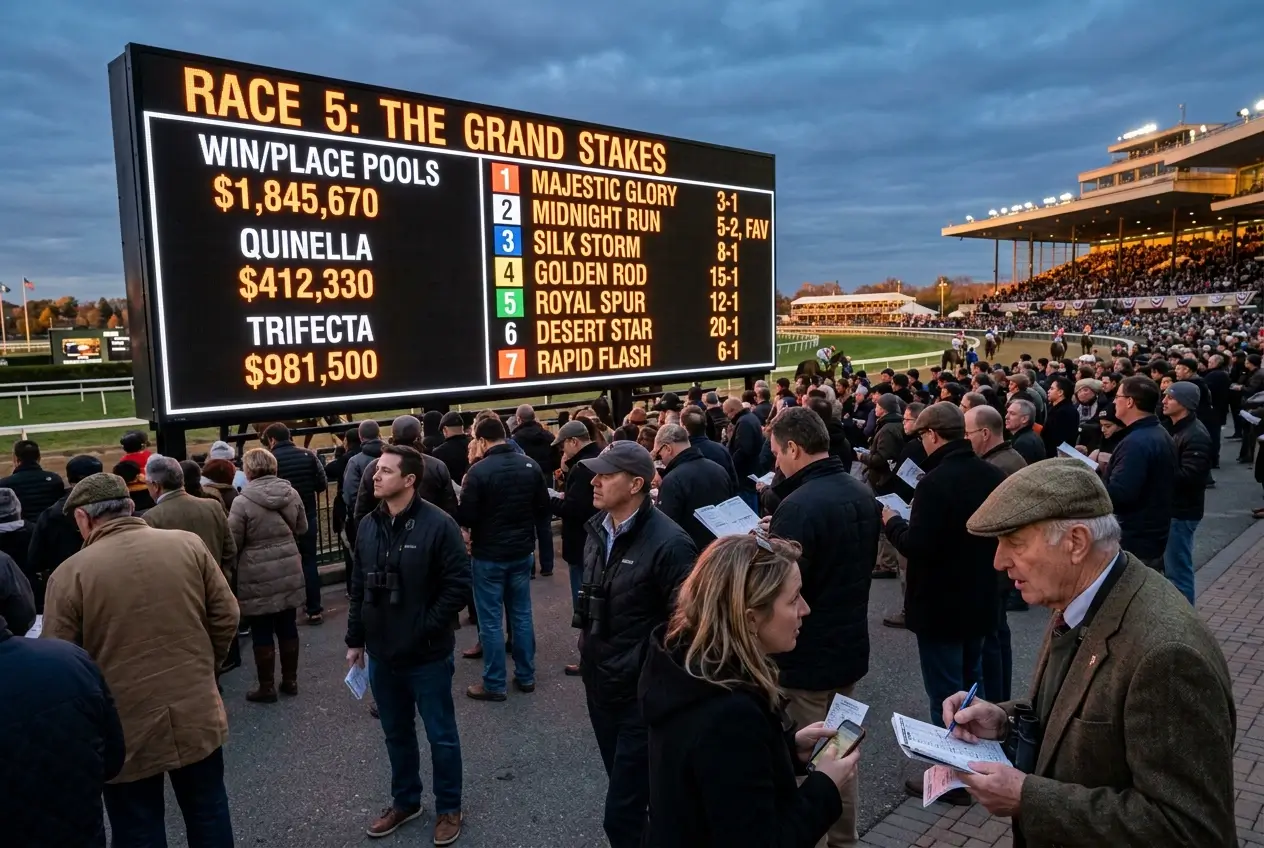
The system where nobody knows the price until the last bet is placed
The first time I explained pari-mutuel betting to someone who had only ever used fixed-odds bookmakers, the reaction was genuine confusion followed by genuine interest. “So the bookmaker doesn’t set a price at all?” No, not exactly. In a pari-mutuel pool, the effective price — the dividend — emerges from the collective behaviour of all the bettors in the pool. The more money that flows onto a horse, the lower its dividend. The less money on a horse, the higher its dividend. Nobody, including the operator, knows what the final payout will be until the pool closes. That’s a fundamentally different model to walking up to a bookmaker, seeing 5-1 on a board, and knowing exactly what you’ll receive if you win. The full picture is in our complete guide to quaddie betting.
Pari-mutuel comes from the French for “mutual stake” or “betting among ourselves” — an apt description of the mechanism. Every punter in the pool is, in effect, betting against every other punter rather than against a single bookmaker. The operator’s role is to manage the pool, calculate the dividend, and distribute the winnings. They don’t take a position on the outcome.
How the pool is split
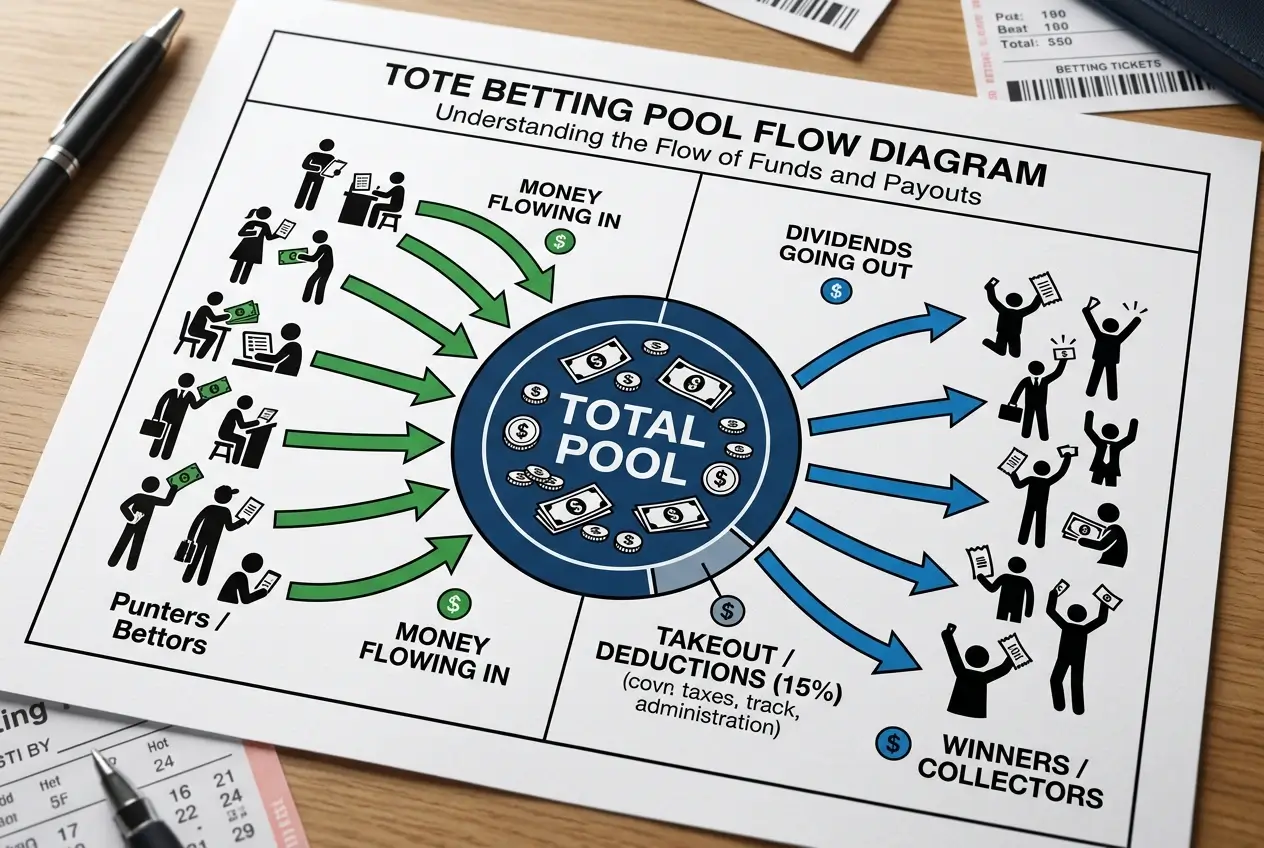
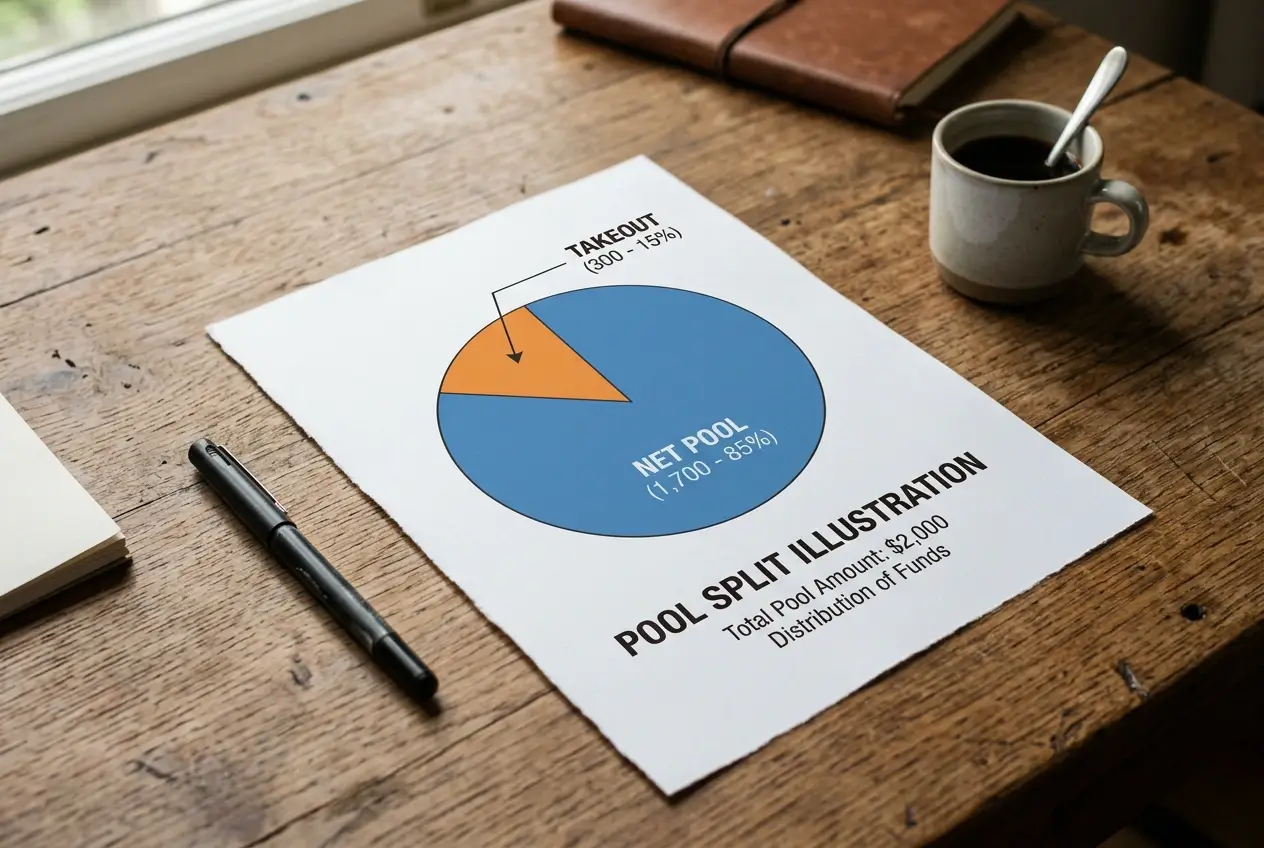
The mechanics are simpler than the terminology suggests. All bets on a race or multi-race sequence go into a shared pool. Before any dividends are calculated, the operator takes a cut — a percentage called the takeout or commission. What remains after the takeout is the net pool. That net pool is then divided equally among all the winning tickets, based on the total number of winning units held.
A concrete example: suppose a pool on a win bet contains £100,000 in total. The operator takes 15% as takeout, leaving £85,000 in the net pool. Four horses ran; the favourite won. Suppose all the bets on that favourite add up to £60,000 — 60% of the total pool. The net pool of £85,000 is divided by the £60,000 on the winner, giving a dividend of approximately £1.42 per £1 unit. A punter who placed £10 on the winner receives £14.20.
Now suppose a 20-1 shot wins instead. Only £5,000 of the pool was on that horse. The net pool of £85,000 divided by £5,000 gives a dividend of £17.00 per £1 unit — the same pool, but distributed among far fewer winners, each of whom receives a much larger share. The pool didn’t change; the winning share changed, because fewer people held it.
Takeout and the dividend
Takeout is the fundamental cost of pool betting. It’s the percentage that goes to the operator before any dividends are declared. In British racing, the Tote takeout varies by product — typically around 15-17% on win bets, and higher on exotic products like the Placepot or Jackpot. That means for every £100 bet into a pool, £83-85 ends up in the net pool to be distributed as dividends. The remaining £15-17 covers the operator’s costs, taxes (General Betting Duty is currently 15% for racing operators), and profit.
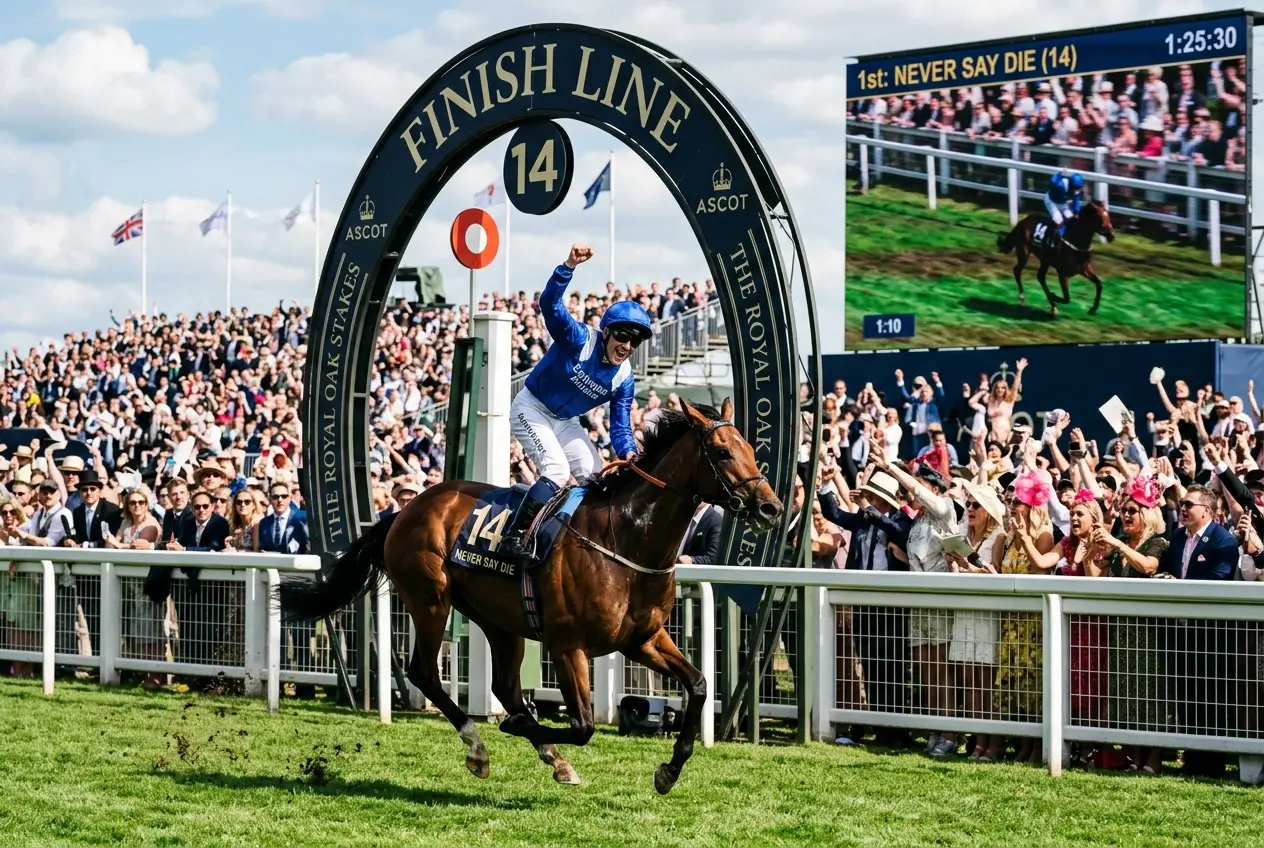
Why does takeout matter for a punter? Because it establishes the structural disadvantage of pool betting relative to a zero-margin world. If the takeout is 15%, then in the long run, pool bettors collectively receive 85p back for every £1 staked — before accounting for any skill or information advantage they might hold. This is the “structural return to bettor” — the same concept as house edge in casino games, just expressed differently.
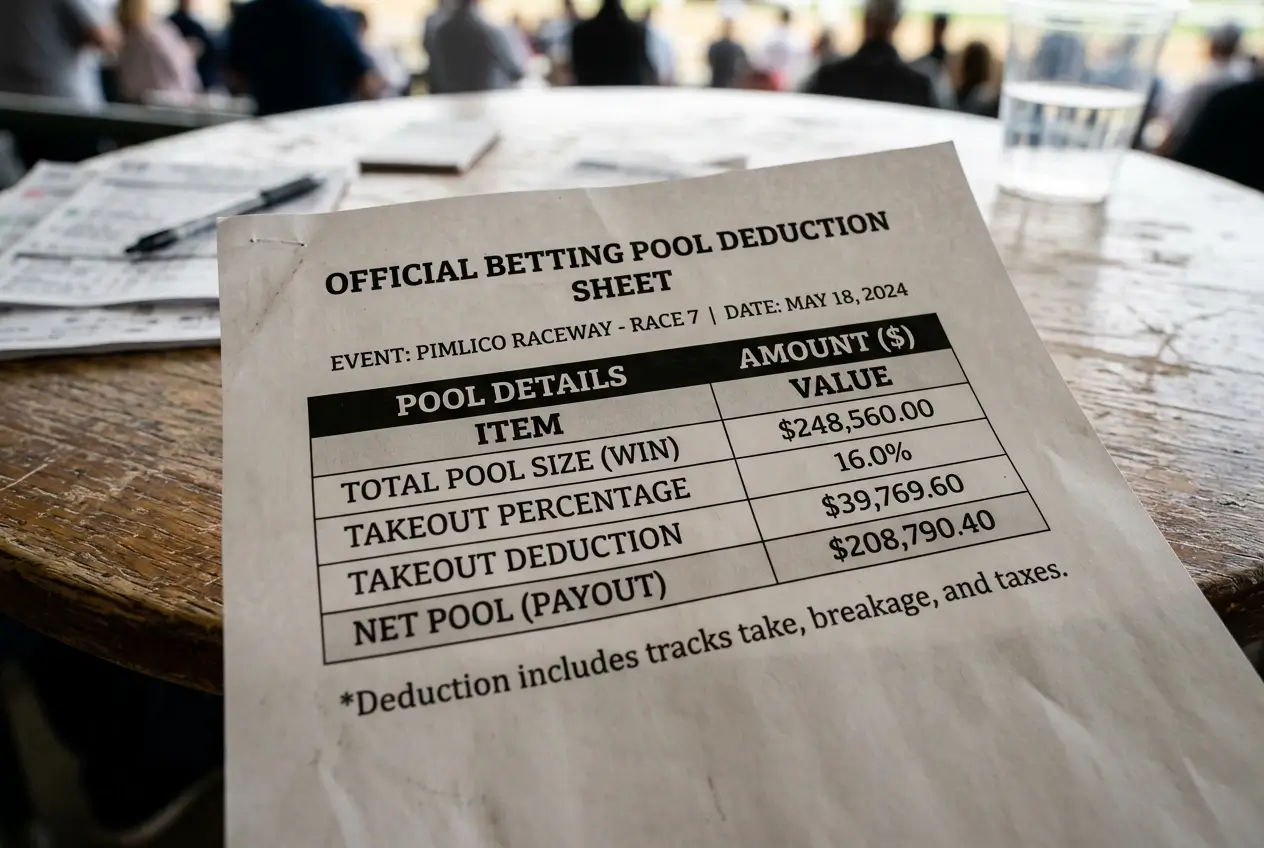
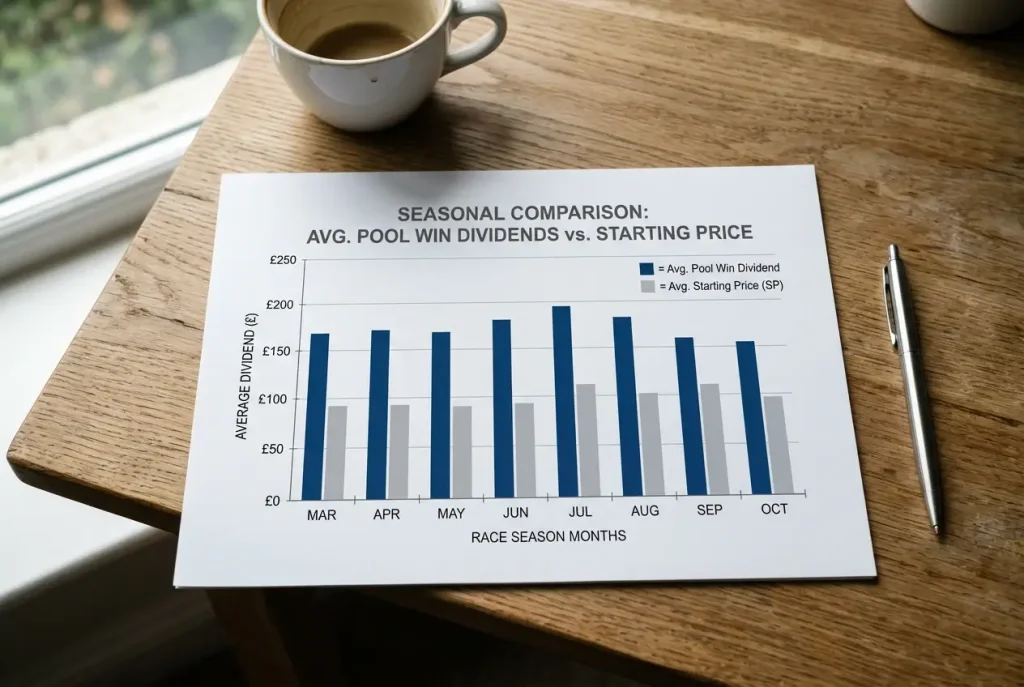
What partially offsets the structural takeout disadvantage is the evidence on Tote dividends versus Starting Price. UK data shows that Tote Exacta beats the equivalent Forecast result in roughly 73% of races, with an average uplift of around 30%. Trifecta beats Tricast in approximately 74% of races, with an average uplift of around 57%. That consistent outperformance isn’t random — it reflects the way pool pricing diverges from fixed-odds pricing, particularly on less-fancied combinations that the market underweights. A pool bet’s “real” expected value is therefore higher than a naive takeout calculation would suggest, because the dividend distribution better reflects the true uncertainty of outcomes.
Pool betting versus fixed odds — the basic structural difference
Fixed-odds betting offers a guaranteed return at a known price. If you take 4-1 on a horse and it wins, you get 4-1, regardless of how many other people backed it. The bookmaker has taken your money at a price they set, and they bear the risk of their pricing being wrong. That’s the bookmaker’s business: assessing risk and pricing it.
In a pari-mutuel pool, no single entity is pricing individual horses. The crowd — the collective of all bettors — sets the effective price through their betting behaviour. This has an important consequence: it removes the ceiling on what a correctly-placed pool bet can pay. If you back a genuinely unfancied horse and it wins, the dividend reflects the fact that almost nobody else was right with you. A fixed-odds bookmaker would have offered you a price on that horse, but it would have been their estimate of the probability. In a pool, the price is set by market consensus, and if consensus is wrong, the payout to those who were right can be substantially higher than any bookmaker would have offered.
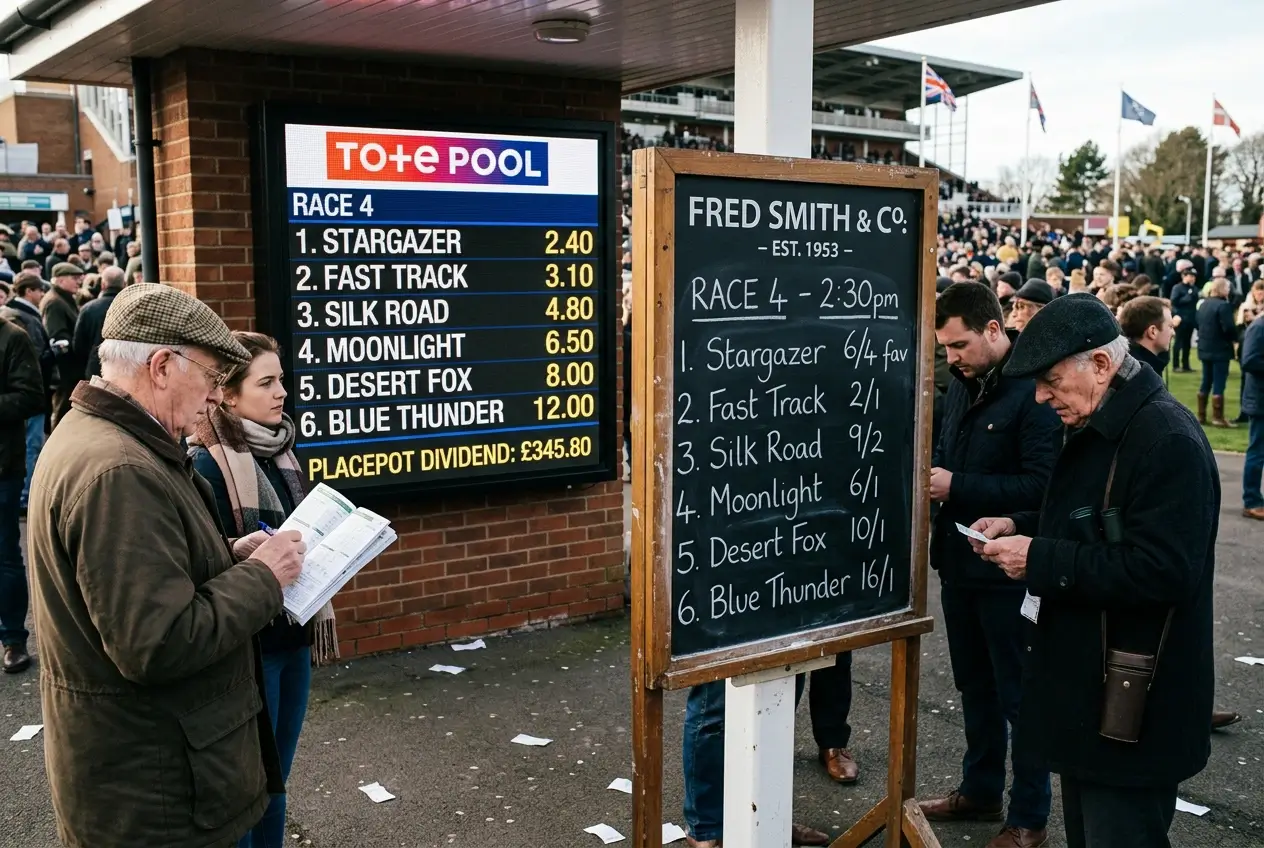
This structural feature is what produces the Placepot records — £182,568 for a £2 line at Cheltenham in 2019 — and the headline quaddie dividends from major Australian meetings. No fixed-odds product can deliver those numbers, because a bookmaker prices every combination and manages their exposure accordingly. A pari-mutuel pool has no such cap. For a direct, evidence-based comparison of the two systems, the pool betting vs fixed odds guide covers the value case in detail.
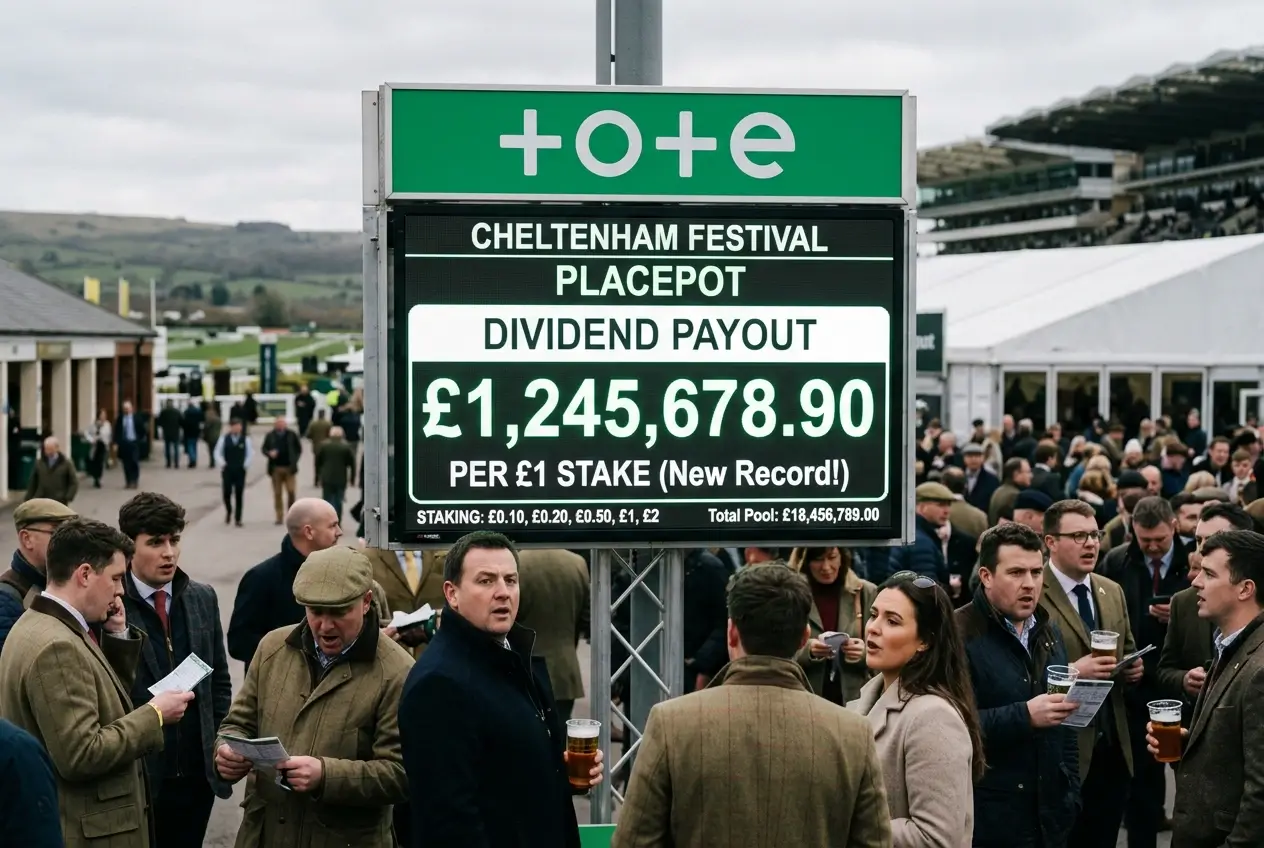
There is one more dimension to the comparison that casual punters often miss: the treatment of unbackable winners. In fixed-odds markets, a horse that is barely on most punters’ radars still gets a price — typically a long one, because bookmakers must offer a market on every runner. In a pari-mutuel pool, an unbackable horse might have almost no money on it, which means a minimal number of winning tickets and a maximum per-unit dividend. The pool does not cap its generosity on extreme outsiders the way a fixed-odds bookmaker would. A horse with 0.1% of the pool on it that somehow wins will return approximately 1,000 times the stake minus takeout — terms no bookmaker would offer. Understanding this asymmetry — that pool betting is functionally uncapped on its upside in a way that fixed odds are not — is fundamental to appreciating why experienced pool punters continue to use the system even when takeout costs appear structurally unfavourable at the aggregate level. The moments when the pool is spectacularly generous to a small number of correct tickets are the moments that define the entire value proposition of pari-mutuel betting. How that becomes your return: dividend calculation.
Who decides the odds in pool betting?
Nobody sets odds in advance. The effective price — the dividend — is determined by the total money in the pool and how much of that pool was on the winning selection. The more money on a horse, the lower its dividend. The less money on a horse, the higher its dividend. The final dividend isn’t known until the pool closes before the race starts.
What is takeout in pool betting?
Takeout is the percentage of the total pool that the operator retains before calculating dividends. It covers the operator’s costs, duties, and profit margin. The remaining percentage — the net pool — is distributed to winning tickets. A 15% takeout means 85p of every £1 staked eventually returns to winning punters collectively.
Why can the dividend change after I bet?
Because the pool continues to accept bets right up until the race starts. Every new bet changes the proportion of the pool on each horse, which changes the theoretical dividend for each possible winner. The dividend displayed before the race closes is an approximation based on current pool proportions — it will update as more bets arrive. The final dividend is only declared when the pool is closed.
This material was created by the FourCast team.
Related posts

Quaddie Tips: How to Read, Judge and Use Daily Selections
Pool Betting vs Fixed Odds: Where the Value Evidence Points