The Biggest Quaddie Payouts: Record Dividends and How They Happen
 Available in US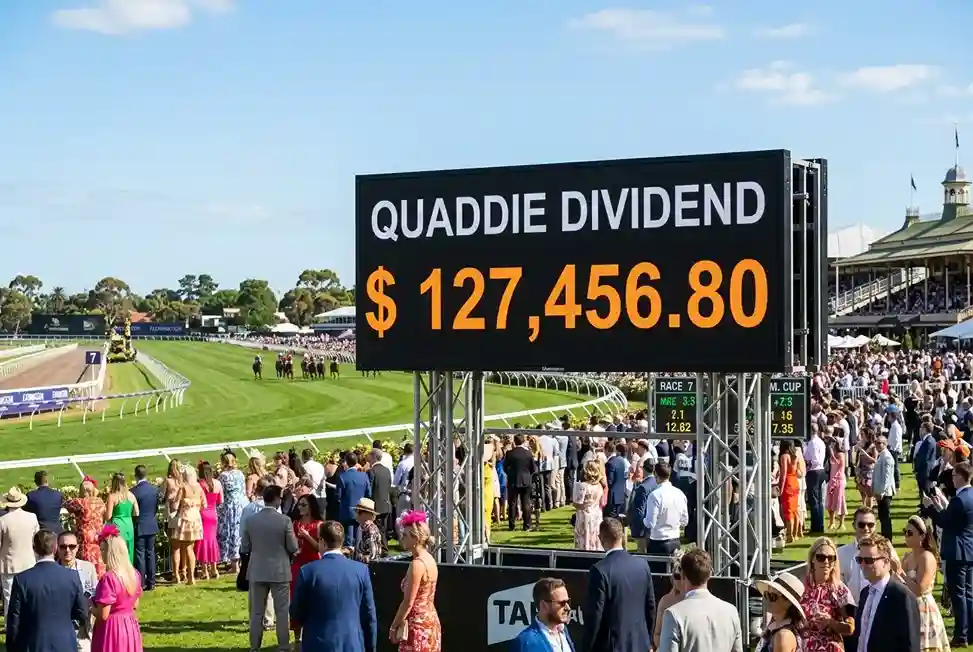
The Numbers That Make Pool Betting Worth Understanding
The biggest quaddie payouts are not measured in hundreds of pounds. They are measured in hundreds of thousands. The 2024 Melbourne Cup quaddie declared A$512,000 to a full unit — a payout driven by four winners whose combined starting prices added up to over A$115. The same day’s First 4 (a related exotic product on the same race) paid A$728,000 to a full unit, and one punter reportedly converted a A$100 investment into A$3,200,000 via a Ladbrokes exotics ticket on the race. These are genuine verified figures, not promotional approximations. The full picture is in our complete guide to quaddie betting.
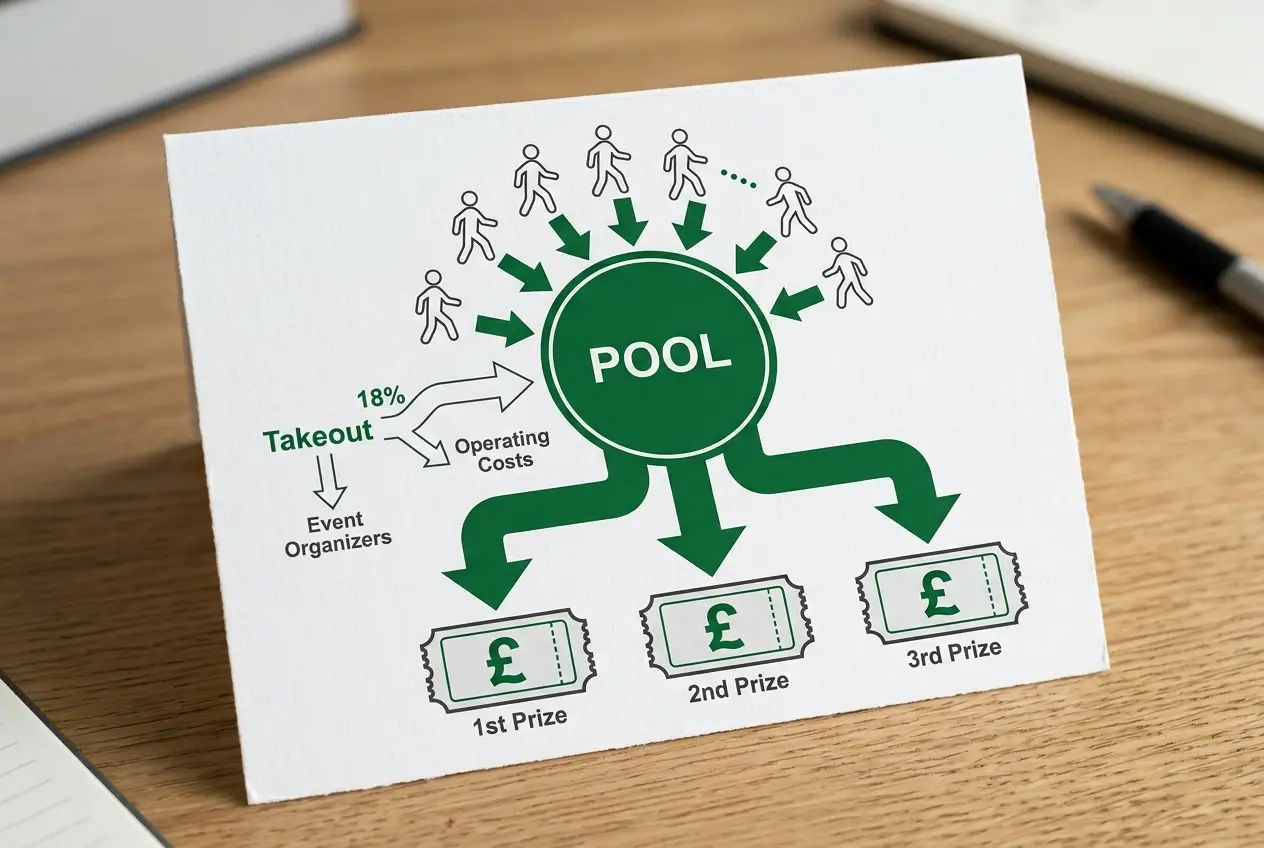
The reason these numbers matter for understanding pool betting is not that you should expect to win A$512,000 from a quaddie next week. It is that they illustrate the structural feature that distinguishes pari-mutuel pools from every other form of betting: the size of the payout is determined not by what you staked but by how many other people’s tickets share the winning combination. When only a handful of tickets contain all four correct selections, the pool divides into very large pieces. When the four winning horses are widely held on most tickets, the pool divides into many small pieces. That dynamic — the distribution of the winning pool among a variable number of holders — is what makes pool dividends so different from fixed-odds returns, and it is why the ceiling on a quaddie payout has no practical upper limit.
This article looks at the record dividends, explains why they happen, and examines how the same mechanism operates in UK pool products — where the scale is different but the principle is identical.
What Makes a Dividend Explode
Every extraordinary quaddie dividend shares the same fundamental cause: the winning combination of four horses was held by very few, or in some cases perhaps just one, of the betting tickets in the pool. Understanding why that happens requires understanding how punters behave when they construct their tickets.
The majority versus the winner
When a meeting is announced and quaddie pools open, the majority of bettors gravitate towards the same horses — the market leaders, the recent winners, the well-publicised favourites. This is entirely rational for any individual punter but creates a collective problem: it concentrates most of the pool’s winning tickets on a small set of probable combinations. If all four favourites win, those popular combinations survive, and the pool divides among many holders. The dividend is small.
But if even one of those favourites is beaten — and particularly if the winner is a longer-priced runner that most punters did not include on their tickets — the number of surviving tickets drops dramatically. Two favourites beaten by outsiders, and the winning combination may be held by only a fraction of a percent of all tickets. The pool, still containing the same total of all punters’ stakes, now divides among very few. Each winning unit collects a very large share.
The 2024 Melbourne Cup quaddie is the clearest illustration. Knight’s Choice, at A$63 in the tote win market, was not a popular quaddie selection. Catoggio at A$35 was not a popular quaddie selection. Together in the same winning combination, they ensured that the winning ticket was sparsely held, and the pool — already large because it was Cup day with massive global wagering — concentrated into a very large per-unit dividend.
The three levers that drive dividend size
The total pool size is the first lever. A large meeting with high wagering turnover builds a bigger pool, and a bigger pool means a larger absolute dividend even when shared among the same number of winners. Melbourne Cup and similar marquee events attract nationally significant wagering volumes — the pool starts from a much higher base than a midweek provincial meeting.
The second lever is the popularity of the winning combination. Even a huge pool produces a small dividend if thousands of punters all held the same combination. It is specifically the combination of a large pool and an unpopular winning result that produces record payouts.
The third lever is the Flexi structure of the winning tickets. In the Australian quaddie, punters who took a low Flexi percentage on a wide ticket — covering many combinations, including the winning one — receive only a fraction of the per-unit dividend. Punters who took a high Flexi or a full unit on a narrow ticket that happened to include the winning combination collect the full declared per-unit amount or more. A punter who had a 10% Flexi on the 2024 Melbourne Cup winning combination collected approximately A$51,200 on that unit — still an extraordinary return, but one-tenth of the full-unit declared dividend.
Why rollovers amplify everything
Some quaddie variants operate on a rollover model: if no ticket holds all four winners, the pool does not pay out — it carries forward to the next nominated meeting, adding to whatever new stakes are collected. A long rollover sequence can build a pool to many multiples of a typical meeting’s wagering volume. When the winning combination finally emerges from a large rolled-over pool, the dividend per unit is amplified by all the accumulated stakes from the previous meetings that did not pay. This is the mechanism behind some of the largest historical quaddie payouts in Australian racing — not a single extraordinary day of form but several consecutive meetings of near-misses before a winning combination finally landed.
Pool versus fixed odds: the ceiling difference
A fixed-odds bet on a 100/1 shot pays 100/1 — nothing more, regardless of how many other people did not back it. A pari-mutuel pool on the same result pays the pool net of takeout divided by the number of winning units — and if very few units covered that result, the payout per unit is uncapped. There is no theoretical upper limit to a pool dividend. A fixed-odds ceiling is set at the moment you place the bet. A pool ceiling is unknown until the result is final and the winning tickets are counted. That asymmetry is exactly what generates the extraordinary figures this article is documenting.
Record Quaddie Dividends: The Verified Figures
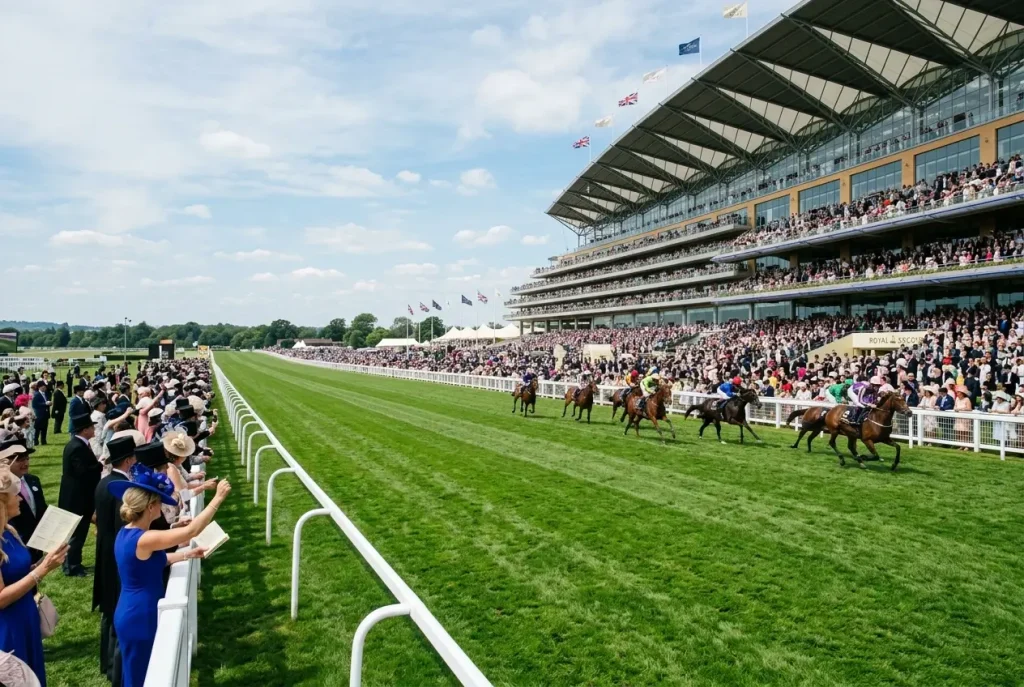
The most reliable set of recent record figures comes from Australia, where quaddie pools have operated continuously since the 1970s and where Cup day in Melbourne generates the largest single-meeting exotic pools in the Southern Hemisphere. The UK equivalent (Placepot and Quadpot) has produced its own record figures — in sterling, at generally lower absolute levels, but with the same structural dynamics behind the biggest payouts.
Melbourne Cup 2024: A$512,000
The Melbourne Cup quaddie declared A$512,000 to a full unit in 2024. The four winners were Knight’s Choice (A$63 tote win), Catoggio (A$35), Fancify (A$6.30) and Bel Air (A$12.40). The combination of two double-digit outsiders in a race famous for international favourites ensured that the winning sequence was held by very few tickets. Punters who had Knight’s Choice and Catoggio anywhere on their quaddie ticket — even at low Flexi percentages — were the beneficiaries.
For context: a punter with a 10% Flexi on a wide ticket that happened to include both Knight’s Choice and Catoggio in their respective legs would have collected approximately A$51,200 from a stake that, depending on their total combinations, might have been as little as A$20–30. That is the Flexi mechanism in action at the top of the range.
The same race’s First 4 — a related exotic requiring the first four finishers in exact order — paid A$728,000 to a full unit. One punter, betting through Ladbrokes, reportedly turned a A$100 investment into A$3,200,000 on the same race via an exotics ticket. That figure relates to a different product structure, but it illustrates the scale of what Australian Cup day exotic pools can produce when an improbable combination of results unfolds.
For the mechanics of how these dividends are actually calculated — how the pool, the takeout rate and the number of winning units combine to produce the per-unit figure — the how quaddie dividends are calculated guide walks through the full arithmetic.

UK Placepot records: the equivalent scale in sterling
The UK’s closest equivalent to a large exotic payout is the Cheltenham Festival Placepot. The record Placepot dividend at the Festival stands at £182,568 per £2 unit — the largest in the event’s history, achieved in 2019. A per-£1-line record of £91,774.50 was set at the same venue in 2015. These figures are for the Placepot (placed runners in six races), not the Quadpot (placed runners in four races), but they are the same structural type of event: an extremely sparse winning combination in a pool that had attracted significant wagering activity.
In 2025, the largest Placepot dividend of the year came at Royal Ascot: £26,424.30 declared to a winning unit, from a total of approximately 18.15 winning units in the pool. A punter who had taken a full unit on that ticket won £26,424.30. A punter with a 50% Flexi won £13,212.15. The pool distributed its entire net total among fewer than twenty winning units — that is how concentrated the surviving combinations were after six races of placed-runner requirements.

The relative scale: Australia versus UK
Australian quaddie dividends can reach higher absolute figures than UK Quadpot and Placepot dividends, for a structural reason: Australian racing pools are globally large, Cup day in particular attracts international wagering, and the quaddie’s winners-only requirement means fewer tickets survive than in a placed-runner product. A larger pool, concentrating into fewer winning units, produces larger absolute dividends per unit.
UK pool dividends are real and significant — £26,424 from a Placepot, or over £180,000 on a Cheltenham Festival weekend — but they typically benchmark in thousands to tens of thousands rather than hundreds of thousands. For UK punters, the relevant comparison is not “will my Quadpot pay A$512,000?” but “can a carefully constructed Placepot or Quadpot ticket on a competitive festival card return several hundred or several thousand times my stake?” The answer to that question, on the evidence of the record figures, is clearly yes — and on any given week at a major meeting, the probability of a large dividend is meaningfully higher than in most other forms of betting.
How Big Can It Realistically Get?
The question I get asked most often about pool betting records is whether the extraordinary figures are flukes or whether they represent a repeatable structural feature of pari-mutuel markets. The answer is: both, simultaneously. They are individual events that occur rarely — no one lands a A$512,000 quaddie every week — but they arise from a structural feature of pool betting that is present at every meeting, every day, regardless of whether any particular payout happens to be exceptional.
The role of pool liquidity
The scale of what a pool can pay is directly linked to the size of the pool. Large meetings with high total wagering produce larger pools and larger absolute dividends. This is why Cup day in Australia, Royal Ascot and Cheltenham in the UK are where the record payouts tend to occur: these meetings attract the most money into their pools.
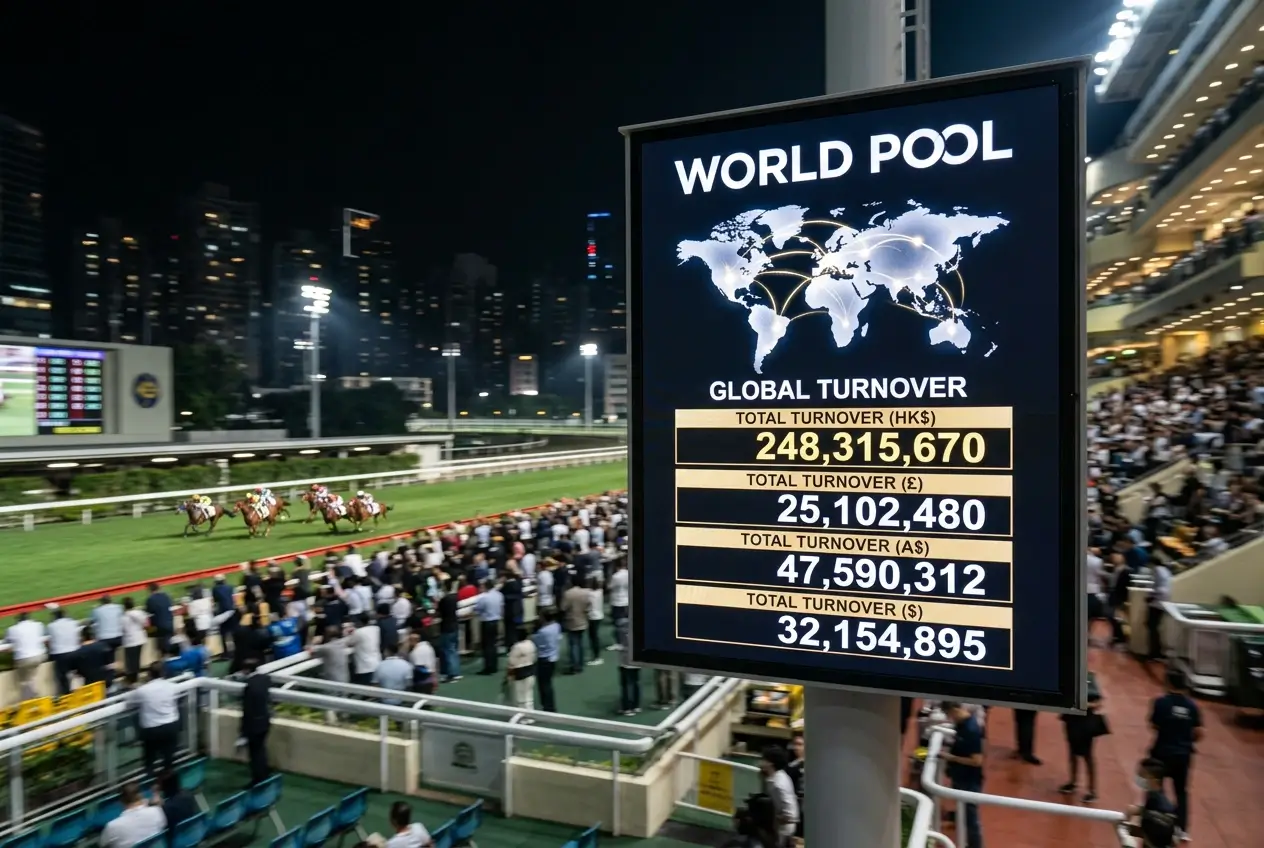
The growth of international commingling through World Pool has expanded this further. The total turnover through World Pool in 2025 reached a record HK$10.9 billion — an extraordinary scale for a single pari-mutuel network. The Royal Ascot 2025 World Pool generated HK$1,574.4 million (approximately £150 million equivalent) across the week, up 10% from 2024. When that volume of money floods into a pool and a rare result emerges, the per-unit dividend can be spectacular.
The record win pool on a single World Pool race reached HK$97.1 million (approximately £9.5 million) on the victory of Ka Ying Rising at Sha Tin in April 2026. Winfried Engelbrecht-Bresges, the Chief Executive of the Hong Kong Jockey Club, commented at the time: “I’ve never seen a tote figure like this.” That record win pool was a domestic race, not a quaddie product — but it demonstrates the scale of liquidity that commingling can produce when a major pool and an unexpected result coincide.
What determines whether any given meeting produces a large payout
Three factors in combination: the size of the pool going in (a function of meeting prestige and international interest), the unpopularity of the winning selection in each leg (a function of results on the day), and the concentration of remaining tickets on popular alternatives that did not win. None of these is predictable in advance. You cannot bet a quaddie expecting a record dividend; you can only structure your ticket to be included in a winning combination if one should occur.
The most you can do strategically is ensure your ticket includes at least one runner per leg that is not the most popular selection — the value leg approach I outlined in the strategy guide. Being the sole holder of a winning combination in even a modestly sized pool produces a disproportionate return. Being one of ten thousand holders of a popular combination in a large pool produces almost nothing. The dividend is determined entirely by how many other people got the same result as you.
The realistic distribution of UK payouts
For perspective on what “realistic” means in UK pool terms, consider the Placepot average figures: in 2023, the average UK Placepot dividend was £466 per unit. On Cheltenham Festival days across the 2020–2024 period, the average was over £7,126 per unit. The wide range between £466 and £7,126 reflects how dramatically the character of the meeting — and the results on the day — affects payout levels. A regular midweek card with predictable results produces a very different pool environment from a festival day with large fields, multiple upsets, and a nationally significant wagering audience.
The ceiling, as the 2019 Cheltenham record of £182,568 demonstrates, can be extraordinary even in the UK context. The floor is a few pounds per unit when short-priced favourites dominate all legs. Between those extremes, the realistic distribution clusters around a few hundred pounds per unit on ordinary days and a few thousand at major meetings — meaningful returns on a £2 to £20 stake, even without reaching the record territory.
Chasing Versus Protecting a Big Return
The record dividends described above represent one end of a spectrum. At the other end is the regular pool punter who wants steady, meaningful returns — not one-in-a-decade jackpots. Most people who bet pool products seriously are somewhere in the middle: they want a realistic chance at a worthwhile dividend, but they are not building their entire strategy around catching a once-in-a-season exceptional result. Understanding the tension between these two goals is important for any long-term approach to quaddie betting.
The case for “protecting” your payout
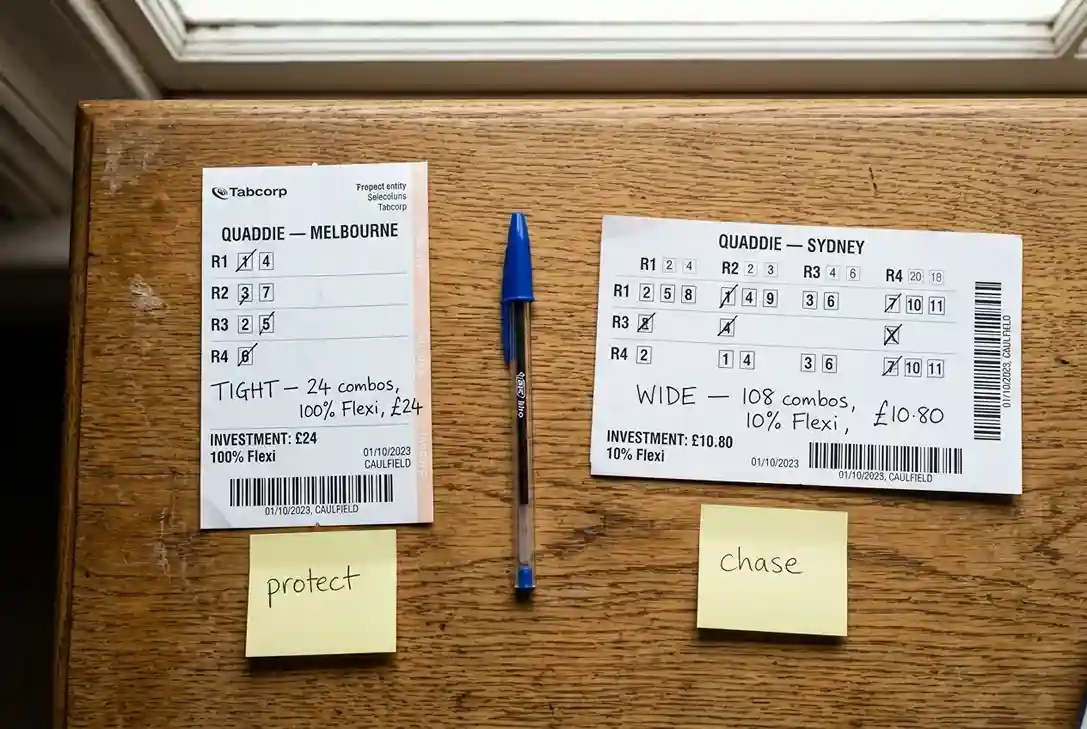
Protecting a return means constructing a ticket with high Flexi percentage on a relatively narrow combination set — accepting that you will not cover every possible winning path, but ensuring that the winning paths you do cover return a meaningful share of the dividend. A 25% Flexi on 81 combinations at a £300 dividend returns £75. Not spectacular, but meaningful relative to a £20.25 stake. The key discipline in this approach is resisting the temptation to widen the ticket further and further (reducing your Flexi percentage) in the hope of catching a bigger result.
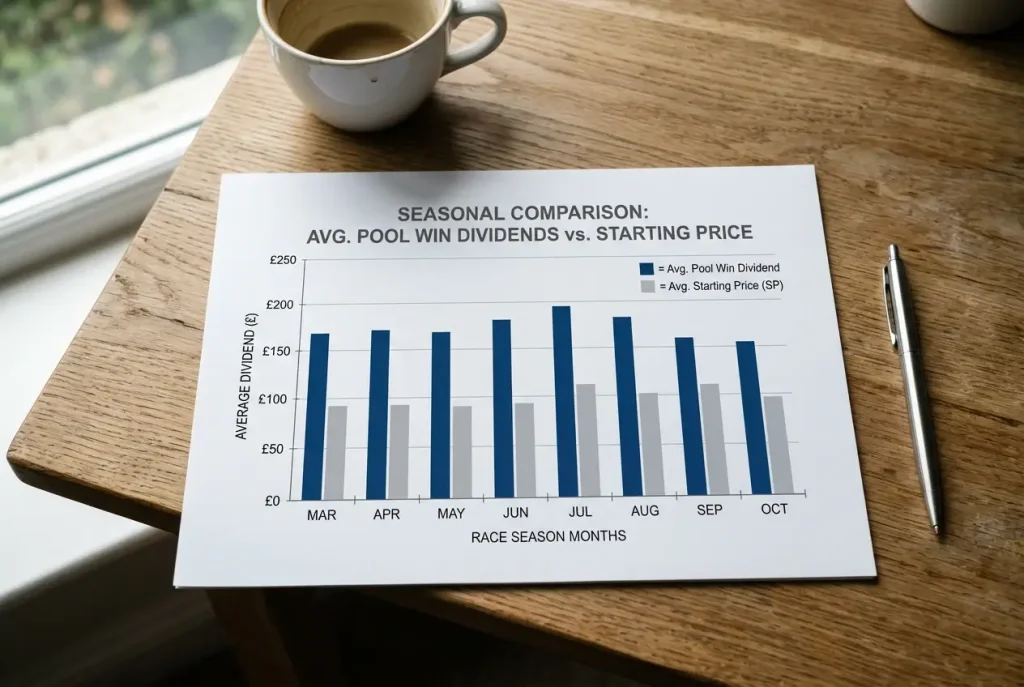
The pool value data supports this approach. Across UK World Pool meetings in 2025, pool bets paid £171.44 more per winner than Starting Price across the board — demonstrating that the pool structure consistently rewards punters who participate at a meaningful unit level. A high-Flexi, tight-combination ticket participates in that return premium more efficiently than a wide, thin-Flexi ticket that barely covers each combination.
The case for “chasing” a big payout
Chasing a big payout means accepting a low Flexi percentage on a wide ticket — covering many combinations, including several longer-priced runners in open legs, in the hope that an unusual result produces an extraordinary dividend. On most days, this ticket returns nothing (or a very small amount on a low Flexi percentage). On the occasional day when multiple outsiders land, it catches a payout that would be far larger than the equivalent higher-Flexi ticket because it was there when most punters were not.
The risk of this approach is frequency: if your average UK meeting Quadpot or Placepot win frequency is once every three weeks with a narrow ticket, and once every five weeks with a wide ticket, you are accepting a 67% increase in losing runs for the possibility of a much larger return when you do win. Whether that trade-off works financially depends on the dividend size when it hits — and dividend size on the wide ticket is typically lower than on the narrow ticket because the wide ticket holds more of the winning combinations, which means you are sharing the pool with yourself to some degree.
The practical answer: position sizing
After eight years in this space, my practical answer to the chasing-versus-protecting question is to use the Flexi mechanism as a position-sizing tool rather than an all-or-nothing decision. Instead of one large wide ticket or one large narrow ticket, build two tickets with the same total budget: one tight-and-high-Flexi (catching the popular result at a good percentage), one wide-and-low-Flexi (catching the unusual result at a small percentage). The two together cover both scenarios without fully committing to either. On most days, the tight ticket wins and returns something meaningful. On the occasional exceptional day, the wide ticket catches a result the tight one missed and returns something memorable. That combination — not chasing or protecting in isolation but doing both at smaller scale — is how I have managed pool betting stakes sustainably over a long period. The single biggest of them: the Melbourne Cup quaddie.
The fundamental principle to take away
The biggest quaddie payouts — whether A$512,000 in Melbourne or £182,568 at Cheltenham — did not happen because someone predicted the result. They happened because someone held a ticket that included the winning combination when almost no one else did. That is a structural feature of pari-mutuel betting that no other product type can replicate: the less popular your winning combination, the more the pool pays you for having it. The maths is not complicated. The discipline required to act on it — building tight, well-reasoned tickets rather than wide, anxious ones — is what separates the consistent pool punters from the rest.
Frequently Asked Questions
What is the largest quaddie dividend ever recorded?
Among the most significant verified recent figures, the Melbourne Cup 2024 quaddie paid A$512,000 to a full unit. UK Placepot records include £182,568 from a £2 stake at Cheltenham Festival in 2019. Australian quad dividends can reach higher absolute figures because of the larger pool volumes on marquee events and the winners-only qualification that reduces the number of surviving tickets.
Why do small pools sometimes pay the biggest dividends?
They do not — large pools pay the largest absolute dividends, because a bigger pool means more total stakes to distribute. What small pools can produce is a large dividend relative to the expected payout, if the winning combination is very sparsely held. But the record absolute figures always come from major meetings with high wagering volumes and an unexpected result.
Can a single longshot turn a cheap quaddie into a five-figure return?
Yes — and the 2024 Melbourne Cup is the clearest example. Knight’s Choice at A$63 and Catoggio at A$35 in the same four-leg combination produced a A$512,000 full-unit dividend. A punter with a 10% Flexi share of that winning combination would have collected approximately A$51,200. The longshot does not just add to the dividend — it reduces the number of other tickets that survived, concentrating the pool into fewer winning units.
Are UK pool payouts ever as big as Australian quaddie dividends?
In absolute terms, Australian quaddie dividends at marquee events tend to be larger, driven by the scale of Cup day and similar major meetings. UK Placepot records reach six figures at Cheltenham — £182,568 in 2019 — and the 2025 Royal Ascot Placepot paid £26,424 per unit. UK figures are meaningful and competitive on a sterling basis, but the total pool sizes at Australian marquee events tend to produce higher absolute per-unit dividends.
This material was created by the FourCast team.
Related posts

Quaddie Tips: How to Read, Judge and Use Daily Selections
Pool Betting vs Fixed Odds: Where the Value Evidence Points