Quaddie Strategy: Coverage, Cost and Getting the Combination Balance Right
 Available in US
The structural decision you make before the first race matters more than the selections themselves
I’ve spent enough time reviewing my losing quaddies and Placepots to have formed a clear view: the biggest mistakes are almost never in the individual selections. They’re in the structure. Covering the wrong legs too tightly, spending budget on combinations that are redundant, failing to match coverage depth to actual form difficulty — these structural errors cost more over time than missing the occasional winner. The form assessment determines which horses you include. The structure determines how much coverage those horses give you for your budget. Getting the structure right is a skill that compounds — you can have mediocre form reading and still bet efficiently if your combination planning is systematic. The full picture is in our complete guide to quaddie betting.
Pool betting strategy in a UK context is dominated by the Placepot and Quadpot, but the principles apply equally to any multi-leg pool product including the Australian quaddie. The core framework is the same: you have a budget, you have a combination structure, and the relationship between the two is mediated by flexi betting. The question is how to distribute your selections across the legs to maximise coverage of the outcomes you think are most probable, at a cost your budget can sustain.
Reading each leg’s difficulty
The first step in any multi-leg pool bet is assessing each leg independently. For a Placepot, this means asking: how confident am I that a specific horse will place in this race? For a Quadpot, the same question with a winner requirement. For an Australian quaddie, winner only.
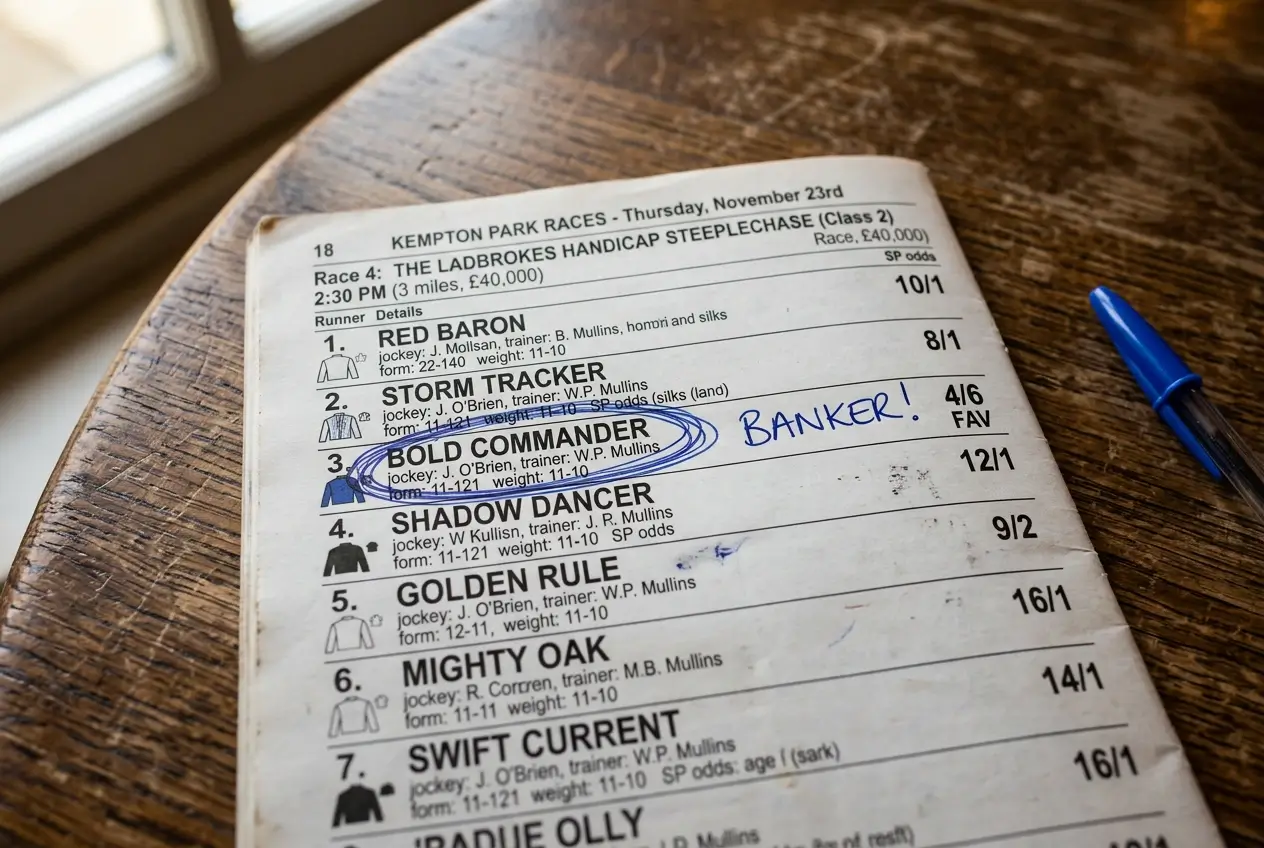
Legs divide roughly into three categories based on form confidence. High-confidence legs are those where one horse looks a near-certainty — a short-priced favourite in a small field, an unexposed horse with clear class advantages, a race with a dominant market leader. These are banker candidates. Banking them contributes a multiplication factor of 1 to your combination count, keeping cost down without sacrificing meaningful coverage.
Medium-confidence legs are the majority of most race cards: competitive handicaps, fields with three or four plausible outcomes, races where the form suggests a shortlist of two or three horses but no clear standout. These legs justify two or three selections. The cost doubles or triples for that leg compared to banking, but the coverage improvement is proportionate — a two-selection medium leg has twice the survival probability of a banker in the same race.
Low-confidence legs are genuinely open races — large fields with several unexposed horses, conditions races with no clear form guides, races where the market is spread across five or six horses without a dominant favourite. These are the legs where three or four selections may be warranted, and where the cost of insufficient coverage is highest. Losing a difficult quaddie because you took one selection in a 20-runner handicap that had four equally viable outcomes is an avoidable structural error.
Distributing budget across the legs
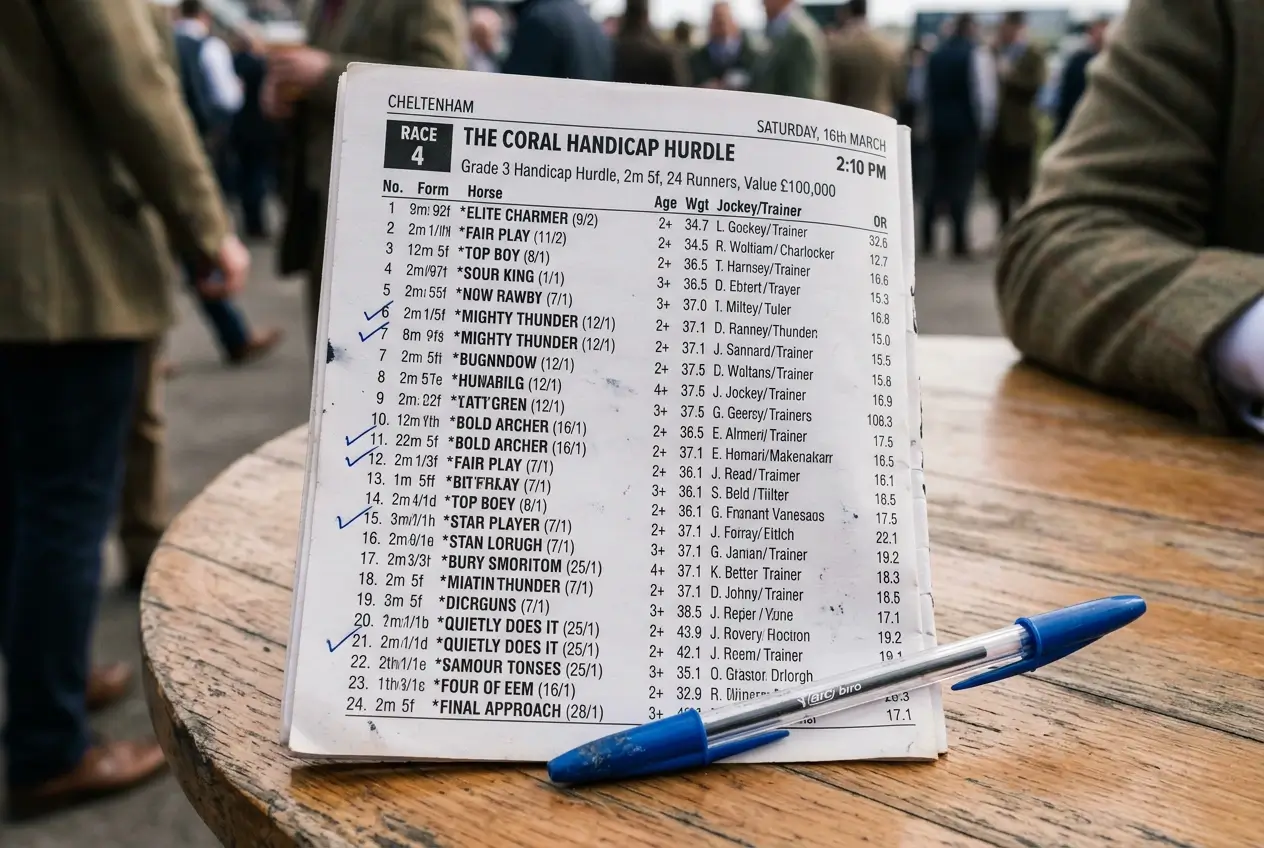
Once you’ve assessed each leg’s difficulty, the budget allocation follows logically. Budget spent on a banker leg buys coverage certainty at minimum cost. Budget spent on a wide-spread leg in a difficult race buys coverage probability at higher cost. The optimal structure puts the minimum number of selections in easy legs and the maximum in difficult ones — not the other way around.
The 2024 Melbourne Cup quaddie is instructive here. The winning combination included Knight’s Choice ($63), Catoggio ($35), and Bel Air ($12.40) — three substantial-priced winners. A punter who analysed the Cup race as a “difficult leg” and spread four selections, while banking the clearer-cut legs, had a better chance of including those three winners than a punter who reversed the logic. The return of A$512,000 per unit rewarded the correct structural decision as much as the correct horse selection.
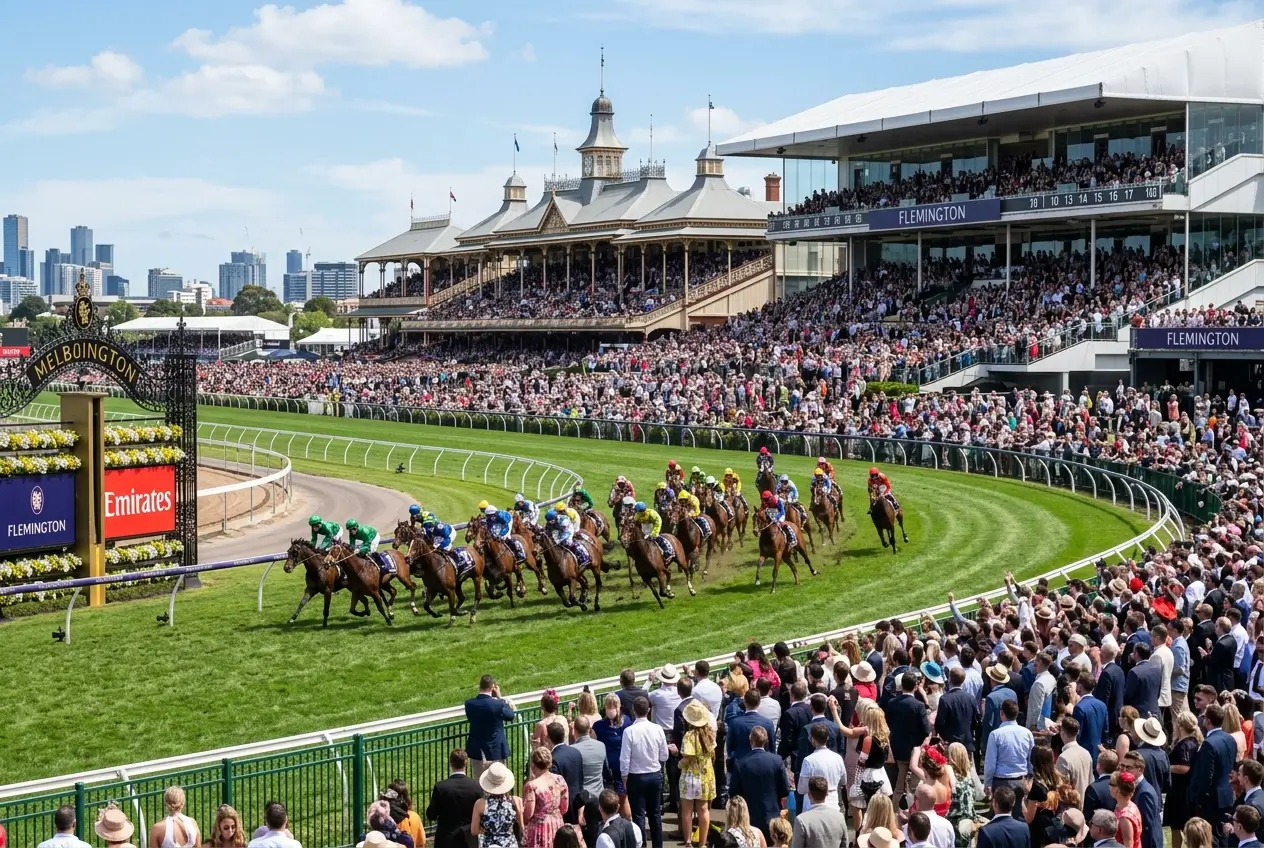
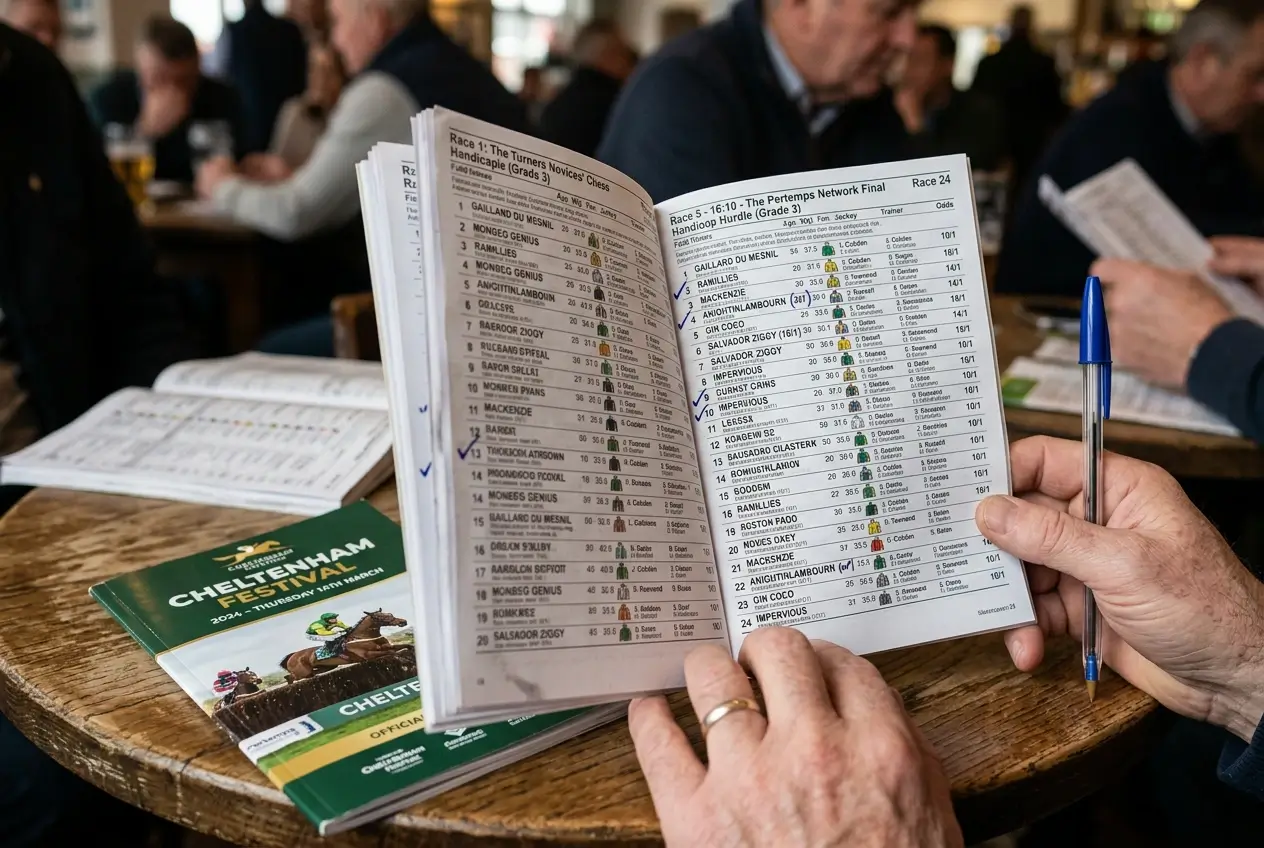
In UK pool betting, the same principle applies to the Cheltenham Festival Placepot. The five-year average Festival Placepot dividend exceeds £2,361, compared to a UK daily average of approximately £466. Festival cards are difficult because every race is competitive and the placed-horse outcome is genuinely uncertain. A punter who matches coverage to difficulty — spreading more in the open handicaps, anchoring the clearer novice hurdles — builds a ticket that survives more of the Festival’s hard cards than one who applies a uniform two-runners-per-leg structure regardless of the race type.
The coverage-versus-cost calculation
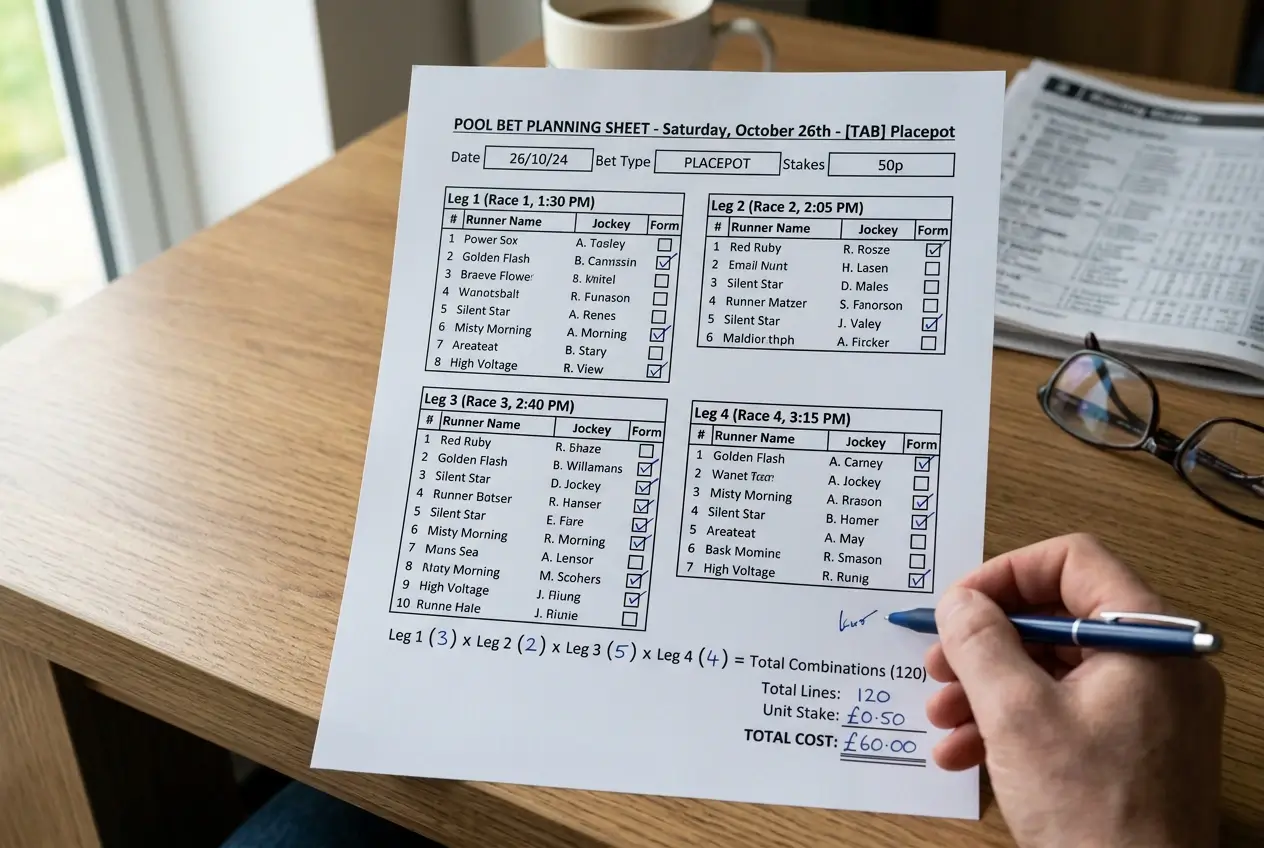
The combination count in a multi-leg pool bet is the product of the selection counts per leg. Two legs with three selections each and two with one selection each: 3x1x3x1 = 9 combinations. Change one banker leg to two selections: 3x2x3x1 = 18 combinations — double the cost, double the coverage in that leg. The arithmetic is transparent, and the digital Tote interface shows running combination counts and total costs as you build the ticket. The key discipline is doing this calculation consciously — deciding in advance what the optimal structure is and then executing it — rather than adding selections instinctively and being surprised by the cost at the end.
Flexi betting is the release valve. On a day with a large guaranteed pool — like a Cheltenham Festival Placepot with a £1,000,000 minimum — a wider coverage structure at a lower flexi percentage is rationally justified. The prize pot is large enough that a small share of a high dividend from a wide ticket is more valuable than a large share of a modest dividend from a narrow one. On an ordinary midweek Placepot with a £50,000 guarantee and a lower-difficulty card, the argument for extreme width is weaker — a tight structure at a higher flexi percentage may be the better balance of cost and expected return.
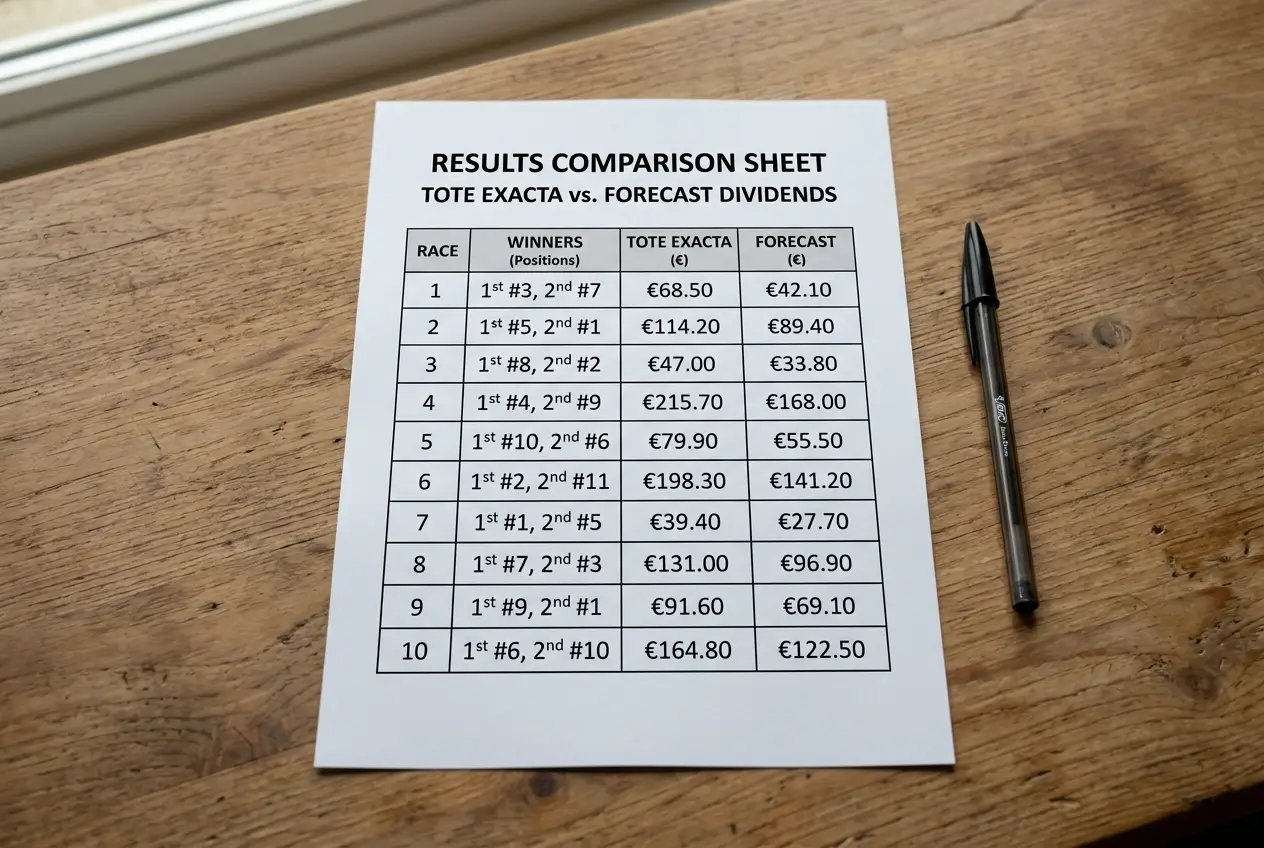
The Tote Exacta data is relevant as a structural reminder: pool betting on less-fancied combinations outperforms fixed-odds equivalents in roughly 73% of races, with an average uplift of about 30%. That consistent outperformance reflects the pool’s tendency to underweight less-fancied outcomes — exactly the horses that wide coverage structures are designed to include. Wide coverage in a pool bet is not just risk management; it’s a systematic method for being in the right position when the pool’s pricing inefficiency is most exposed. For the full calculation framework — how to work out combination counts, flexi costs, and projected returns for any structure — the guide to how quaddie dividends are calculated covers the arithmetic from first principles. Costing the ticket first: how to calculate a quaddie.
How do I decide how many horses to pick per leg?
Assess each leg independently for form confidence. High-confidence legs — short-priced favourites in small fields, dominant form horses — warrant a single banker selection. Medium-confidence legs with two or three plausible outcomes warrant two or three selections. Low-confidence legs with open form or large fields warrant three or four selections. The structure should match your actual conviction level per leg, not apply a uniform spread across all four or six.
Should I always use flexi betting?
For wide coverage structures, yes. Flexi is the mechanism that makes broad combination coverage affordable on any budget. Without flexi, an 81-combination Quadpot at £2 per unit costs £162 — too expensive for most recreational punters. At 25% flexi, the same structure costs £40.50. The trade-off is a 25% share of the dividend, but that share of a large pool dividend is typically more valuable than a 100% share of a narrow-coverage dividend.
How do I work out what my ticket costs?
Multiply the number of selections per leg together to get the total combination count. Then multiply combinations by your unit stake (£2 minimum) and your flexi percentage. For example: 3x2x2x3 = 36 combinations, at £2 per unit and 50% flexi = 36 x £2 x 0.50 = £36. The Tote digital interface calculates this automatically as you build the ticket.
This material was created by the FourCast team.
Related posts

Quaddie Tips: How to Read, Judge and Use Daily Selections
Pool Betting vs Fixed Odds: Where the Value Evidence Points