Quaddie Minimum Stake in the UK: How Little You Can Bet
 Available in US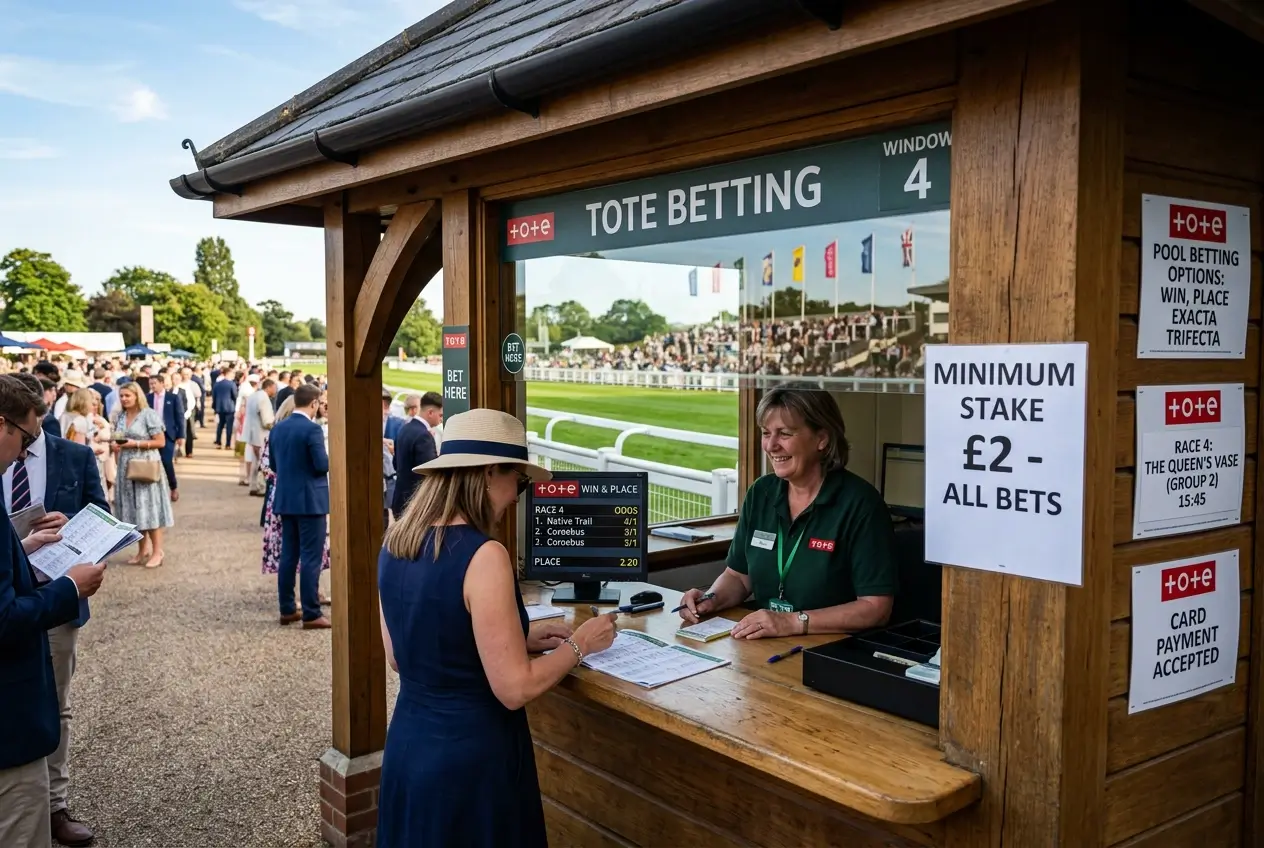
The question nobody thinks to ask until they’re standing at the window
I’ve watched someone at a Tote window at Newbury look genuinely surprised when told the minimum stake is £2. They’d been calculating combinations all morning, had worked out they needed 81 of them to cover their quaddie structure properly, and had arrived expecting to be able to bet pennies per combination. The £2 minimum per unit was, to put it charitably, not what they’d factored in. Understanding where the floor sits — and more importantly, how flexi betting changes the calculation — is not optional knowledge if you’re going to bet pool products without an unpleasant surprise at the counter. The full picture is in our complete guide to quaddie betting.
The Tote minimum stake on pool products in the UK is £2 per unit. That applies across the full range of Tote products available on-course and online: win, place, exacta, trifecta, quadpot, and placepot all share the same £2 minimum per unit. Cash and card are both accepted at racecourse Tote windows. The minimum doesn’t vary based on the product you’re betting — it’s £2 regardless of whether you’re doing a simple win bet or a multi-leg Placepot.
The £2 Tote floor — what it means in practice
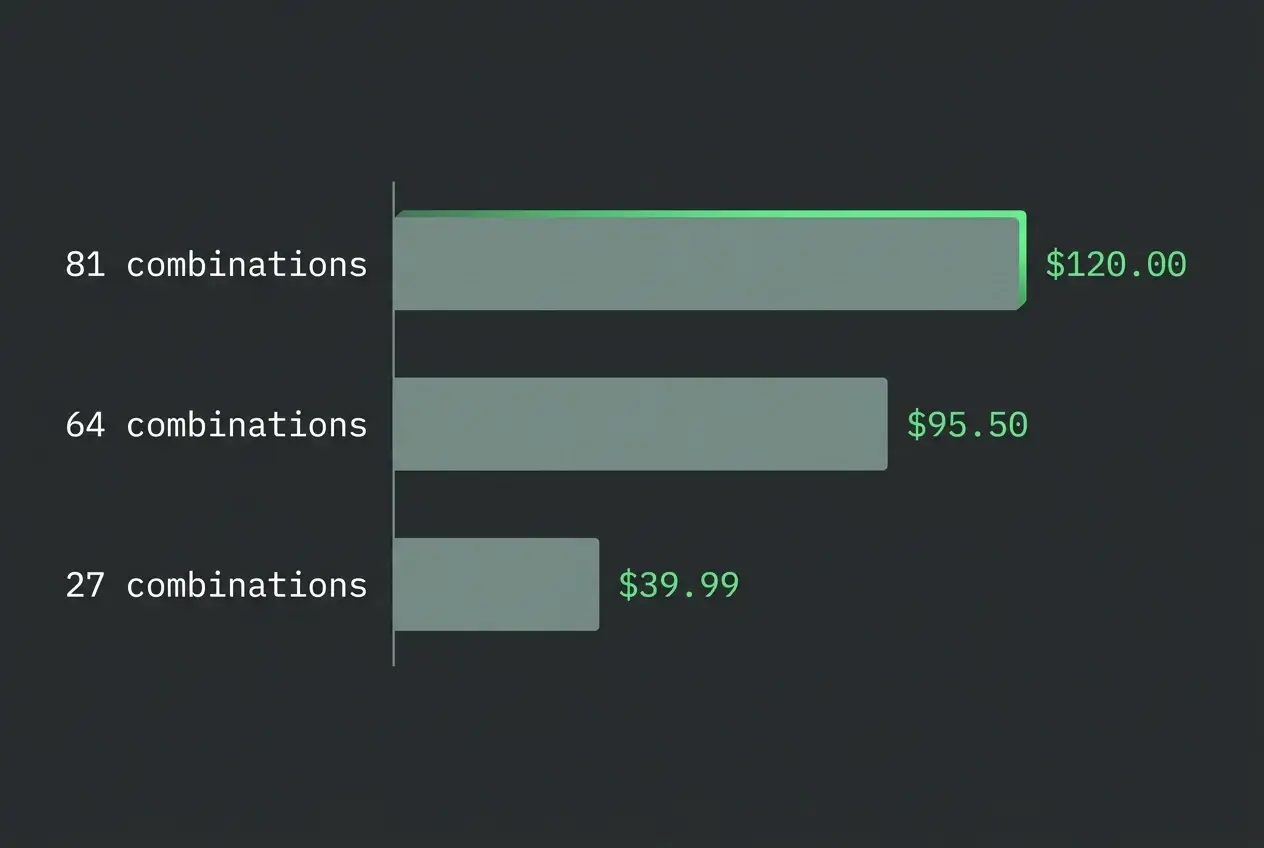
The £2 minimum is a per-unit stake, not a per-ticket minimum. If your ticket covers 81 combinations — a 3x3x3x3 Quadpot structure, for example — the full-unit cost is £2 multiplied by 81 combinations, which gives £162 for the complete ticket at minimum unit. That’s the cost of taking a full unit across the whole coverage structure. Most punters don’t realise this until they build a reasonably wide coverage structure and discover the arithmetic quickly becomes substantial.
For a standard quaddie with 3 selections per leg — 3x3x3x3 = 81 combinations — the full unit cost at the £2 minimum is £162. For a Placepot with 2 selections per leg across all six legs — 2x2x2x2x2x2 = 64 combinations — the full unit cost is £128. These are the figures before any flexi reduction. They’re not small amounts, and they illustrate why the minimum unit stake matters significantly to the practical cost of pool betting with realistic coverage structures.
The per-unit minimum also interacts with how dividends are calculated. The declared dividend on a Tote pool product is typically quoted per £1 unit — meaning the declared figure represents the return per £1 of investment. A £2 minimum stake doubles the return figure automatically, since you’re always staking at least two units. If the Placepot declares a dividend of £340 to a £1 unit, a £2 minimum stake returns £680 for a single-combination winning ticket. The minimum stake is both a cost floor and a return multiplier.
Going below the minimum with flexi
Flexi betting is the mechanism that allows punters to maintain a wide coverage structure without committing to the full per-unit cost across every combination. Instead of betting £1 (or the £2 minimum) per combination, a flexi bet takes a stated percentage of the full unit. The coverage structure — which combinations are included in your ticket — remains unchanged; only the per-combination investment changes.
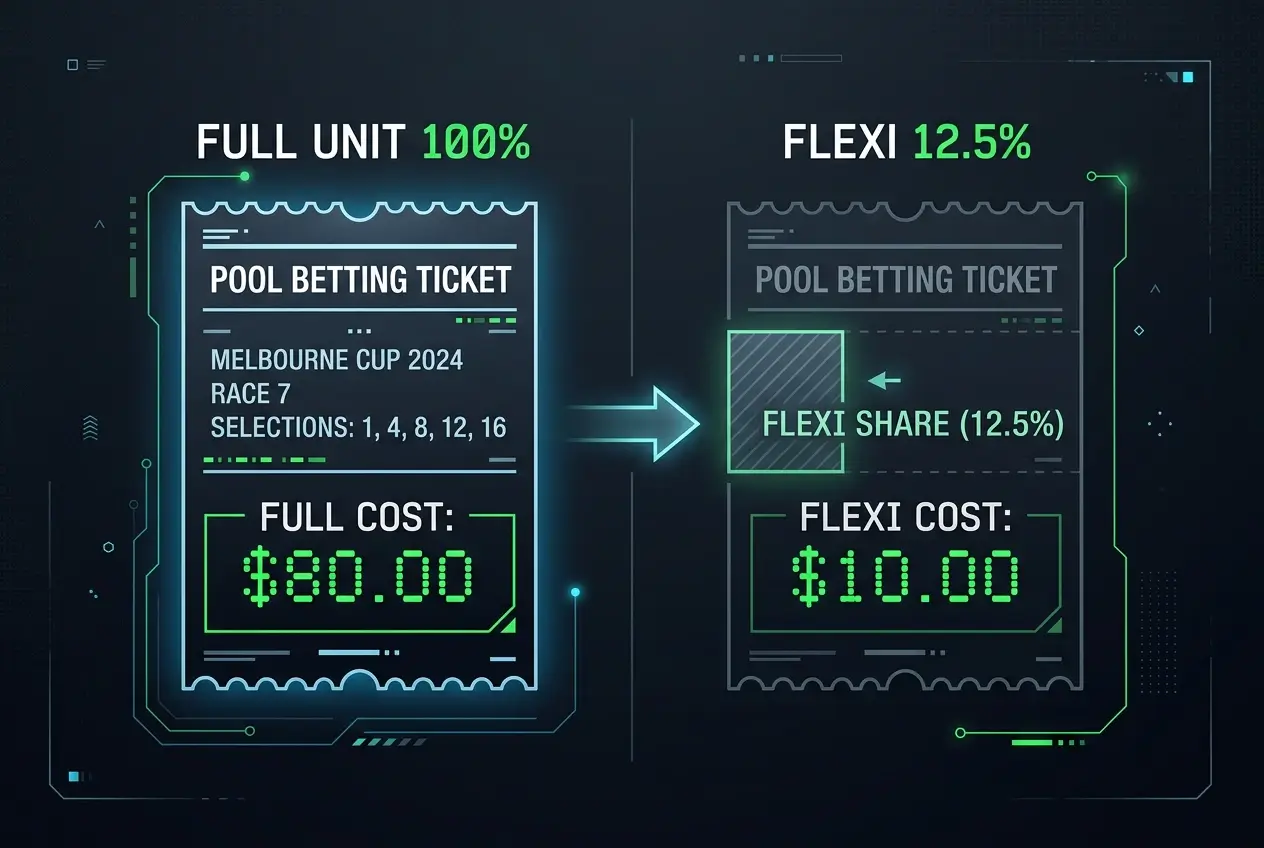
The practical effect is that you can run a large coverage structure at a fraction of the full cost. A 81-combination Quadpot at 12.5% flexi costs 81 x £2 x 12.5% = £20.25. Your ticket covers the same 81 combinations as a full-unit ticket, but if your combination wins, you receive 12.5% of the declared dividend rather than the full declared dividend. The dividend per full unit might be £400; at 12.5% flexi, your return is £50.
Flexi betting doesn’t technically allow you to go below the £2 minimum per unit — the minimum is a unit constraint, and flexi changes your share of that unit rather than bypassing the minimum. What it does is let you buy a fraction of a full unit, which effectively reduces your per-combination spend below what a full £2 unit would cost. On an 81-combination ticket at 12.5% flexi, your spend per combination is £2 x 12.5% = £0.25 — well below the minimum unit level. The flexi mechanism is the practical solution to the minimum unit constraint for complex, wide-coverage pool tickets. The full arithmetic of flexi calculation is covered in the quaddie calculation guide.
Minimums by product — how they compare
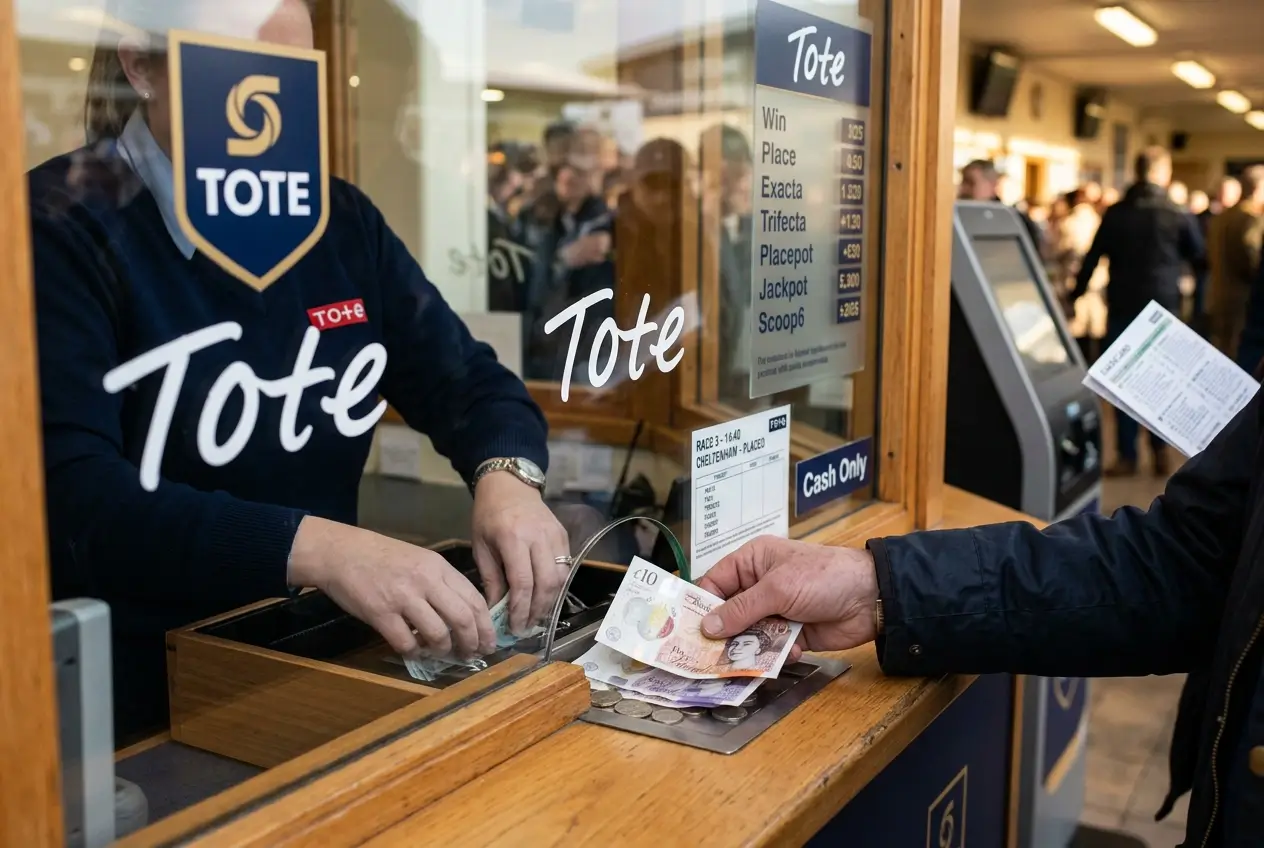
The £2 minimum applies consistently across the main Tote pool product range in the UK. Whether you’re placing a win bet, a place bet, an exacta, trifecta, quadpot, or placepot on-course or through the Tote app, the same £2 per-unit floor applies. Every day at every racecourse, six pool products are available: win, place, exacta, trifecta, quadpot, and placepot. The uniformity of the minimum across all six products simplifies the cost calculation — you always start from the same £2 unit floor.
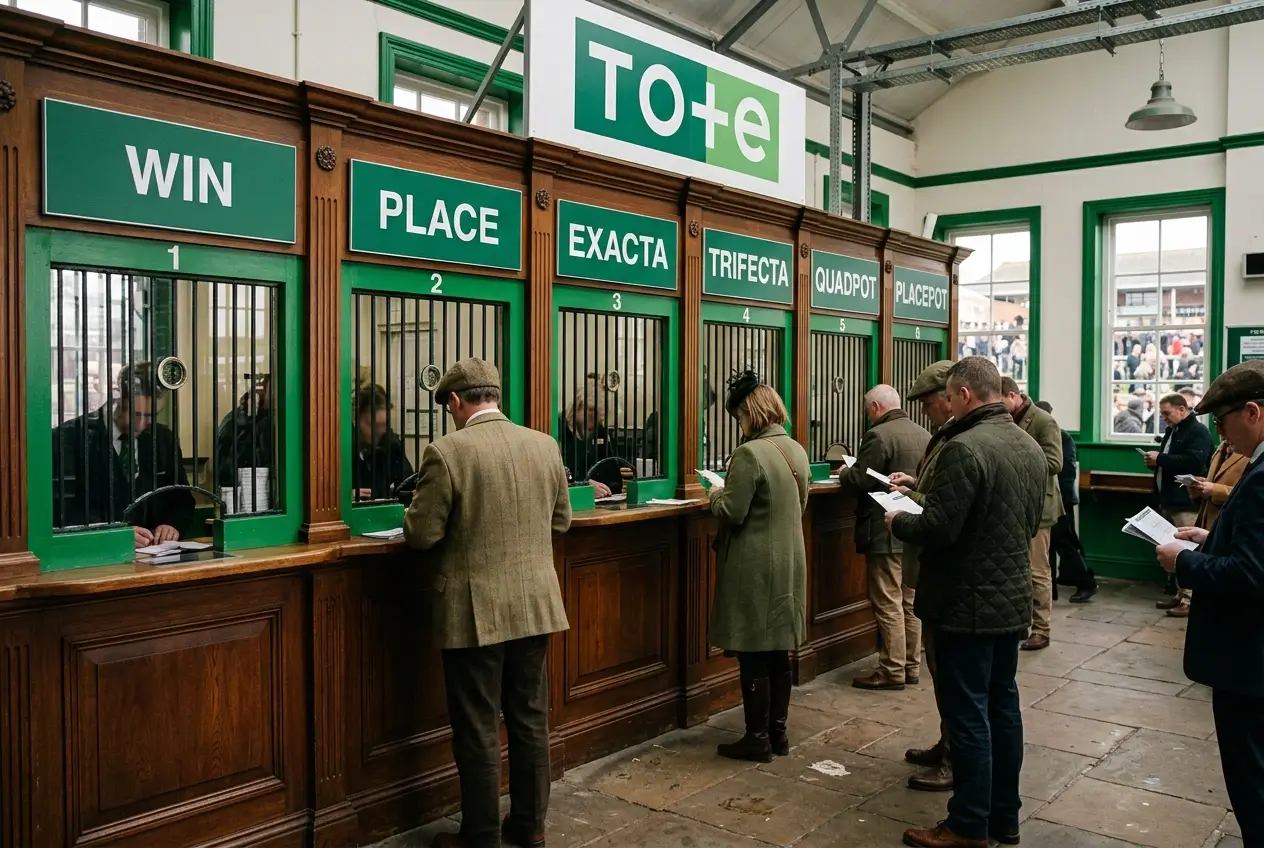
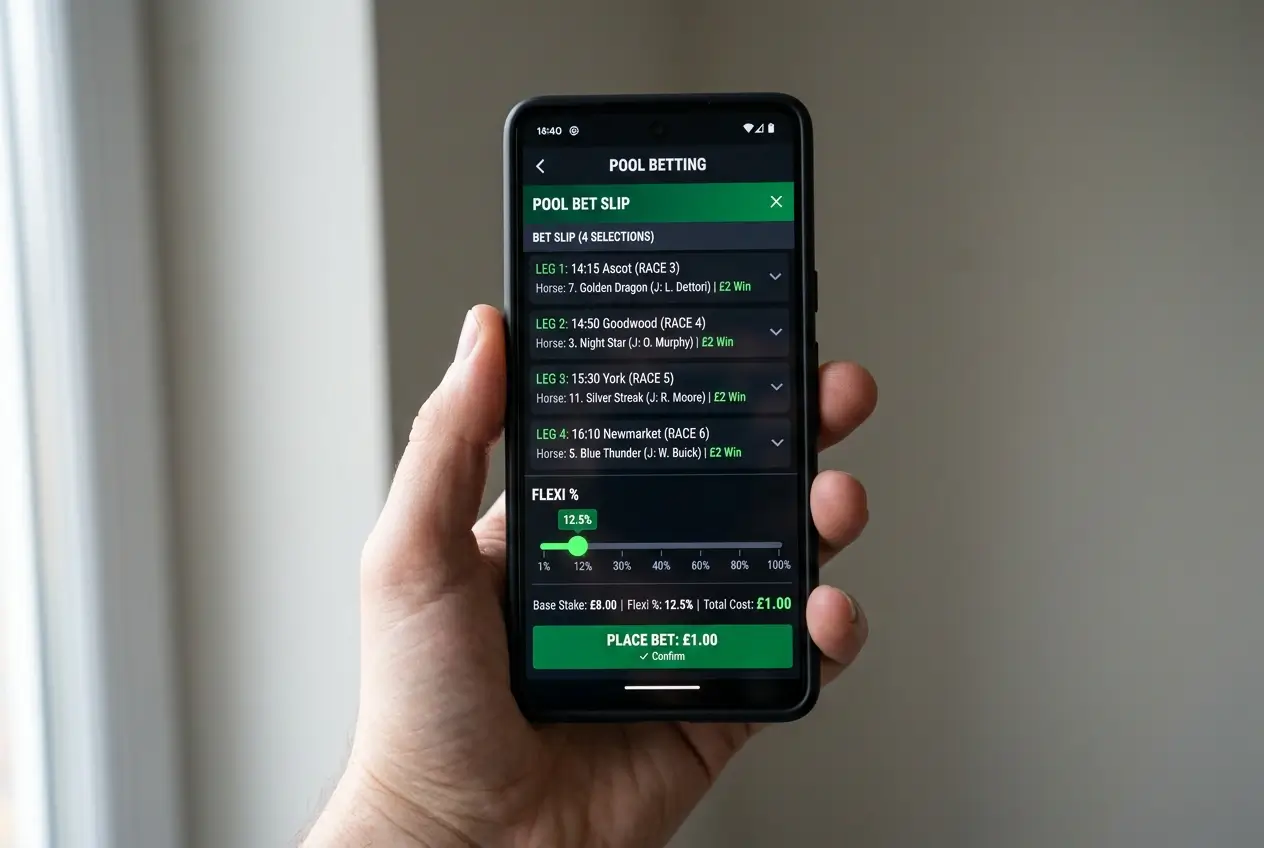
There is a practical distinction between the on-course and online minimum experience. On-course Tote windows accept cash and card at the £2 minimum. Online via the Tote app or website, the same minimum applies but the entry interface makes it slightly easier to input flexi percentages directly rather than calculating them manually before presenting them at a window. For a punter new to pool betting who wants to experiment with different coverage structures and flexi percentages before committing to a ticket, the online interface is more forgiving — you can adjust selections and percentages before confirming, whereas a window bet is typically finalised when you present your selections.
One nuance that catches some punters out: the £2 minimum applies to the total unit stake, not to the flexi-adjusted cost. You cannot bet less than £2 in absolute terms — even at a very small flexi percentage, the minimum absolute spend is constrained by the £2 floor. On a one-combination ticket (a single selection in every leg), the minimum cost is £2. On a multi-combination ticket at a low flexi percentage, the minimum absolute cost is still £2 — the flexi percentage and the combination count together must produce a figure of at least £2 when calculated. If your structure would cost less than £2 at your chosen flexi percentage, the system will prompt you to either increase the flexi, add more combinations, or accept that the minimum £2 applies. How to stretch that minimum: flexi betting.
What is the smallest amount I can put on a Tote pool?
The minimum stake on Tote pool products in the UK is £2 per unit, applying to win, place, exacta, trifecta, quadpot, and placepot. This minimum applies both on-course and online. For multi-combination tickets, the full cost is £2 multiplied by the number of combinations in your ticket — though flexi betting allows you to take a percentage of the full unit to reduce the total spend.
Can flexi let me bet under the minimum unit?
Flexi betting reduces your per-combination investment by allowing you to take a fraction of a full unit. While it doesn’t technically eliminate the £2 minimum unit, it lets you cover a large combination structure at a fraction of what the full unit cost would be. On a wide coverage structure, the flexi-adjusted cost can be quite small per combination, though the absolute minimum of £2 for the total ticket still applies.
Is the on-course minimum the same as online?
Yes, the £2 per unit minimum applies equally on-course and through the Tote app and website. The difference is purely in the user experience — online interfaces allow easier adjustment of flexi percentages and combination structures before confirming a bet, while on-course windows finalise the bet when you present your selections and payment.
This material was created by the FourCast team.
Related posts

Quaddie Tips: How to Read, Judge and Use Daily Selections
Pool Betting vs Fixed Odds: Where the Value Evidence Points